


Photographing Real Estate Interiors Isn’t as Simple as People Think
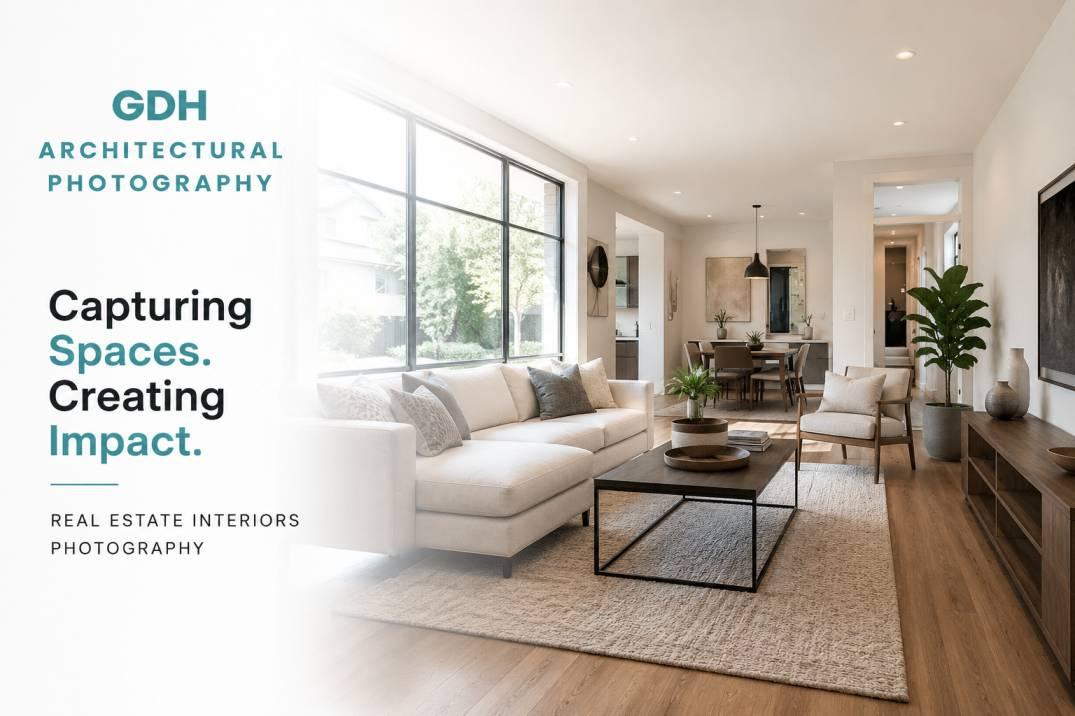
A few years ago, I walked into a beautifully designed home that honestly should’ve sold immediately. Tall ceilings, huge windows, custom woodwork … the place looked fantastic in person.
Then I saw the online listing.
The photos made the entire house feel dark and oddly cramped. One bedroom looked yellow for some reason. The kitchen counters appeared crooked. It barely even looked like the same property.
That happens more often than people realize.
Photographing real estate interiors sounds easy until you actually try doing it properly. Rooms behave differently on camera. Light shifts constantly. Mirrors create problems out of nowhere. Even perfectly clean spaces can look messy in photos if the angles are wrong.
Good photography fixes those problems quietly.
Buyers Judge the Photos Before Anything Else
People like to say location matters most in real estate. Sure, that’s true eventually.
But first, buyers look at the pictures.
If the listing photos feel dull or awkward, most people won’t even bother reading the property description. They just move on to the next listing without thinking twice.
I’ve seen homes sit on the market longer simply because the photography didn’t do the property justice.
Then the photos get updated by a professional architectural photographer and suddenly the listing starts getting attention.
Same house. Same furniture. Different photos.
That alone says a lot.
The Wide-Angle Problem Nobody Talks About
This is one of the biggest mistakes in interior photography.
Some photographers push wide-angle lenses way too far because they want rooms to appear larger. Technically it works, but the space starts looking unnatural after a certain point.
You know those listing photos where the sofa looks tiny and the hallway stretches like a tunnel? That’s usually lens distortion.
And buyers absolutely notice it when they visit in person.
Strong interior photography services usually try to keep spaces looking open without making them feel fake. There’s a balance there, and honestly, not everybody gets it right.
Lighting Can Completely Change the Mood of a Room
Lighting matters more than expensive equipment. Probably more than editing too.
Natural light almost always looks best when photographing real estate interiors because it makes rooms feel comfortable and believable. Soft daylight creates depth without making the image look overly processed.
Artificial lighting gets tricky fast.
Different bulbs create different colors, and cameras pick up those inconsistencies immediately. A room might look normal to your eyes but turn strange in photos because half the lights are warm yellow and the others are bright white.
Then there’s window glare.
That alone can turn a perfectly nice room into a frustrating editing project.
Small Details End Up Looking Huge on Camera
This part surprises homeowners all the time.
Tiny distractions suddenly become incredibly obvious in photos. Loose wires, wrinkled blankets, remote controls, uneven chairs … the camera catches everything.
I once watched a photographer spend several minutes adjusting bar stools by maybe two inches each. At first it seemed ridiculous.
Then the final image looked dramatically cleaner.
That’s the weird thing about real estate photography. Little details affect the overall feeling of a room more than people expect.
Experienced commercial photography services understand this because composition is doing half the work behind the scenes.
Overediting Usually Makes Things Worse
Some listings barely look real anymore.
The skies are too blue. The floors glow orange. Window light looks like a nuclear explosion. Everything feels overly polished in a way that immediately creates skepticism.
Most buyers don’t want perfection.
They want accuracy.
Good editing should mostly go unnoticed. Straight walls, balanced brightness, natural-looking colors … those matter far more than dramatic effects.
Honestly, if people start talking about the editing instead of the property, something probably went wrong.
Why Architectural Experience Makes a Difference
A skilled construction photographer or architectural specialist tends to notice things casual photographers miss.
Lines. Symmetry. Materials. Reflections. How textures react under different lighting conditions.
Modern spaces especially benefit from that experience because architectural details often become selling points themselves.
A photographer who understands design can highlight those features naturally instead of forcing dramatic angles that feel unnatural.
That difference shows up immediately in the final images.
Final Thoughts
Photographing real estate interiors is really about helping people picture themselves inside the space.
That’s it.
The camera should make rooms feel inviting, balanced, and honest. Not overly edited. Not artificially huge. Not staged to the point where the property loses all personality.
At GDH Architects, that natural approach matters because buyers have gotten much better at spotting photos that feel fake or overproduced.
And once trust disappears from a listing, it’s hard to win it back with better lighting later.

 English
 Arabic
 French
 Spanish
 Portuguese
 Deutsch
 Turkish
 Dutch
Dutch
 Russian
 Romaian
 Portuguese (Brazil)
 Greek
Greek
