


Cheapest Postcard Printing UK: Is It Really Worth It for Businesses?
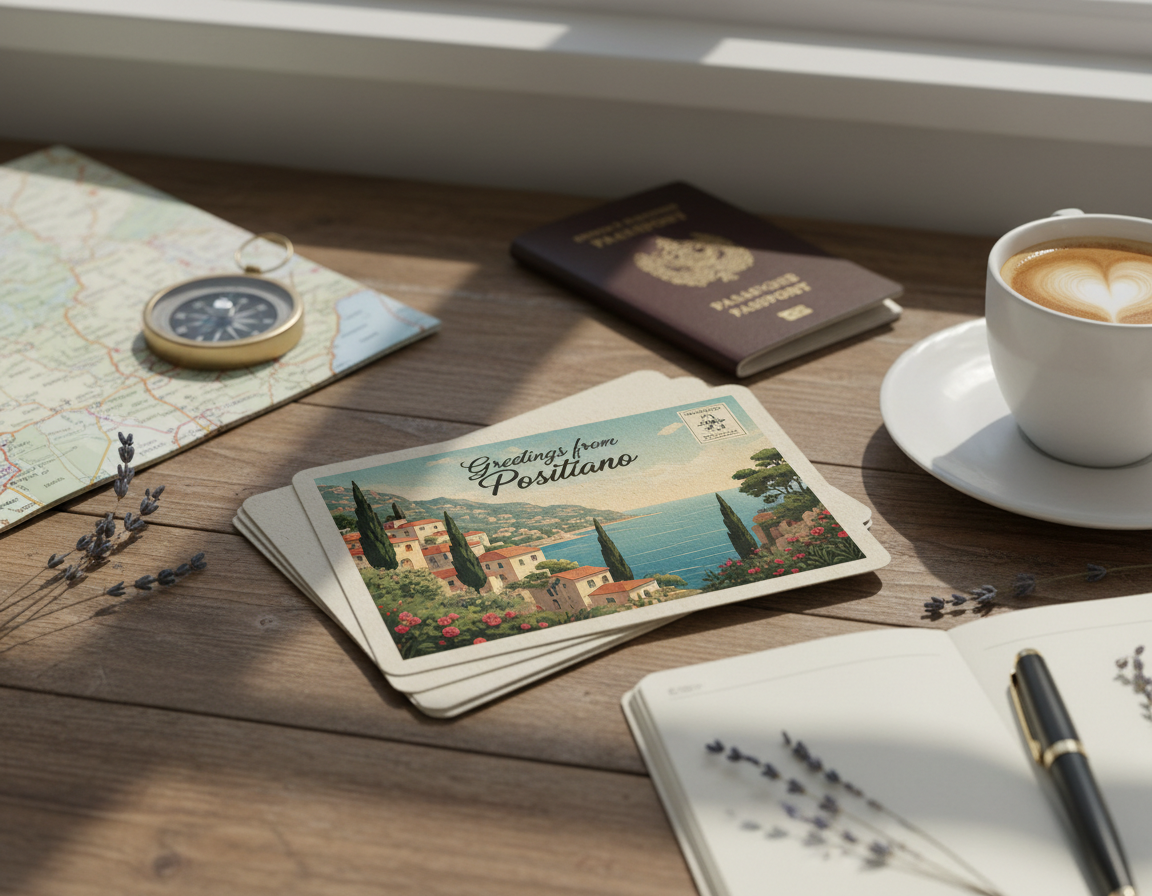
Cheapest postcard printing in the UK sounds like a straightforward win on paper.
Lower cost per unit. Higher volume. Bigger reach. Simple maths.
But in real marketing environments, “cheapest” is rarely just a pricing decision. It becomes a strategic trade-off that quietly affects how the entire campaign behaves once it leaves production.
And that’s where businesses often only realise the impact later — when response rates, engagement, or brand perception don’t match expectations.
Because in postcard printing, cost is not just an input. It influences output quality, attention retention, and even trust signals.
The real question isn’t cost — it’s campaign survival
A better way to think about cheapest postcard printing UK services is not “how much can I save?”
It’s:
How long will this postcard remain effective once it enters a real environment?
That question changes everything.
Because a postcard doesn’t live on a screen. It lives on desks, counters, floors, pinboards, and in piles of other mail.
And in those environments, survival matters more than initial appearance.
If a postcard gets discarded quickly, the cheapest option stops being cheap in practice.
It becomes short-lived.
Where the cost cutting actually happens
To understand whether cheap postcard printing is worth it, you first need to understand what is being reduced.
Most low-cost printing services optimise by adjusting:
-
paper weight (lower GSM stock)
-
simplified finishing processes
-
standardised print runs
-
reduced colour calibration control
-
bulk automation efficiency
None of these sound dramatic individually.
But together, they shift the postcard from a “designed object” to a “produced item.”
That distinction matters more than most brands realise.
Because produced items are disposable by default.
Designed objects tend to be kept longer.
The hidden cost: attention decay
One of the biggest issues with cheapest postcard printing is not visible at all in production.
It appears after distribution.
A lower-quality postcard typically experiences faster attention decay:
-
it is noticed once
-
quickly assessed
-
often discarded or ignored
-
rarely revisited
A higher-quality postcard behaves differently:
-
it gets picked up multiple times
-
left in visible spaces
-
re-encountered unintentionally
-
processed gradually over time
This difference is not about design. It’s about physical presence.
And physical presence directly affects marketing lifespan.
Why businesses underestimate perception damage
Here’s where things get uncomfortable.
Customers don’t know how much a postcard cost to print.
But they do form a perception of what it “feels like” it cost.
That perception is shaped instantly through:
-
paper thickness
-
print sharpness
-
colour depth
-
edge quality
-
overall rigidity
And once that perception is formed, it influences everything else — including how the message is received.
Even a strong offer can feel weaker if the physical piece doesn’t feel credible.
That’s the silent risk in cheapest postcard printing.
A simple reality check: volume vs effectiveness
Cheap printing usually encourages higher volume.
More postcards for the same budget sounds like a clear advantage.
But in real campaign performance, volume alone doesn’t guarantee results.
|
Approach |
Immediate output |
Real-world behaviour |
Outcome quality |
|
Cheapest print |
High volume |
Fast discard rate |
Short-lived impact |
|
Mid-tier balanced print |
Moderate volume |
Repeated exposure |
Stable engagement |
|
Higher-quality print |
Lower volume |
Longer retention |
Stronger recall |
The important part is what happens after delivery — not just how many pieces are sent out.
Because one postcard seen five times is often more valuable than five postcards seen once.
Where cheapest printing actually makes sense
Cheapest postcard printing isn’t automatically a bad choice.
It just has a narrower window of effectiveness than people assume.
It works best when:
-
the message is time-sensitive
-
the goal is immediate awareness, not retention
-
campaigns are high-frequency and repetitive
-
brand recognition is already established
-
the postcard is part of a larger funnel
In these cases, longevity is not the priority.
Speed and scale are.
And cheap printing can support that.
When cheapest printing quietly fails businesses
Problems usually appear when expectations don’t match purpose.
Cheap postcards struggle when campaigns require:
-
long-term visibility
-
repeated engagement
-
brand trust building
-
premium positioning
-
decision reinforcement over time
In these scenarios, low-cost production shortens the lifespan of the message.
And that leads to a familiar pattern:
more distribution needed to achieve the same result.
Which cancels out initial savings.
The durability factor nobody talks about enough
Postcards are physical objects. That means they degrade.
And cheaper production accelerates that degradation.
Common issues include:
-
bending and curling at edges
-
surface scuffing
-
fading under light exposure
-
reduced resistance to handling
-
weaker structural integrity in storage
These aren’t dramatic failures.
They’re gradual ones.
But gradual decline directly affects how often a postcard is noticed again after first contact.
And repeated exposure is where real marketing value builds.
Why “cheap” often shifts cost somewhere else
The biggest misconception is that cheap printing reduces total spend.
In reality, it often redistributes cost:
-
more reprints required
-
higher distribution volume needed
-
additional digital reinforcement required
-
weaker conversion rates needing follow-up campaigns
So the savings don’t disappear — they move.
And sometimes they move into areas that are harder to track.
Which makes budgeting feel efficient… even when performance is not.
The psychological layer: disposable vs intentional
People respond differently to things that feel disposable versus intentional.
A cheap postcard often feels like something made quickly and in bulk.
A higher-quality postcard feels like something that was meant to be noticed.
That difference influences behaviour in subtle ways:
-
how long it is looked at
-
whether it is kept
-
whether it is shared or shown to others
-
whether it is acted on later
This is not about aesthetics alone. It’s about perceived effort.
And perceived effort influences trust.
A practical way to evaluate if “cheapest” is worth it
Instead of asking whether cheapest postcard printing is good or bad, a more useful approach is to test three questions:
-
Will this postcard need to survive beyond first contact?
-
Does the message rely on repetition or memory?
-
Is perception quality important for conversion?
If the answer to any of these is yes, cheapest printing starts to lose effectiveness.
Because the role of the postcard shifts from “distribution tool” to “retention object.”
And retention objects require stability, not just volume.
Final perspective: cheapest is only valuable when it matches behaviour
Cheapest postcard printing in the UK is not inherently ineffective.
It simply operates within strict behavioural limits.
It works when campaigns are fast, direct, and volume-driven.
It struggles when campaigns rely on trust, memory, and repeated exposure.
The real question businesses should be asking is not whether cheapest printing is worth it in general — but whether it supports the actual behaviour they expect from their audience.
At I YOU PRINT, this is usually treated as a usage-fit decision rather than a pricing decision, where cost only becomes meaningful once the intended lifespan and engagement pattern of the postcard is clearly defined.

 English
 Arabic
 French
 Spanish
 Portuguese
 Deutsch
 Turkish
 Dutch
Dutch
 Italiano
 Russian
 Portuguese (Brazil)
 Greek
Greek
