


The Shift from Traditional BI to Augmented Analytics
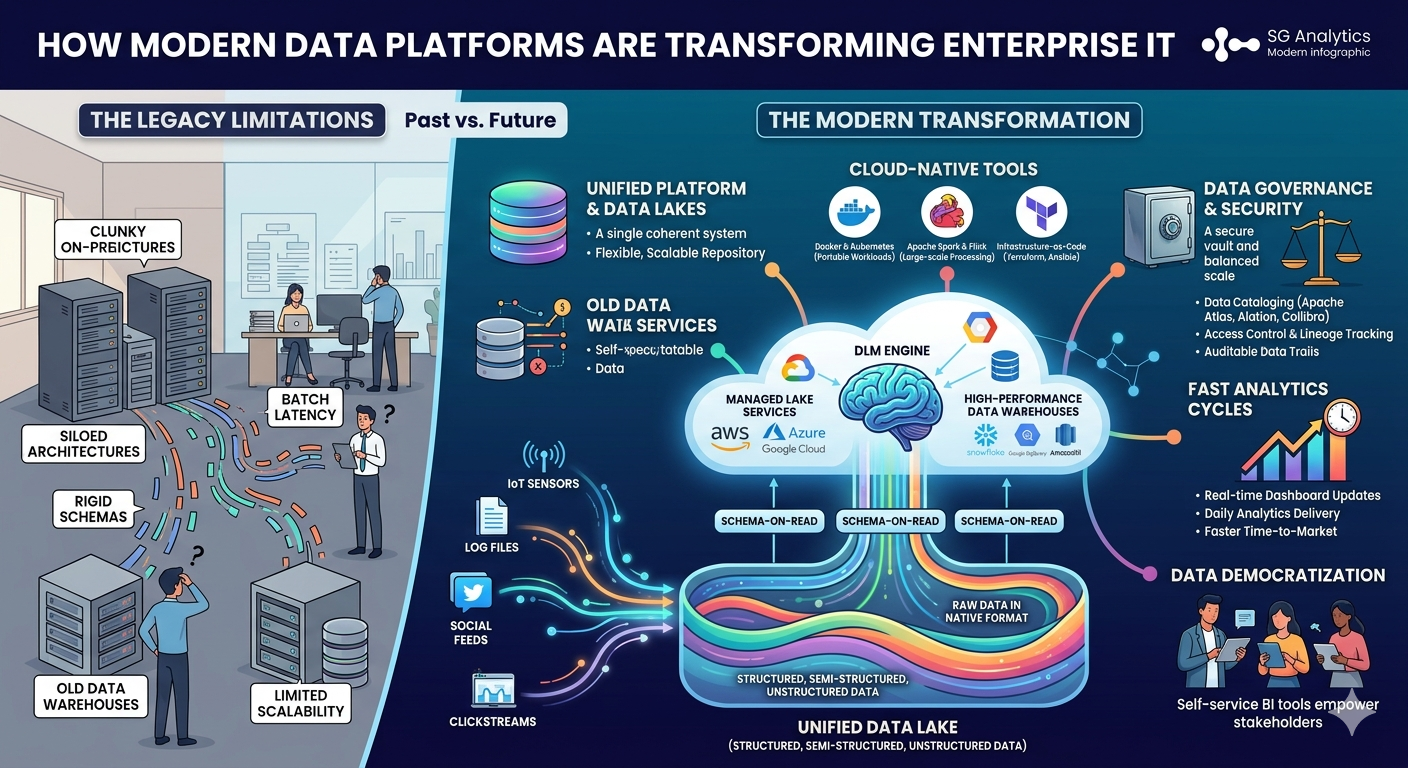
Business intelligence (BI) might fail to democratize data if enterprises let it be another area with too many restrictions that employees dislike. Modernizing it can still take a toll, at least in the beginning, but it would be worth it. You want your tools and teams to stop limiting themselves with reports that are hard to interpret. Thankfully, augmented analytics can be the key to preventing BI-related bottlenecks. This post will underscore the significance of the shift from traditional BI to a more augmented, democratization-enabling analytics ecosystem.
What is Augmented Analytics?
Augmented analytics taps into the growing capabilities of enterprise-grade artificial intelligence. Here, you witness machine learning models that excel at automating data preparation. Thus, interpretation does take weeks. Instead, augmented analytics solutions will pick up the repetitive aspects of insight generation.
In short, natural language commands and explanations will be by your side as you brainstorm decisions and strategies.
Why would you waste hours or days finding the best query when an augmented analytics system can uncover the most crucial patterns on its own? That logic fuels the current proactive attitudes.
The mantra stays consistent: Let the AI come up with ideas while human workers spend longer on more nuanced, creativity-demanding problem-solving.
The Limits of Traditional BI
Historical BI definitely matters. Nobody is denying that. But let’s be honest. As soon as you fix any underperformance issues that historical insights help discover, the BI becomes irrelevant. That cannot work now. Foresight is all the rage, and even investors seek leaders who care about predictive insights instead of backward-looking ones.
This new phase also indicates why traditional BI tools are losing appeal. The limitations, such as needing structured data, periodic reporting cycles, and specialist users, together increase costs while failing at comprehensive reporting.
Additionally, market intelligence services now rely on real-world data that also becomes accessible as soon as an event occurs. So, how can you possibly expect conventional BI systems to keep up with real-time dashboards?
The shift from traditional BI to augmented analytics is, therefore, not some hype or temporary trend. That is the permanent change due to the inevitable increase in corporations’ data, reporting, and interpretation needs.
How Augmented Analytics Creates Competitive Advantage That Traditional BI Could Not Offer
-
Speed: Augmented analytics compresses the time from data to decision. So, it now takes minutes instead of days.
-
Accessibility: Natural language processing (NLP) allows non-technical users to query and use enterprise data. Only conversions drive the workflows, not hard-to-recall coding syntax.
-
Accuracy: Human analysts carry cognitive biases. However, AI does not have them. As long as the augmented analytics systems have bandwidth, their output will be reliable and realistic.
-
Strategic Intelligence: Combining the augmented analytics tools with other data handling systems is straightforward. Application programming interfaces (APIs) simplify the whole process. So, you can reuse them for macro and internal risk detection. That means, more resilient strategy creations become possible.
Conclusion
Organizations that make this shift to augmented analytics can make BI less traditional, more democratization-oriented. In other words, more multidisciplinary teams will be freely using enterprise intelligence. Simple tasks will not suffer due to a dozen time-consuming approval requests.
Humans will not need to stare at dashboards. Instead, AI will readily alert them to potential disruptions and market entry opportunities. Although this space is still evolving, postponing augmented analytics adoption will only hurt your organization’s competitiveness. Leaders must move now and embrace it to thrive with AI-assisted data interpretation.
-

 English
 Arabic
 French
 Spanish
 Portuguese
 Deutsch
 Turkish
 Dutch
Dutch
 Italiano
 Russian
 Romaian
 Greek
Greek
