


What Quality Web Development Services Actually Cost You?
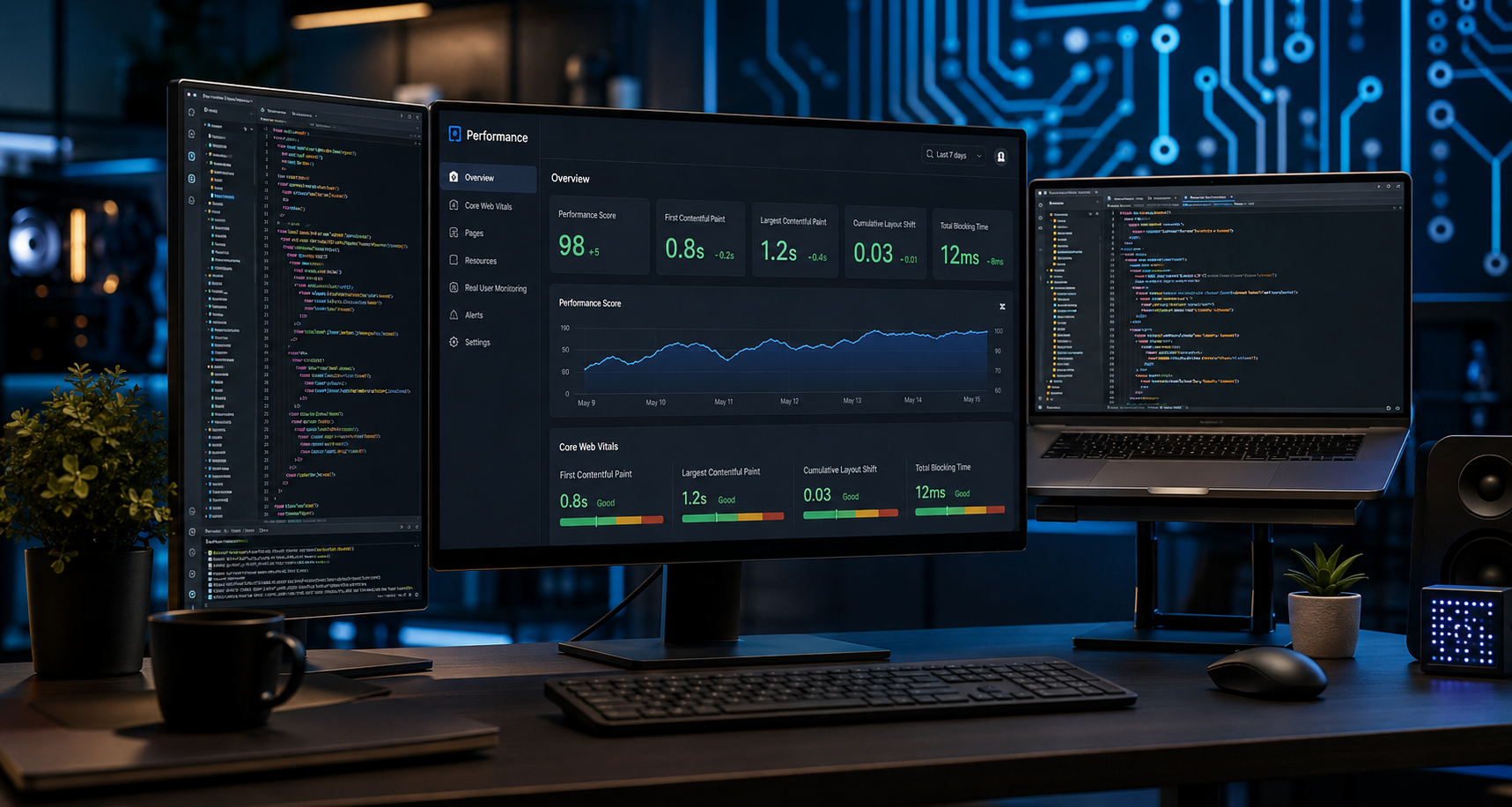
The gap between a cheap website and a high-performing one isn't just aesthetic — it shows up directly in revenue, search rankings, and customer trust.
A restaurant owner once told me that her website "worked fine." It loaded, it had a menu, and it listed her address. What it didn't do was convert visitors into reservations — and she had no idea why. Six months after switching to a professionally built site, her online bookings had doubled. The website hadn't changed much visually. What changed was everything underneath it: load speed, structured data, mobile responsiveness, and a booking flow that didn't make users think.
This is what professional web development services actually deliver — and why the difference between doing it right and doing it cheap tends to be measured in business outcomes, not just pixels.
The $89 Billion Industry Nobody Talks About Strategically
The global web development services market was valued at USD 80.6 billion in 2025 and is projected to reach USD 134.17 billion by 2031, growing at nearly 9% annually. That's not a vanity statistic. It reflects the compounding reality that businesses with fast, functional, well-architected websites outperform those without them — across every measurable metric.
Yet most businesses still treat their website as a one-time expense rather than an ongoing asset. They budget for a redesign every five years, sign off on a low-cost build, and wonder why the traffic numbers never move. The issue isn't always the design. It's the absence of engineering discipline behind it.
Why Cheap Websites Have a Hidden Invoice
Slow pages are not a UX inconvenience. According to a 2025 study cited by Backlinko, slow websites can cause up to 20% revenue loss for eCommerce brands. Google has baked Core Web Vitals into its ranking signals, which means a site that loads in 4+ seconds doesn't just frustrate users — it actively loses search visibility.
Then there's the mobile problem. Roughly 58–60% of all web traffic now comes from mobile devices, yet 81% of websites still perform poorly on mobile UX. A site that looks good on a desktop monitor but fails users on a phone is, statistically, failing the majority of its visitors.
The hidden invoice of cheap web development usually arrives in three forms:
-
Lost organic traffic from poor technical SEO
-
High bounce rates eroding paid campaign ROI
-
Recurring developer costs for fixing structural problems that should never have existed
What Modern Web Development Actually Involves
Many business owners picture web development as someone typing HTML into a text editor. The reality in 2026 looks considerably different. The discipline now covers server-side rendering, edge computing, API design, accessibility compliance, security architecture, and performance optimisation — often simultaneously.
Accessibility is no longer optional, either legally or commercially. There were 2,014 accessibility lawsuits filed in the first half of 2025 alone — a 37% year-over-year increase. And more than 96% of websites still fail basic WCAG accessibility checks. Businesses that invest in proper web development services are, quietly, protecting themselves from an increasingly litigated corner of the web.
Security is similarly non-negotiable. The React2Shell vulnerability (CVE-2025-55182) and the Next.js middleware vulnerability of 2025 were stark reminders that modern web frameworks, however powerful, expose new attack surfaces when not implemented by experienced engineers.
Choosing a Web Development Partner That Understands Your Business
This is where most procurement decisions go wrong. Businesses compare hourly rates and portfolio aesthetics when they should be asking different questions: Does this team understand how web architecture affects search rankings? Can they articulate a performance strategy? Do they know what their previous builds converted to?
When evaluating professional web development services, the questions worth asking include:
-
Load time benchmarks — What's their typical Lighthouse performance score on delivery?
-
Technology choices — Are they choosing a stack that suits your scale, or defaulting to what they know?
-
Post-launch support — Is ongoing maintenance included, or will every small fix cost a separate invoice?
-
SEO integration — Is technical SEO part of the build process or an afterthought?
-
Accessibility standards — Are WCAG 2.1 AA guidelines built into development, not retrofitted later?
The best development partners bring business context into technical decisions. They ask what the site needs to do commercially, then engineer backwards from that goal.
The Frameworks Powering Professional Sites Right Now
JavaScript remains the dominant language across web development, used by 65.6% of developers globally. React holds 40.6% of the framework market. TypeScript has grown from 12% to 38.5% adoption in five years and now appears in a third of all frontend job listings — a sign that large-scale, maintainable codebases are finally being treated as a business requirement, not an engineering preference.
Server-side rendering has made a strong return, with frameworks like Next.js and Remix becoming defaults for teams that want fast, SEO-friendly applications without sacrificing interactivity. The logic is sound: render what you can on the server, ship only the JavaScript users actually need, and let the infrastructure do the heavy lifting instead of the user's device.
For businesses working with an experienced development team, understanding these stack choices matters — not because you need to write the code, but because they have direct implications for your site's speed, maintainability, and long-term cost.
What the Budget Conversation Should Actually Look Like
US-based web development agencies typically charge between $75 and $150 per hour. Asia-Pacific agencies often run $25–$50 per hour. But the hourly rate is a poor proxy for value.
A $10,000 website built quickly on an unsecured, unoptimised foundation may cost another $15,000 in fixes within 18 months. A $25,000 investment with a team that delivers a performant, accessible, maintainable build may pay for itself within the first year through improved conversion rates and reduced maintenance overhead.
The question worth reframing is not "how much does web development cost?" but "what is a well-built website worth to this business?" Those are meaningfully different questions — and the answers lead to better decisions.
FAQ
Q: How long does it take to build a professional website?
A: A well-scoped website for a small to medium business typically takes 6–16 weeks from discovery to launch. Complex web applications or eCommerce platforms often run 4–9 months. Timelines depend on scope, content readiness, and revision cycles.
Q: What's the difference between web development and web design?
A: Web design focuses on visual presentation, layout, and user experience. Web development is the engineering that makes it functional — the code, databases, server logic, and integrations that bring the design to life. Most quality projects involve both disciplines working together.
Q: Should a small business invest in custom web development or use a template?
A: Template platforms work well for businesses with simple needs and constrained budgets. Custom development becomes a better investment when a business has specific performance requirements, complex user journeys, third-party integrations, or expects to scale significantly.
Q: How do I know if my current website is underperforming?
A: Check Google Search Console for crawl errors, Core Web Vitals scores, and mobile usability issues. Tools like PageSpeed Insights give you a Lighthouse performance score. A score below 70 on mobile usually indicates significant room for improvement.
What a Well-Built Website Actually Feels Like to Own
The businesses that report the highest satisfaction from their web development investment aren't always the ones with the flashiest sites. They're the ones whose sites just work — reliably, quickly, and without drama. Pages that load before users notice the gap. Forms that submit without friction. Analytics that show steady improvement month over month.
That's what professional web development services, done correctly, feel like in practice: not a project you finished, but an asset that keeps working. The initial investment is real. So is the return, and for most businesses that make it properly, the math eventually becomes obvious.

 English
 Arabic
 French
 Spanish
 Portuguese
 Deutsch
 Dutch
Dutch
 Italiano
 Russian
 Romaian
 Portuguese (Brazil)
 Greek
Greek
