


Financial Planning Tips Every Working Professional Should Follow
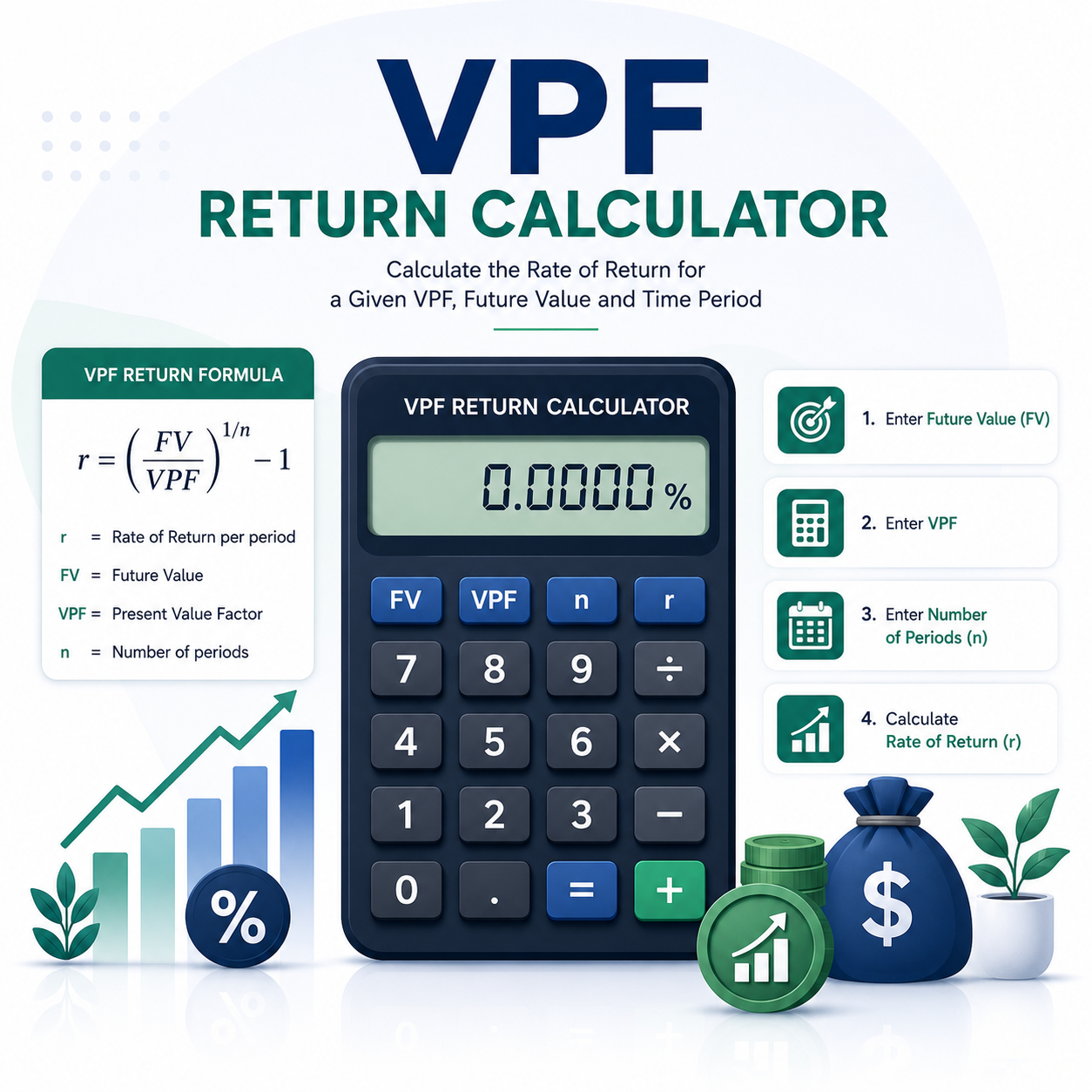
Managing money well isn’t a skill you’re born with — it’s something you build over time. For most working professionals in India, financial planning starts as an afterthought, something to deal with “later” once income is more stable or EMIs are cleared. But later usually never comes. The professionals who retire comfortably are rarely the ones who earned the most — they’re the ones who planned the most. It starts with knowing what your money is doing right now, using tools like a VPF return calculator to track how your savings are growing, and building habits that work quietly in the background.
Build Your Financial Foundation First
Before you chase returns, make sure the basics are covered. Many professionals skip foundational steps and go straight to investments — which is like building a house on loose soil.
Your financial foundation should include:
-
An emergency fund covering 4–6 months of expenses
-
Adequate health insurance (not just the employer policy — a personal policy too)
-
Term life insurance of at least 10x your annual income
-
Zero high-interest debt (credit card dues cleared monthly)
Once these are in place, every rupee you invest goes to work without the anxiety of needing it in an emergency.
Understand Your VPF Returns Before Anything Else
If you’re a salaried employee, you’re already contributing to EPF. But most people don’t know how much it’s actually earning them. Using a VPF return calculator gives you a clear, year-by-year breakdown of how your Voluntary Provident Fund contributions accumulate with interest.
This one step — simply understanding your existing PF returns — often motivates people to increase their contributions voluntarily, because they can see the compounding effect for the first time.
Why VPF makes sense for salaried professionals:
-
Contributions are deducted before you can spend them (zero temptation)
-
Interest is compounded annually at government-declared rates
-
Fully tax-free on maturity (EEE status)
-
No fund manager risk, no market fluctuation
The 50-30-20 Rule: A Simple Framework That Actually Works
If budgeting sounds complicated, it doesn’t have to be. The 50-30-20 rule is a simple allocation framework that works for most professionals earning between ₹30,000–₹2 lakh per month.
-
50% for needs — rent, groceries, utilities, EMIs
-
30% for wants — dining out, entertainment, travel
-
20% for savings and investments — EPF, VPF, PPF, mutual funds, etc.
The 20% savings portion is where most people struggle. But if you’re investing through VPF and PPF already, a large chunk of this may already be automated.
Use a PPF Calculator to Plan Long-Term Tax-Free Savings
The PPF calculator is another tool every professional should bookmark. PPF has a 15-year lock-in, which sounds restrictive — but that’s exactly what makes it a powerful retirement instrument. The discipline is built into the product.
At the current rate of 7.1%, a monthly PPF contribution of ₹5,000 over 15 years grows to approximately ₹16.3 lakhs — fully tax-free on maturity. Extend it by 5 more years and the power of compounding kicks in dramatically.
PPF vs VPF at a glance:
|
Feature |
PPF |
VPF |
|---|---|---|
|
Available to |
All citizens |
Salaried employees only |
|
Interest Rate |
7.1% (quarterly review) |
8.25% (same as EPF) |
|
Lock-in |
15 years |
Until retirement/resignation |
|
Tax on Maturity |
Fully exempt |
Fully exempt |
|
Annual Limit |
₹1.5 lakh |
No upper limit |
Prioritise Goal-Based Investing
Random investing rarely works. Money put in “for investment” without a specific goal gets spent or pulled out during emergencies. Successful financial planning maps every rupee to a specific goal.
Common financial goals for working professionals:
-
Emergency fund — 6 months of expenses, in a liquid FD or savings account
-
Home down payment — 5–10 years; use debt mutual funds or recurring deposits
-
Children’s education — 10–15 years; Sukanya Samriddhi (for daughters), equity MFs
-
Retirement corpus — 20–30 years; EPF + VPF + PPF + NPS combination
Each goal has a different time horizon, and therefore a different ideal instrument. Mixing them up is one of the biggest financial planning mistakes.
Tax Planning Is Part of Financial Planning
Many professionals treat tax saving as a January–March panic exercise — scrambling for 80C investments at the last minute. This approach is both inefficient and costly.
Instead, build tax savings into your year-round plan:
-
VPF contributions reduce taxable income through 80C
-
PPF contributions up to ₹1.5 lakh qualify under 80C
-
NPS (Tier 1) offers an additional ₹50,000 deduction under 80CCD(1B) — over and above 80C
-
Health insurance premiums qualify under 80D
Used together, these deductions can reduce your taxable income by ₹2–2.5 lakh annually — saving ₹30,000–₹75,000 in taxes depending on your bracket.
Review and Rebalance — At Least Once a Year
A financial plan is not a one-time document. Life changes — salary increases, new EMIs, family additions, job changes — all require you to revisit your plan.
Set a calendar reminder every April (start of financial year) to:
-
Review your insurance coverage
-
Check your EPF/VPF balance and consider increasing contributions
-
Rebalance your mutual fund portfolio if any asset class has drifted significantly
-
Update your nominee details across all investments
It takes 2–3 hours once a year, and it keeps your financial plan aligned with your current life.
Frequently Asked Questions
Q1. What is a VPF return calculator used for?
A VPF return calculator helps you estimate how much your voluntary provident fund contributions will grow over a specific period based on the current interest rate and your monthly contribution amount.
Q2. How much should I save from my salary every month?
A widely recommended benchmark is 20% of your take-home salary. However, the actual amount depends on your goals, expenses, and existing liabilities. Starting with even 10% and gradually increasing it works well.
Q3. Is it better to invest in VPF or mutual funds?
Both serve different purposes. VPF is risk-free and tax-exempt — ideal for the debt/secure portion of your portfolio. Mutual funds offer higher potential returns with market risk — suited for long-term wealth creation. A balanced mix of both is usually the best approach.
Q4. When should I start financial planning?
The moment you receive your first paycheck. Even contributing ₹500/month at age 22 makes a meaningful difference by retirement due to compounding. There’s no “right time” other than now.
Q5. Can I withdraw my VPF before retirement?
Partial withdrawals from EPF/VPF are permitted under specific conditions like medical emergencies, home purchase, marriage, or education after completing 5 years of service. Full withdrawal before 5 years attracts tax.
Q6. Is PPF or NPS better for retirement planning?
Both are excellent. PPF offers fixed, guaranteed returns with full tax exemption. NPS has a market-linked component that can deliver higher returns, plus an additional 80CCD(1B) deduction. Using both together diversifies your retirement savings.
Conclusion
Financial planning for working professionals is less about dramatic investment moves and more about building smart, consistent habits. Understanding your VPF return calculator outputs, maxing out tax-saving instruments, aligning investments with specific goals, and reviewing your plan annually — these are not complicated steps, but they separate those who retire comfortably from those who don’t. Your future self will thank the decisions you make today.

 English
 Arabic
 French
 Spanish
 Portuguese
 Turkish
 Dutch
Dutch
 Italiano
 Russian
 Romaian
 Portuguese (Brazil)
 Greek
Greek
