


Why Thousands of Parent Visa Applications Get Delayed Every Year
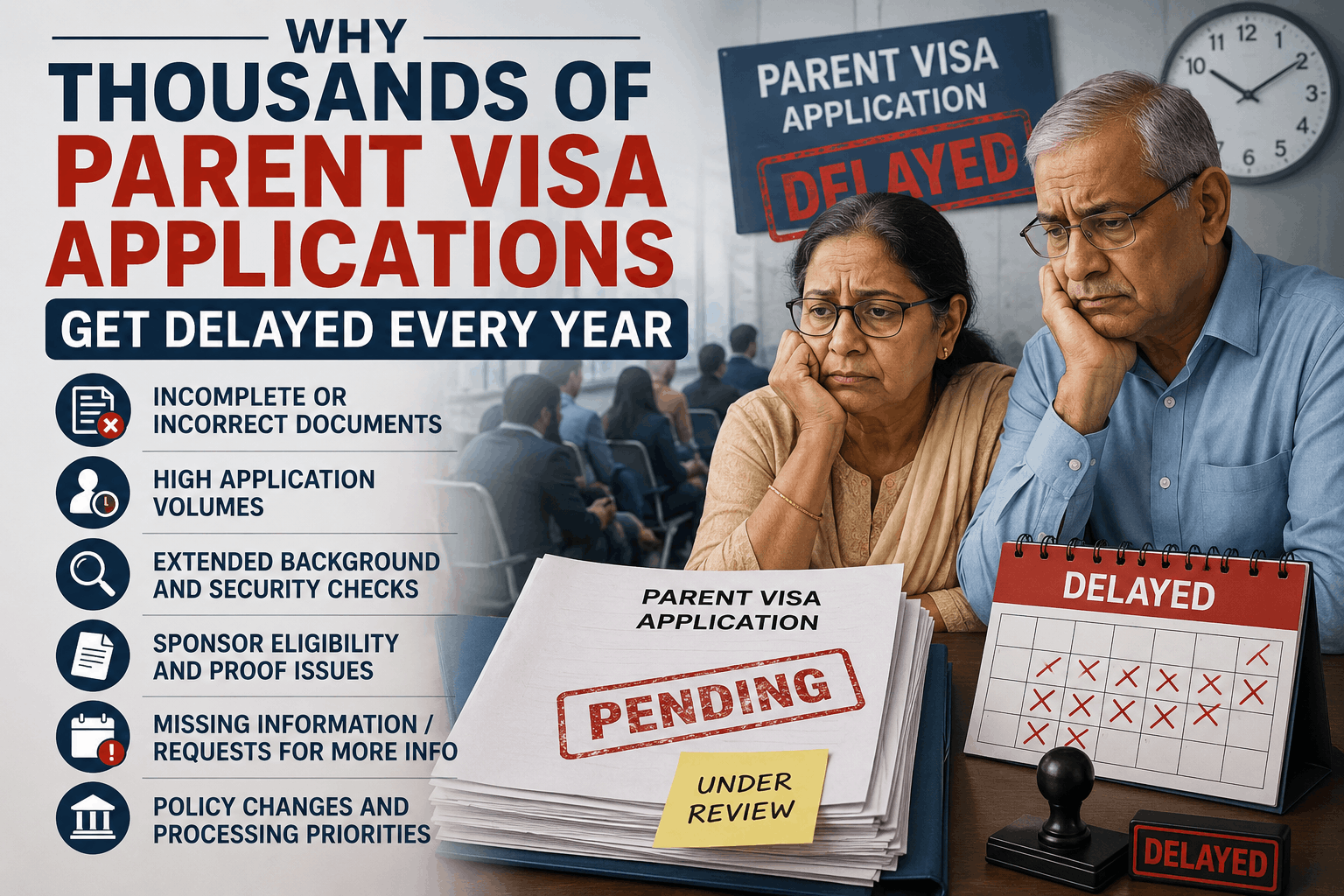
Every year, thousands of families across the world dream of reuniting with their parents in Australia. Whether it’s for a permanent move or temporary stay, the parent visa application Australia process often turns into a long, frustrating wait. Many applications face significant delays, leaving sponsors anxious and parents uncertain about their future. If you’re navigating an Australian parent visa, understanding the reasons behind these delays can help you avoid common pitfalls and make informed decisions.
The Reality of Parent Visa Processing Time in Australia
Parent visa processing time varies dramatically depending on the visa subclass. Non-contributory options like the Parent Visa (subclass 103) can stretch up to 30+ years due to massive backlogs and limited annual quotas. Contributory parent visas (like subclass 143) currently face waits of 12–15 years or more for new applicants. Even temporary pathways aren’t immune to scrutiny.
The Australian government caps parent visas at around 8,500 places per year, while demand far exceeds this. High application volumes create a queue system where applications are assessed in lodgement order. This structural bottleneck is the biggest single reason thousands of parent visa applications sit idle for years.
Aged parent visa Australia options (such as subclass 804) for those old enough to receive the age pension follow similar patterns, especially if onshore. Families often underestimate how these caps and queues compound over time, turning what seems like a straightforward family reunion into a decade-long ordeal.
Top Reasons Why Parent Visa Applications Get Delayed
- High Demand and Capping/Queuing System The Department of Home Affairs processes applications in stages: initial assessment, queuing, and final decision when a place becomes available. Even complete applications can wait years simply because the annual migration program limit has been reached. Backlogs have grown from around 140,000 to over 150,000 applications in recent years.
- Incomplete or Inconsistent Documentation This is one of the most common avoidable delays. Missing financial proofs, inconsistent family details, or incomplete health and character documents trigger requests for further information (RFIs), pushing your application back in the queue. Elderly parents may struggle with gathering old records, leading to gaps that officers must chase.
- Health and Character Requirements Parent visa requirements Australia include rigorous health examinations. If a parent’s condition exceeds the significant cost threshold (around AUD $86,000 over their lifetime), it can lead to refusals or lengthy waivers. Police clearances from multiple countries and security checks also add time, especially for parents with complex travel histories.
- Sponsor Eligibility and Assurance of Support Sponsors (usually adult children who are Australian citizens or permanent residents) must meet income thresholds and provide an Assurance of Support. Any issues here—such as incomplete financials or previous sponsorship breaches—delay the entire process.
- Balance of Family Test For many visas, at least half of the parent’s children must live in Australia (or more children in Australia than any other single country). Proving this with accurate records from siblings worldwide takes time and documentation.
- Administrative and External Factors Processing involves coordination with external agencies for checks. Peak periods, staff shortages, or policy changes can further slow things down. Applications with multiple dependents or unique circumstances naturally require more scrutiny.
Understanding Your Options: Contributory vs Sponsored Pathways
The contributory parent visa (subclass 143) requires a substantial second instalment (around AUD $43,600+ per parent) but offers a relatively shorter queue than non-contributory streams. The temporary-to-permanent pathway (173/143) provides some flexibility.
The sponsored parent visa 870 (Sponsored Parent Temporary visa) is a popular faster alternative. It allows stays of 3 or 5 years (up to 10 years total) with quicker parent visa processing time—often 4–8 months. However, it has strict sponsorship rules, application limits, and no direct permanent residency path without further steps. This makes it ideal for families wanting immediate reunion without the massive upfront cost of contributory options.
Parent visa cost Australia varies widely: contributory visas can exceed AUD $48,000–$50,000 total, while standard and temporary options are lower but come with longer waits or limitations. Always factor in health checks, translations, and legal fees.
How to Minimize Delays in Your Parent Visa Application Australia
- Submit a complete, decision-ready application the first time with all supporting evidence organized clearly.
- Use professional translation for non-English documents.
- Prepare health and police checks early.
- Ensure sponsor documents (income, residency proof) are rock-solid.
- Respond promptly to any Department requests.
- Consider the sponsored parent visa 870 if permanent waits feel too long.
Proactive planning and expert guidance dramatically improve your chances of smoother processing.
How Edvise Hub Can Help You Navigate the Maze
At Edvise Hub, we understand the emotional and practical toll of these delays. Our experienced Edvise Hub agents specialize in Australian parent visa applications and have helped hundreds of families successfully reunite.
We provide end-to-end support: assessing your eligibility, preparing comprehensive documentation to avoid common pitfalls, handling sponsorship requirements, and liaising with the Department of Home Affairs. Whether you’re exploring a contributory parent visa, aged parent visa Australia, or the faster sponsored parent visa 870, our team ensures your application is lodged correctly and monitored closely.
Edvise Hub’s personalized approach includes:
- Free initial eligibility assessments
- Document checklists tailored to parent visa requirements Australia
- Guidance on costs and payment structures
- Regular updates on your parent visa processing time
- Strategies to address potential health or character issues
Don’t let delays rob you of precious family time. Many clients who partnered with Edvise Hub early avoided unnecessary RFIs and positioned themselves better in the queue.
Final Thoughts: Plan Ahead and Seek Expert Help
The reasons behind delayed parent visa applications Australia are a mix of systemic caps and individual application quality. While you can’t control government quotas, you can control the strength of your submission. Understanding options like contributory, aged, and sponsored pathways empowers you to choose the best route for your family.
If you’re feeling overwhelmed, remember you’re not alone. Reach out to a trusted partner like Edvise Hub today. Our Edvise Hub agent can review your situation and create a clear action plan to bring your parents closer—faster and with fewer headaches.
Family reunion is worth the effort. Start preparing now, stay informed about current parent visa processing time, and take proactive steps. Your parents’ Australian dream doesn’t have to remain on hold indefinitely.
Ready to take the next step? Contact Edvise Hub for expert guidance on your Australian parent visa journey.

 English
 Arabic
 Spanish
 Portuguese
 Deutsch
 Turkish
 Dutch
Dutch
 Italiano
 Russian
 Romaian
 Portuguese (Brazil)
 Greek
Greek
