


How to Use Product Demonstrations in Roofing Trade Show Booth Design
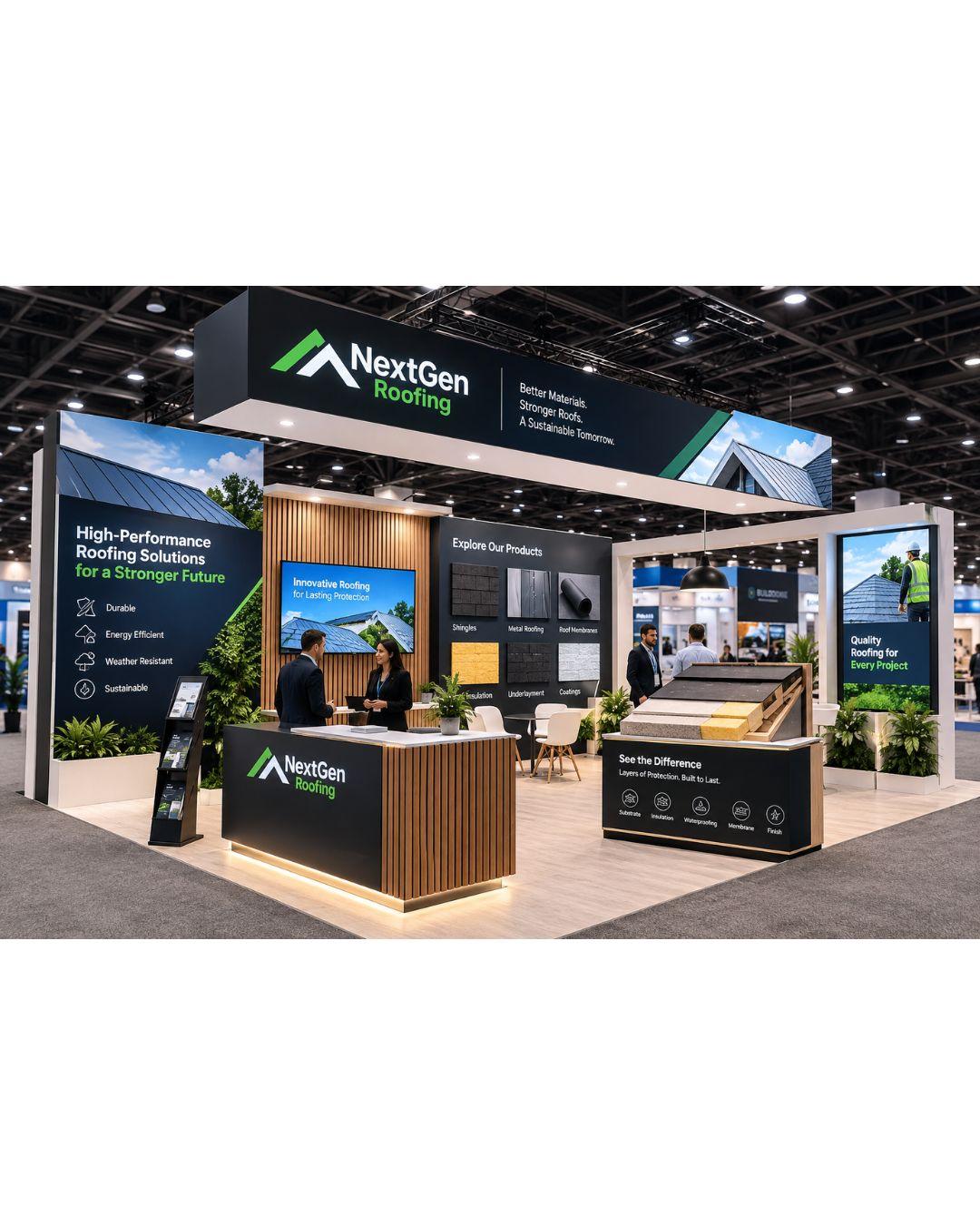
Product demonstrations can turn a passive trade show display into an active learning experience. For roofing companies, demonstrations are especially valuable because many products are easier to understand when visitors can see their materials, installation methods, construction, or performance in action. Effective Roofing industry trade show booth design can incorporate demonstrations strategically to attract relevant visitors, explain complex solutions, encourage conversations, and support lead generation. With the right planning, even a compact demonstration can become one of the most memorable elements of a roofing trade show booth.
Why Product Demonstrations Matter
Static graphics can explain what a product is, but a demonstration can show visitors how it works.
This distinction is important in the roofing industry, where customers may want to understand installation procedures, material characteristics, durability, compatibility, or practical applications before considering a product.
A demonstration gives visitors something concrete to observe. It can also create a natural reason for them to stop at the booth and speak with a representative.
Start With the Demonstration Goal
Before designing the demonstration area, determine what you want visitors to learn.
The objective could be to demonstrate installation speed, explain a product's construction, compare two materials, showcase a new technology, demonstrate waterproofing, or explain a particular application.
A clear goal prevents the demonstration from becoming a simple visual attraction without a useful business purpose.
Choose the Right Product
Not every roofing product needs a live demonstration.
Select products where visual or physical interaction adds value. Products with unique installation processes, construction details, textures, components, or performance features are often strong candidates.
A featured product should also align with the audience attending the trade show.
Demonstrate a Real Problem and Solution
The strongest demonstrations often begin with a problem that roofing professionals recognize.
For example, the demonstration might show how a particular solution addresses installation complexity, moisture concerns, material handling, durability requirements, or project efficiency.
Once visitors understand the problem, the product's value becomes easier to communicate.
Keep the Demonstration Easy to Understand
Trade show visitors are often moving quickly between booths.
A demonstration should therefore communicate its main point quickly.
Break the process into simple steps. Use clear labels and short explanations. Avoid unnecessary technical detail during the initial demonstration.
If a visitor wants deeper information, booth staff can provide technical specifications afterward.
Make Demonstrations Visible From the Aisle
A demonstration cannot attract visitors if nobody can see it.
Position the demonstration where passing attendees can observe at least part of the activity.
Raised displays, open layouts, visible product samples, and appropriate lighting can improve visibility.
A visitor who notices something interesting from the aisle may naturally move closer to investigate.
Create a Dedicated Demonstration Zone
If space allows, create a specific area for demonstrations.
This gives the booth a clear structure and prevents active demonstrations from interfering with other visitor activities.
The area should provide enough room for staff to operate the product while allowing attendees to observe comfortably.
Use Tabletop Demonstrations
Small booths can still benefit from product demonstrations.
Tabletop displays can show roofing materials, connection systems, fastening methods, product layers, installation details, or material comparisons.
A compact demonstration can be repeated throughout the day and requires less space than a large installation.
Show Product Layers and Construction
Roofing systems can involve multiple layers and components.
A cutaway or cross-sectional display can help visitors understand how these elements work together.
This approach is useful when the product's value depends on something that cannot easily be seen in the finished installation.
Use labels to identify each component and explain its role.
Demonstrate Installation Steps
Installation demonstrations can be highly useful for contractors and other technical visitors.
Show the process in a logical sequence rather than trying to demonstrate everything at once.
Staff can explain preparation, positioning, connection, finishing, and other relevant steps.
The demonstration should focus on the aspects that differentiate your product or make the installation process valuable to the customer.
Demonstrate Material Differences
Comparisons can help visitors understand product choices.
For example, two roofing materials can be displayed side by side with information about their applications, features, and practical differences.
A physical comparison is often more memorable than a paragraph describing the same differences.
Use Video When Live Demonstration Is Difficult
Some products or processes may be impractical to demonstrate live.
Large installations, long-term performance, manufacturing processes, or completed projects can be shown through video instead.
Short videos can demonstrate installation techniques, project applications, testing procedures, or product performance.
Video can also complement a physical product sample.
Combine Physical and Digital Demonstrations
The most engaging booth experiences can combine real products with digital information.
For example, a visitor might examine a physical roofing material and then use a touchscreen to explore technical specifications, applications, installation videos, and project examples.
This combination allows the physical product to create interest while digital content provides additional depth.
Encourage Visitor Participation
A demonstration becomes more engaging when visitors can participate.
Where appropriate and safe, allow attendees to handle samples, compare materials, operate a product selector, or try a simple installation step.
Participation can make the experience more memorable and provide staff with an opportunity to understand the visitor's needs.
Make Safety a Priority
Safety should always be considered when demonstrating roofing products, tools, materials, or installation techniques.
Avoid creating hazards for staff or visitors. Any equipment requiring specialized operation should be handled by trained personnel.
The demonstration should be designed around the event venue's rules and the company's safety standards.
Use Staff to Explain the Demonstration
Technology and physical displays can attract attention, but knowledgeable staff bring the demonstration to life.
A representative should explain what visitors are seeing, answer questions, and connect the demonstration to real-world applications.
The conversation should be interactive rather than a memorized speech.
Ask Questions During the Demonstration
Good demonstrations can become discovery tools.
Staff can ask visitors questions such as what type of projects they work on, which installation challenges they experience, what materials they currently use, or what performance characteristics matter most.
These questions can help determine whether the visitor is a relevant prospect.
Adapt Demonstrations for Different Audiences
A contractor may care about installation efficiency, while an architect may want information about specifications and applications.
The same demonstration can be explained differently depending on the visitor.
Train staff to identify the visitor's role and adapt the conversation accordingly.
This creates a more personalized experience.
Schedule Demonstration Times
If the demonstration is more extensive, establish a schedule.
Display the times clearly so visitors know when they can watch the full presentation.
Scheduled demonstrations can create anticipation and encourage groups of visitors to gather at specific times.
However, shorter informal demonstrations should also be available between scheduled sessions.
Use Demonstrations to Highlight Innovation
A new roofing technology may be difficult to communicate through conventional signage.
A live demonstration can show what makes the innovation different.
Whether the product introduces a new material, installation technique, energy-related benefit, waterproofing approach, or digital feature, showing it in action can make the innovation easier to understand.
Create a Story Around the Product
A demonstration should have a beginning, middle, and conclusion.
Start by introducing the customer challenge. Then show the product or process. Finally, explain the resulting benefit.
This structure makes the demonstration easier to follow and gives visitors a reason to remember the product after leaving the booth.
Keep the Demonstration Consistent
If multiple staff members conduct demonstrations, the key information should remain consistent.
Create a simple demonstration guide covering the main talking points, important product benefits, safety considerations, common questions, and lead-capture process.
This ensures visitors receive a reliable message throughout the event.
Avoid Overloading Visitors With Technical Details
Technical visitors may appreciate detailed information, but the initial demonstration should remain accessible.
Use the demonstration to establish the main concept. Then offer deeper documentation for visitors who want additional information.
Digital catalogs, technical sheets, specification documents, and product experts can provide the next level of detail.
Add Supporting Graphics
Simple graphics can reinforce what visitors are seeing.
Labels, diagrams, arrows, product benefits, and short explanations can make the demonstration easier to understand.
Avoid covering the demonstration area with too much text.
The product itself should remain the primary focus.
Use Lighting to Highlight the Demonstration
Lighting can help guide attention toward an important product or demonstration.
Focused lighting can highlight material textures, product components, or the area where the demonstration takes place.
This is particularly useful in busy exhibition halls where many booths are competing for visual attention.
Make the Demonstration Photogenic
A well-designed demonstration can also create opportunities for visitors to take photographs or share the experience online.
Use clean presentation, clear branding, and visually interesting product arrangements.
However, the primary goal should remain visitor education and engagement rather than social media activity alone.
Connect Demonstrations With Lead Capture
A demonstration can be a powerful lead-generation opportunity.
After the demonstration, staff can invite interested visitors to receive technical information, request samples, schedule a consultation, or discuss an upcoming project.
The transition should feel natural.
If a visitor has shown genuine interest, the next step can be directly connected to what they just experienced.
Provide Takeaway Resources
Visitors may want to review the information later.
Offer relevant digital or printed resources based on the demonstration they viewed.
A QR code can provide access to installation guides, technical specifications, product videos, catalogs, or case studies.
Personalized resources are more useful than generic promotional material.
Measure Demonstration Performance
Track how many people attend demonstrations and how many become qualified leads.
Other useful metrics may include product inquiries, sample requests, technical consultations, meetings scheduled, QR scans, and follow-up requests.
This information can help determine whether the demonstration is achieving its intended purpose.
Improve Based on Visitor Questions
The questions visitors ask can reveal what information is missing from the demonstration.
If many attendees ask the same question, consider adding that information to the presentation or supporting graphics.
If visitors consistently struggle with a particular concept, simplify the explanation.
Every trade show provides an opportunity to refine the experience.
Avoid Common Demonstration Mistakes
A demonstration can lose effectiveness when it is too long, difficult to see, overly technical, poorly rehearsed, or disconnected from the visitor's needs.
Avoid demonstrations that require complicated setup or frequent technical troubleshooting.
Keep the process reliable, repeatable, and focused on one clear message.
Consider Space and Logistics
Demonstrations require more than physical space.
Consider power requirements, equipment transportation, product storage, cleaning, staff access, venue regulations, and installation time.
These details should be included during the booth planning stage.
Work With the Right Booth Builder
A professional booth partner can help integrate demonstration areas into the overall exhibit.
The design should account for visitor sightlines, staff movement, product safety, lighting, storage, technology, and seating.
An experienced partner can also help ensure the demonstration area remains visually consistent with the company's brand.
Make Demonstrations Part of the Overall Booth Strategy
A demonstration should not feel like an isolated activity.
It should connect with the booth's graphics, product displays, staff conversations, digital content, and lead-capture process.
For example, the booth graphic can introduce the customer problem, the demonstration can show the solution, and the digital screen can provide supporting technical information.
This creates a connected visitor journey.
Conclusion
Product demonstrations can make roofing trade show booths more engaging, informative, and memorable. By choosing the right products, focusing on practical customer problems, keeping demonstrations clear, encouraging participation, combining physical and digital experiences, and connecting demonstrations with lead generation, exhibitors can create stronger visitor interactions. Thoughtful Roofing industry trade show booth design can turn a simple product display into an interactive experience that helps roofing brands explain their solutions, build credibility, qualify prospects, and create valuable opportunities beyond the trade show floor.

 English
 Arabic
 French
 Spanish
 Portuguese
 Deutsch
 Turkish
 Dutch
Dutch
 Italiano
 Russian
 Romaian
 Greek
Greek
