


Data centers and artificial intelligence: why energy bills are skyrocketing
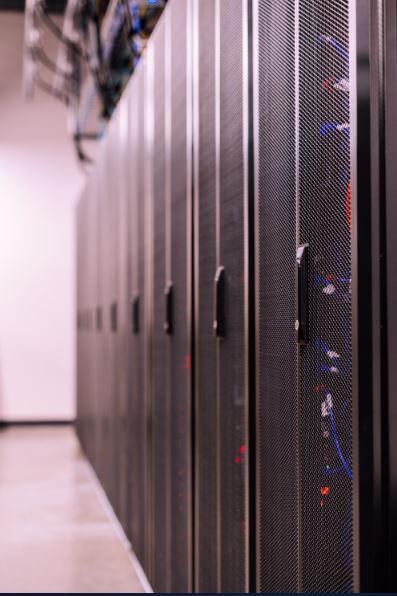
Artificial intelligence has a cost that's rarely seen on a bill. Every request sent to a chatbot, every image generated, every trained model consumes electricity, somewhere in a data center. And that somewhere is putting an increasingly heavy strain on the global power grid.
Numbers that are climbing rapidly
According to the International Energy Agency (IEA), data centers worldwide (including AI, cloud and cryptocurrencies) consumed approximately 460 TWh in 2022. This figure has already increased by 12% per year between 2019 and 2024.
Projections for 2026 range from 620 to 1,050 TWh depending on the scenario. The Energy Institute, in its Statistical Review of World Energy 2026, even puts forward a higher figure of 787.8 TWh for 2025, an increase of almost 20% year-on-year (the measurement scope differs from that of the IEA, hence the difference).
In all cases, the order of magnitude is the same: consumption comparable to that of a country like Japan, and a trajectory that has been accelerating since 2020, driven by generative AI.
Belgium, a special case in Europe
Belgium is not simply a spectator of this trend. Belgian data centers consumed 3.2 TWh of electricity in 2024, representing approximately 4% of the national electricity consumption. This is twice the European average, which is around 2%.
According to a study by the Boston Consulting Group, this consumption could reach 15.5 TWh by 2035, and even exceed 10% of Belgian electricity consumption in some scenarios. Google, Microsoft, and other companies continue to invest in sites in Belgium (Saint-Ghislain, Farciennes, Feluy, Brussels), which increases the pressure on the grid managed by Elia.
This concentration is also worrying network operators. Elia has started publishing capacity maps and is working on a 2028-2038 federal plan that will have to explicitly address the issue of data centers.
Why AI consumes so much
Two distinct phases explain this consumption.
Training the models requires tens of millions of hours of GPU computing. Training GPT-3 is estimated at approximately 1,287 MWh. For more recent models like GPT-4, independent estimates suggest several GWh, an order of magnitude higher.
Inference , meaning each response generated daily, also has a significant impact on a large scale. A text-based conversational query consumes between 1 and 3 Wh, compared to approximately 0.3 Wh for a typical Google search. Multiplied by billions of queries per day, the difference becomes substantial.
In addition to this, there is cooling. Servers heat up, and air conditioning or liquid cooling systems themselves consume electricity (and often water), without directly participating in the calculation.
A problem that goes beyond technology
The rise of agentic AI, systems capable of autonomously chaining together multiple actions, is further accentuating this trend. Data center consumption dedicated to AI increased by 50% in 2025 and could triple by 2030, according to some industry analyses.
In the United States, the IEA estimates that data centers will account for about half of the growth in electricity demand by 2030. In Ireland, they already consume more than 20% of the available electricity in some areas, exceeding urban residential consumption.
This observation is prompting several countries to review their priorities. In some cases, it is even reviving the use of fossil fuels to meet demand, contrary to climate objectives.
What this changes for households
This increase in electricity demand inevitably impacts prices. The higher the industrial demand, the greater the pressure on the grid and on electricity prices, including for households.
In this context, comparing energy offers remains one of the only concrete ways households can limit the impact on their own bills. Tools like https://energiegidsbelgie.be/ allow users to compare available suppliers in Belgium based on their city.
Towards greater transparency
The European Union is working on transparency standards for data centers, with indicators on energy consumption, water use, and the proportion of clean energy used. The EED directive already mandates energy reporting for large data centers.
These measures will not slow the growth of AI. But they should at least allow us to better understand, with supporting data, the true cost of each request sent to a model

 English
 Arabic
 French
 Spanish
 Portuguese
 Deutsch
 Dutch
Dutch
 Italiano
 Russian
 Romaian
 Portuguese (Brazil)
 Greek
Greek
