


How Can Pelvic Floor Biofeedback Help Improve Exercise Technique?
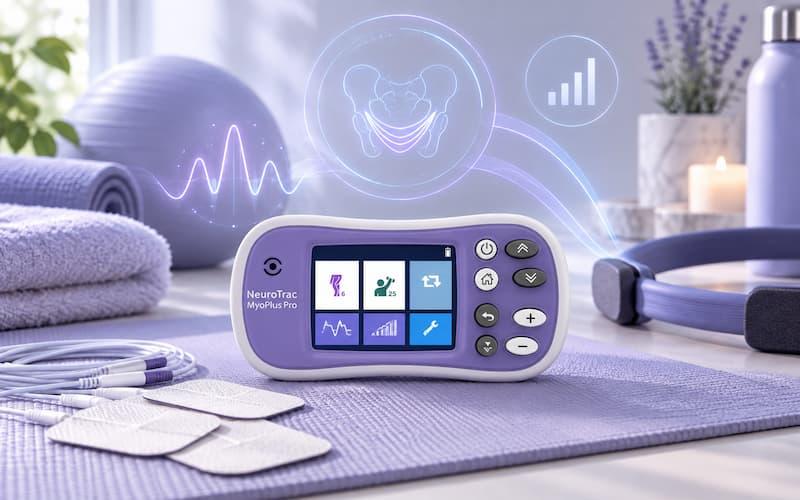
Effective pelvic floor rehabilitation depends not only on performing exercises regularly but also on performing them with appropriate muscle control. Pelvic floor biofeedback can help make muscle activity more visible to patients and clinicians, providing useful information about how the muscles respond during an exercise session. This can be particularly valuable when muscle contractions are difficult to identify or coordinate.
For physiotherapists and pelvic health professionals, feedback can provide another way to assess muscle activity and support more informed exercise instruction. Rather than relying entirely on verbal descriptions of contraction and relaxation, clinicians can use measurable feedback to help patients understand their muscle performance.
When incorporated into a structured rehabilitation programme, biofeedback technology may support better awareness, controlled movement, and gradual muscle re-education. Understanding how this approach works can help professionals use it appropriately alongside exercise-based rehabilitation.
Understanding Pelvic Floor Biofeedback
Pelvic floor biofeedback is a rehabilitation approach that provides information about pelvic floor muscle activity during an exercise or assessment. One commonly used method is electromyography (EMG) biofeedback, which detects electrical activity associated with muscle contraction and presents that information in a visual or other easily understandable format.
The purpose is not simply to show whether a muscle is active. Feedback can help patients recognise the difference between contracting, relaxing, and maintaining controlled muscle activity. This awareness can be particularly useful when a person has difficulty identifying the correct muscles during pelvic floor exercises.
For clinicians, feedback can also provide an additional source of information when assessing exercise performance. It can complement clinical observation, patient feedback, and established rehabilitation protocols.
How Does Pelvic Floor Biofeedback Work?
The process generally involves several stages:
-
Muscle activity is detected: Appropriate EMG electrodes and equipment detect electrical activity associated with the pelvic floor muscles.
-
Activity is displayed: The device converts the detected signal into feedback that the patient and clinician can interpret.
-
Exercise is performed: The patient attempts a prescribed contraction, relaxation, or exercise pattern.
-
Feedback supports awareness: The displayed response can help the patient understand whether the intended muscle activity is occurring.
-
Technique can be adjusted: The clinician can provide guidance based on observed muscle activity and the patient's ability to perform the exercise.
This approach makes the exercise process more interactive. Instead of relying solely on sensation, patients can receive an additional indication of what their muscles are doing.
EMG biofeedback is especially relevant when the rehabilitation objective involves muscle awareness and neuromuscular re-education. In suitable clinical applications, EMG-triggered stimulation (ETS) may also be considered as part of a broader rehabilitation strategy, although its use should be determined according to individual treatment requirements.
Key Benefits and Clinical Applications
Improving Muscle Awareness
One of the main challenges in pelvic floor rehabilitation is identifying the correct muscles. Feedback can give patients a clearer indication of muscle activity, helping them understand what a successful contraction or relaxation response looks like.
This can make Pelvic floor exercise technique easier to understand, particularly during the early stages of rehabilitation.
Supporting Controlled Contractions
Pelvic floor exercises are not simply about producing a strong contraction. Appropriate control includes knowing when to contract, how long to maintain activity, and when to relax.
Biofeedback can provide information during these different stages, allowing clinicians to guide patients toward more controlled exercise patterns.
Helping Identify Unwanted Muscle Activity
Exercise technique can sometimes be affected by excessive activity in surrounding muscles or difficulty relaxing after a contraction. Feedback may help clinicians identify patterns that warrant closer observation during rehabilitation.
This can support more precise exercise instruction rather than encouraging patients to simply increase effort.
Supporting Neuromuscular Re-Education
Neuromuscular re-education involves helping patients develop better awareness and control of muscle activity. EMG biofeedback can fit naturally into this approach by connecting an attempted movement with measurable feedback.
The information can be used alongside appropriately selected exercises rather than replacing active rehabilitation.
Making Exercise More Interactive
Traditional exercise instructions can sometimes be difficult for patients to interpret. A visual feedback display can make the relationship between an attempted contraction and the resulting muscle response easier to understand.
This interactive element may also help clinicians explain progress and exercise technique more clearly.
Important Features and Factors to Consider
The usefulness of a biofeedback system depends on selecting technology that matches the clinical application. Important considerations may include:
-
EMG functionality: The system should provide appropriate muscle activity feedback for the intended assessment or rehabilitation application.
-
Clear feedback: Information should be understandable enough for both clinicians and patients to use during exercises.
-
Adjustable settings: Different patients may require different sensitivity or display options.
-
Electrode compatibility: Appropriate electrodes and accessories are important for obtaining useful signals.
-
Clinical monitoring: The system should fit within the clinician's assessment and rehabilitation workflow.
-
Exercise integration: Biofeedback should complement prescribed pelvic floor exercises rather than distract from proper technique.
-
Patient comfort: Equipment and electrode application should be considered as part of the overall rehabilitation experience.
The clinician should also consider whether the equipment is appropriate for the patient's specific rehabilitation objectives and whether professional training is required for correct use.
How Can Healthcare Professionals Use Pelvic Floor Biofeedback in Practice?
Physiotherapists and pelvic health specialists can incorporate biofeedback into different stages of rehabilitation. During an initial assessment, EMG information may provide additional insight into muscle activation and relaxation patterns.
During exercise sessions, clinicians can use feedback to demonstrate how different contraction strategies affect muscle activity. For example, a therapist may ask a patient to perform a controlled contraction followed by relaxation while observing the response.
The approach can also support progressive rehabilitation. As the patient becomes more familiar with the exercises, feedback may be used to reinforce appropriate technique and encourage consistent practice.
In hospitals, specialist clinics, and rehabilitation centres, professional biofeedback equipment can form part of a broader assessment and treatment process. Where supervised home rehabilitation is appropriate, clinicians can provide clear instructions on how exercises and any prescribed equipment should be used.
The goal should remain effective, controlled rehabilitation rather than simply producing a higher feedback reading.
Choosing the Right Solution
Selecting suitable equipment should begin with the rehabilitation objective rather than the device's feature list alone.
Professionals may consider:
-
The patient's exercise needs – Determine whether the primary requirement is muscle awareness, contraction control, relaxation, or broader neuromuscular re-education.
-
The clinical environment – A system intended for a specialist clinic may have different requirements from equipment used during supervised home rehabilitation.
-
Feedback requirements – Consider how information will be displayed and whether it is easy for the patient to understand.
-
Stimulation capabilities – Where clinically appropriate, professionals may consider whether EMG biofeedback should be combined with stimulation or ETS functionality.
-
Monitoring options – Recording or reviewing therapy information may be useful in structured rehabilitation programmes.
-
Ease of use – Equipment should fit naturally into clinical workflows without unnecessarily complicating sessions.
The most appropriate solution will depend on the individual patient, professional assessment, rehabilitation goals, and clinical protocol.
Why Professional Rehabilitation Devices Matter
Professional rehabilitation devices can provide structured tools for assessing and supporting muscle activity. In pelvic floor rehabilitation, this can be particularly useful when clinicians need more information than patient-reported sensation alone can provide.
Verity Medical's NeuroTrac range includes technologies designed for professional rehabilitation applications, including EMG biofeedback and related neuromuscular rehabilitation functions. Devices such as the NeuroTrac MyoPlus range and NeuroTrac Simplex EMG can be relevant where clinicians require biofeedback-based approaches for muscle assessment and re-education.
Some NeuroTrac systems also incorporate stimulation and EMG-triggered stimulation capabilities, allowing appropriately selected rehabilitation programmes to combine active exercise with technology-assisted feedback. NeuroTrac PC Software can further support professional monitoring and review where compatible equipment and clinical workflows require it.
These technologies should be viewed as tools within rehabilitation rather than standalone solutions. Their value comes from how appropriately they are selected and incorporated into a clinician-led programme.
Practical Considerations for Effective Therapy
Good technology does not automatically produce good exercise technique. How the equipment is used is equally important.
Professionals should consider the following:
-
Correct electrode application: Appropriate placement is essential when using EMG-based feedback.
-
Clear exercise instructions: Patients should understand which muscles they are being asked to activate and when to relax.
-
Appropriate settings: Feedback parameters should be selected according to the device, patient, and clinical objective.
-
Patient comfort: Sessions should remain comfortable and manageable.
-
Consistent technique: Patients should be encouraged to focus on controlled movement rather than simply achieving a larger feedback response.
-
Progress monitoring: Changes in performance should be considered alongside clinical observations and patient-reported experience.
-
Professional guidance: Equipment should be used according to appropriate instructions, clinical protocols, and professional advice.
A structured approach can make Pelvic floor exercise technique more consistent and easier to evaluate over time.
FAQs
What is pelvic floor biofeedback?
Pelvic floor biofeedback uses technology to provide information about pelvic floor muscle activity during exercises. EMG-based systems can detect electrical activity from muscles and display the information in a visual format. This may help patients understand contraction and relaxation while giving clinicians additional information to support exercise instruction and neuromuscular re-education.
How can biofeedback improve pelvic floor exercise technique?
Biofeedback can make muscle activity easier to understand by providing information during an exercise. Instead of relying only on how a contraction feels, patients can observe feedback associated with their muscle activity. This can help clinicians explain appropriate contraction, relaxation, and control while the patient performs the exercise.
Who may benefit from pelvic floor biofeedback?
Biofeedback may be considered for patients who need greater awareness of pelvic floor muscle activity or who have difficulty understanding exercise technique. Suitability depends on the individual's condition, rehabilitation goals, and clinical assessment. A qualified healthcare professional can determine whether biofeedback is appropriate within a particular rehabilitation programme.
Can EMG biofeedback be combined with electrical stimulation?
In suitable clinical applications, EMG biofeedback may be combined with electrical stimulation or EMG-triggered stimulation. These approaches have different functions and should not be treated as interchangeable. The appropriate technology and settings depend on the patient's rehabilitation needs and should be selected according to professional guidance.
Can pelvic floor biofeedback be used during home rehabilitation?
Some rehabilitation programmes may incorporate technology-assisted exercises at home under appropriate professional guidance. Patients should receive clear instructions about equipment use, electrode application, exercise technique, and session requirements. Home use should follow the recommendations provided by the relevant healthcare professional and equipment instructions.
What features should professionals look for in a biofeedback device?
Professionals may consider EMG functionality, feedback clarity, adjustable settings, electrode compatibility, ease of use, monitoring capabilities, and compatibility with their rehabilitation workflow. If stimulation or ETS is clinically relevant, those capabilities may also be evaluated. The device should ultimately support the intended rehabilitation objective rather than simply offering the greatest number of features.
Conclusion
Pelvic floor rehabilitation requires more than simply performing repeated contractions. Patients need to understand how to activate and relax the appropriate muscles, while clinicians need practical ways to observe and guide exercise performance. Biofeedback can provide an additional layer of information that supports this process.
By combining appropriate EMG technology with structured exercises, professional supervision, and consistent monitoring, clinicians can make Pelvic floor exercise technique easier to understand and evaluate. Professional rehabilitation systems such as suitable NeuroTrac biofeedback devices can support this structured approach when selected according to clinical requirements.
The key is to use technology as part of a broader rehabilitation strategy. Appropriate assessment, clear instruction, patient comfort, and professional guidance remain essential for effective and responsible pelvic floor rehabilitation.

 English
 French
 Spanish
 Portuguese
 Deutsch
 Turkish
 Dutch
Dutch
 Italiano
 Russian
 Romaian
 Portuguese (Brazil)
 Greek
Greek
