


How Digital Substations Are Changing Power Grid Operations
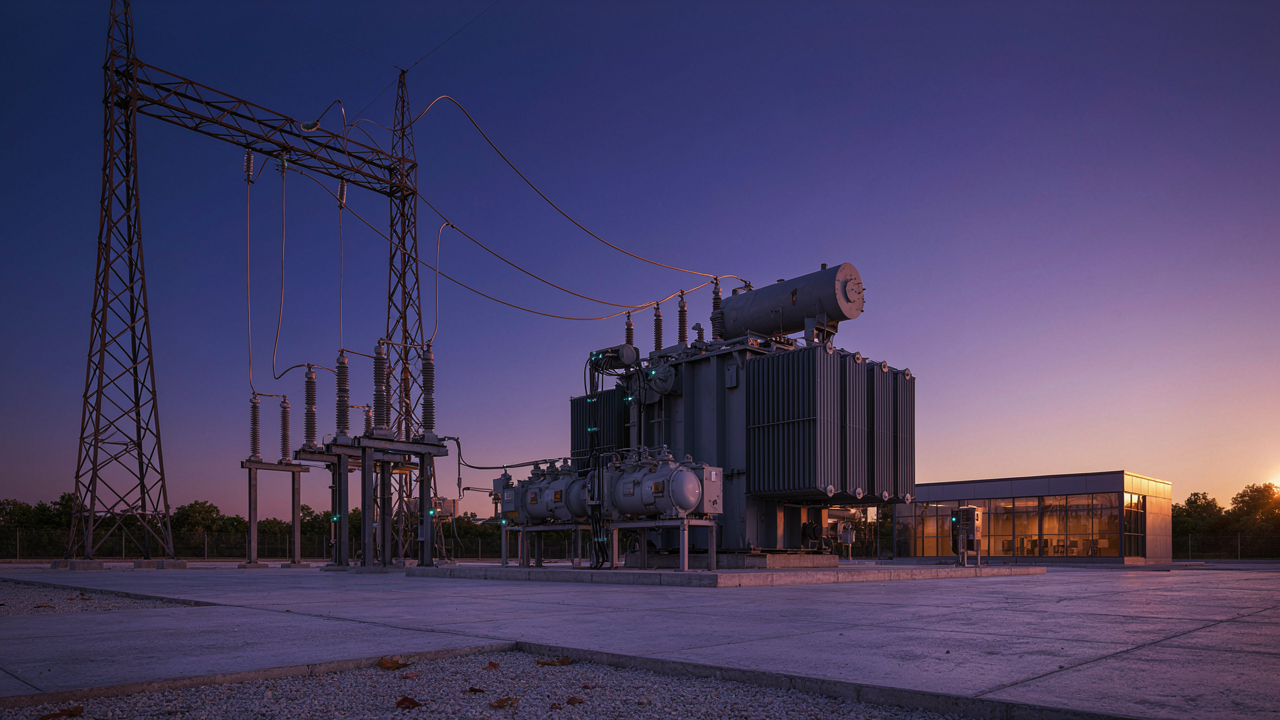
The power grid is becoming more connected, automated, and data-driven. As utilities and energy developers manage growing electricity demand, renewable generation, and increasingly complex networks, traditional substations are evolving into intelligent digital facilities. Digital substation technology is helping operators monitor equipment, exchange information, automate processes, and respond to system conditions more efficiently.
Unlike conventional substations that depend heavily on hardwired connections and manual monitoring, digital substations use intelligent electronic devices, communication networks, sensors, and advanced control systems to create a more integrated operating environment. The result is a power infrastructure that can provide better visibility, faster decision-making, and improved reliability.
1. What Is Digital Substation Technology?
Digital substation technology replaces many conventional copper-based control and measurement connections with intelligent digital communication. Equipment such as circuit breakers, transformers, protection relays, current transformers, and voltage transformers can exchange information through standardized communication networks.
At the heart of a modern digital substation are Intelligent Electronic Devices (IEDs). These devices collect electrical measurements, monitor equipment conditions, execute protection functions, and communicate information to other systems.
Communication standards such as IEC 61850 also play an important role by allowing different devices and systems to communicate using structured digital messages. This creates a more coordinated environment where protection, automation, control, and monitoring functions can work together.
2. How Substation Automation Systems Improve Operations
One of the biggest advantages of modern substation automation systems is the ability to automate routine and critical operational functions. Instead of relying entirely on operators to collect information and respond manually, automated systems continuously monitor electrical conditions and equipment status.
For example, automation systems can identify abnormal voltage, current, frequency, or equipment conditions and provide immediate information to control centers. Protection systems can also detect faults and initiate appropriate switching actions within very short time periods.
Automation improves more than response speed. It can also reduce human error, simplify operational procedures, and provide operators with a clearer view of what is happening across the substation.
For utilities managing large networks, this visibility can be particularly valuable because operators may need to supervise multiple substations and transmission facilities from centralized control centers.
3. Better Monitoring and Real-Time Grid Visibility
Modern grids require accurate information to operate efficiently. Digital substations provide a continuous stream of data that can help engineers and operators understand the condition of electrical equipment and the wider power network.
Real-time measurements can include voltage, current, power flow, frequency, breaker status, transformer conditions, and protection system activity. Historical information can also be stored and analyzed to identify recurring problems or unusual operating patterns.
This improved visibility supports faster troubleshooting. When an event occurs, engineers can review digital records and sequence-of-events information to determine what happened and when it happened.
Digital monitoring can therefore help utilities move from reactive maintenance toward more informed, condition-based maintenance strategies.
4. Digital Substation Systems Support Grid Reliability
Reliability is one of the primary reasons utilities are investing in digital substation systems. Modern power networks must withstand equipment failures, changing power flows, extreme operating conditions, and the variable output of renewable energy resources.
Digital protection and control systems can detect faults quickly and coordinate protective actions to limit their impact. Faster fault detection can help reduce equipment stress and prevent disturbances from spreading unnecessarily through the network.
Digital systems can also support redundancy and system resilience. Communication networks can be designed with appropriate backup arrangements so that the loss of a single communication path or device does not necessarily compromise critical functions.
For engineers, this means digitalization is not simply about replacing older equipment. It is about designing a more intelligent and resilient electrical infrastructure.
5. Integration With Renewable Energy and Smart Grids
The growth of solar, wind, battery storage, and other distributed energy resources is changing how electricity moves through the grid. Power may now flow in different directions and vary more rapidly than in traditional generation models.
Digital substations provide the monitoring and control capabilities needed to manage these changing conditions. Operators can obtain more detailed information about voltage, loading, power flow, and equipment status, helping them make better decisions as generation and demand change.
Digital substations also support broader smart-grid initiatives. Data from substations can be integrated with supervisory control and data acquisition systems, energy management platforms, protection systems, and other utility applications.
This connectivity helps create a more coordinated power network where operational decisions can be based on current system conditions rather than limited or delayed information.
6. The Future of Digital Substation Engineering
As power networks continue to modernize, digital substations will become an increasingly important part of electrical infrastructure. Future systems are likely to combine advanced automation, improved cybersecurity, intelligent sensors, predictive analytics, remote diagnostics, and increasingly sophisticated control technologies.
However, successful digitalization requires careful engineering. Communication architecture, protection coordination, cybersecurity, interoperability, redundancy, data management, and equipment integration all need to be considered during design.
Utilities and project developers also need to consider the complete lifecycle of the substation. A well-designed digital system should not only meet today's operational requirements but also provide flexibility for future expansion and technology upgrades.
For this reason, experienced engineering support is essential when planning or modernizing digital substations. Proper system studies, protection design, communication planning, automation architecture, and equipment specifications can help ensure that digital technologies deliver their expected benefits.
Conclusion
Digital substations are changing power grid operations by bringing together intelligent protection, automation, communication, monitoring, and control. Digital substation technology gives utilities greater visibility into network conditions, while substation automation systems improve operational speed and reduce dependence on manual processes.
At the same time, digital substation systems provide the flexibility needed to support renewable energy integration, smart-grid development, advanced maintenance strategies, and increasingly complex power networks.
The transition toward digital infrastructure is more than a technology upgrade—it is a fundamental shift in how substations are designed, operated, maintained, and integrated into the modern electrical grid. With the right engineering approach, digital substations can help create power networks that are more reliable, responsive, efficient, and prepared for the future.

 English
 Arabic
 French
 Spanish
 Portuguese
 Deutsch
 Turkish
 Italiano
 Russian
 Romaian
 Portuguese (Brazil)
 Greek
Greek
