


Secondary Infertility: Why Getting Pregnant Again Can Be Harder
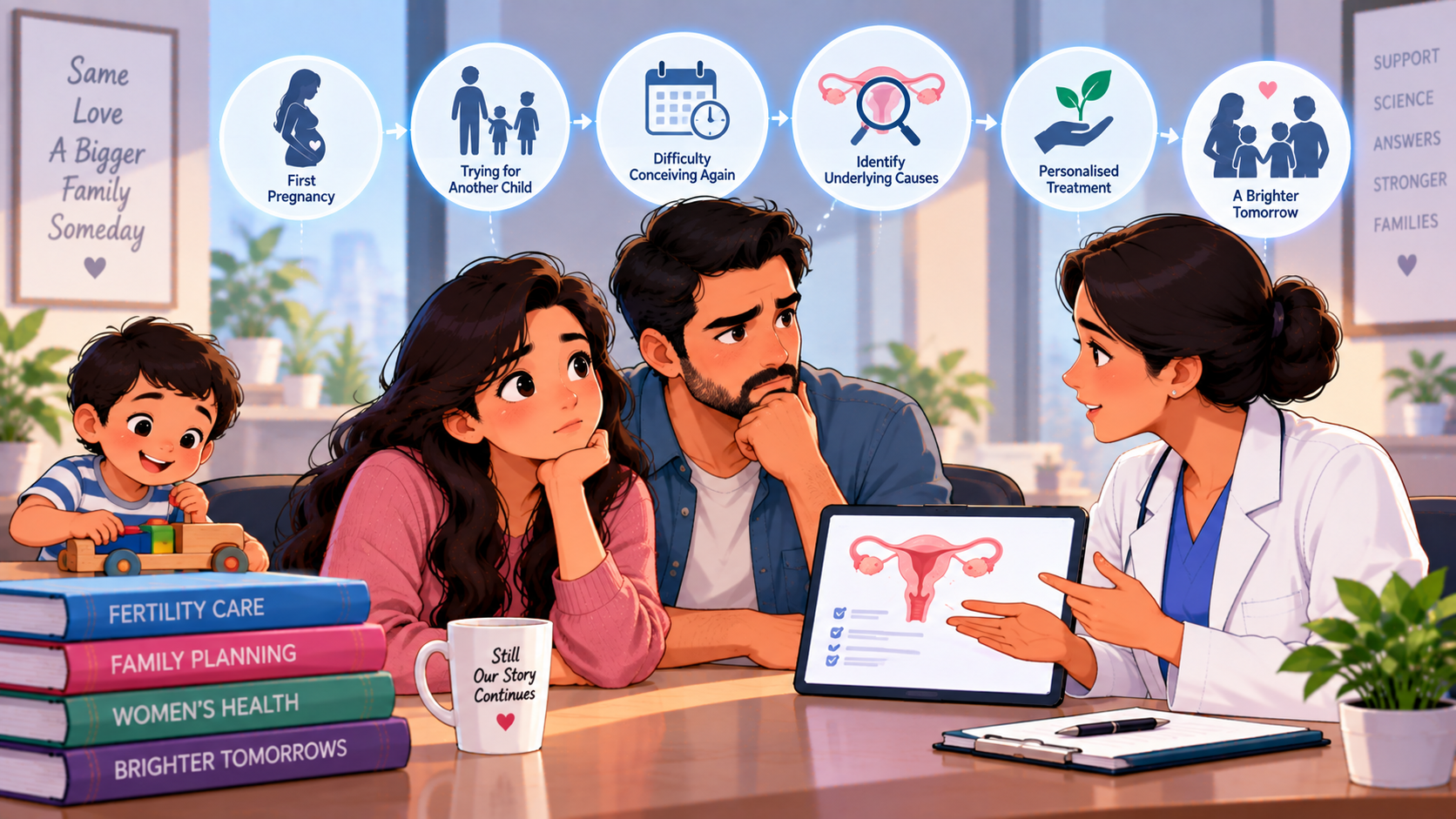
Having one child does not always mean that conceiving again will be easy. Some couples who previously became pregnant without difficulty may later experience problems when trying for another child. This is known as secondary infertility.
Secondary infertility can be emotionally confusing because couples may wonder why conception is difficult when they have already had a successful pregnancy. However, fertility can change over time. Age, reproductive health, sperm quality, hormonal changes, previous pregnancy-related complications, and conditions that develop after the first pregnancy can all affect the ability to conceive again.
Understanding the secondary infertility causes can help couples identify possible problems and seek appropriate care sooner.
What Is Secondary Infertility?
Secondary infertility refers to difficulty conceiving or carrying a pregnancy after having previously achieved a pregnancy.
It can occur after a previous successful birth, miscarriage, or pregnancy. The issue may involve the female partner, male partner, both partners, or sometimes remain unexplained.
Secondary infertility is different from primary infertility, where a person has never achieved a pregnancy.
Importantly, having conceived before does not guarantee that fertility will remain unchanged.
Why Can Getting Pregnant Again Be Difficult?
Fertility is not fixed. Several biological and lifestyle factors can change between the first pregnancy and the time a couple starts trying again.
Some of the most common secondary infertility causes include:
-
Increasing age
-
Changes in ovulation
-
Reduced ovarian reserve
-
Endometriosis
-
Blocked or damaged fallopian tubes
-
Fibroids or other uterine conditions
-
Changes in sperm count or quality
-
Hormonal disorders
-
Weight changes
-
Previous pelvic infections or surgery
-
Complications following a previous pregnancy
-
Lifestyle and environmental factors
Sometimes, more than one factor contributes to the difficulty.
1. Age Can Affect Fertility
Age is one of the most important factors to consider.
A couple may have had their first child several years ago when fertility was higher. When they begin trying again, the female partner may be older, and fertility can naturally decline with age.
Female fertility is closely related to both egg number and egg quality. As age increases, the number of available eggs decreases and the likelihood of chromosomal abnormalities in eggs increases.
Male fertility can also change with age, particularly in relation to sperm quality and other reproductive factors.
This does not mean pregnancy is impossible at an older age. It means that couples may benefit from a fertility evaluation if conception is taking longer than expected.
2. Ovulation Problems May Develop Later
Regular periods do not always guarantee normal ovulation.
Changes in weight, thyroid function, prolactin levels, polycystic ovary syndrome, stress, and other hormonal factors can affect ovulation.
A woman who previously ovulated normally may later develop irregular or absent ovulation.
Doctors may evaluate ovulation through menstrual history, hormone testing, ultrasound monitoring, or other investigations depending on the individual situation.
3. Ovarian Reserve Can Change
Ovarian reserve refers broadly to the remaining supply of eggs in the ovaries.
It can decline with age, although the rate of decline varies between individuals.
Tests such as AMH and antral follicle count may provide information about ovarian reserve. However, these tests do not independently determine whether someone can become pregnant naturally.
A fertility specialist usually considers ovarian reserve alongside age, ovulation, medical history, partner factors, and other fertility findings.
4. Previous Pregnancy or Surgery Can Affect Fertility
Some couples experience changes in reproductive health after their first pregnancy.
Previous pelvic surgery, cesarean delivery, infection, or other procedures may sometimes contribute to adhesions or changes involving reproductive organs.
Tubal problems can also develop independently of the previous pregnancy.
If the fallopian tubes become blocked or damaged, sperm and egg may not be able to meet normally.
This is why tubal evaluation can be an important part of a fertility assessment when clinically appropriate.
5. Endometriosis May Affect Conception
Endometriosis is another possible factor behind difficulty conceiving a second child.
Endometriosis can cause inflammation, pelvic adhesions, ovarian endometriomas, and changes in pelvic anatomy. These factors may interfere with fertility.
Some women may have symptoms such as pelvic pain or painful periods, while others may have few noticeable symptoms.
A previous successful pregnancy does not rule out endometriosis as a factor in later fertility problems.
6. Male Fertility Can Change Too
Secondary infertility is not only a female fertility issue.
Sperm count, motility, morphology, and overall sperm quality can change over time.
Age, certain medical conditions, medications, lifestyle factors, heat exposure, smoking, alcohol use, and other factors may influence male reproductive health.
A semen analysis is commonly used as part of the initial evaluation of male fertility.
Testing both partners is important because fertility problems can involve either partner or both.
7. Hormonal and Medical Conditions
Certain health conditions can interfere with conception.
Examples include:
-
Thyroid disorders
-
Diabetes
-
High prolactin levels
-
PCOS
-
Obesity or significant weight changes
-
Certain autoimmune or reproductive conditions
-
Some medications
Managing an underlying medical condition may sometimes improve reproductive health and overall pregnancy planning.
8. Lifestyle Factors May Also Matter
Lifestyle changes between pregnancies can sometimes influence fertility.
Factors that may affect reproductive health include:
-
Smoking
-
Excessive alcohol consumption
-
Significant weight gain or loss
-
Poor sleep
-
High levels of chronic stress
-
Sedentary lifestyle
-
Poor nutrition
-
Certain environmental exposures
Lifestyle is only one part of fertility, and infertility should not be blamed entirely on personal habits. Medical evaluation remains important when conception is taking longer than expected.
When Should You See a Fertility Specialist?
The appropriate time for an evaluation depends partly on age and medical history.
Generally, couples may consider fertility evaluation after:
-
12 months of regular unprotected intercourse without pregnancy when the female partner is under 35
-
6 months when the female partner is 35 or older
-
Earlier evaluation when the female partner is over 40 or when there are known fertility concerns
Earlier assessment may also be appropriate with irregular periods, suspected endometriosis, previous pelvic surgery, known tubal problems, recurrent pregnancy loss, or known male fertility issues.
The goal is not to immediately start treatment. The first step is understanding what may be affecting conception.
How Is Secondary Infertility Diagnosed?
A fertility evaluation usually looks at both partners.
Female Fertility Evaluation
Depending on the situation, testing may include:
-
Menstrual and ovulation history
-
Hormonal testing
-
Ovarian reserve assessment
-
Pelvic ultrasound
-
Evaluation of the uterus
-
Fallopian tube assessment
-
Review of previous pregnancy and medical history
Not every person needs every test.
Male Fertility Evaluation
The assessment may include:
-
Reproductive history
-
Semen analysis
-
Physical examination when appropriate
-
Hormonal testing in selected cases
-
Additional testing when semen abnormalities or other concerns are identified
A complete evaluation helps doctors avoid focusing on only one possible cause.
Secondary Infertility Treatment
The appropriate secondary infertility treatment depends on the underlying cause, age, fertility history, and results of testing.
Treatment may include:
Ovulation Treatment
If ovulation is irregular or absent, medication may be used to help stimulate ovulation in appropriate patients.
Treatment depends on the underlying diagnosis and should be prescribed and monitored by a fertility specialist.
Treating Underlying Conditions
Conditions such as thyroid disorders, PCOS, endometriosis, or other medical problems may need treatment as part of fertility planning.
Surgery
In selected cases, surgery may be considered for conditions such as certain fibroids, endometriosis, adhesions, or tubal problems.
Surgery is not appropriate for every patient, so the potential benefits and risks should be discussed with a specialist.
Intrauterine Insemination
IUI may be considered for selected couples depending on factors such as ovulation, sperm quality, fallopian tube status, and the overall fertility evaluation.
During IUI, prepared sperm is placed inside the uterus around the time of ovulation.
IVF
IVF may be recommended when other treatments are unlikely to provide sufficient benefit or when factors such as blocked fallopian tubes, significant male-factor infertility, reduced fertility related to age, or previous unsuccessful treatments make IVF a suitable option.
During IVF, eggs are retrieved and fertilized with sperm in a laboratory. An embryo may then be transferred to the uterus.
Secondary Infertility in India
For couples searching for secondary infertility India, treatment options are available through fertility clinics and reproductive medicine specialists across the country.
The cost and treatment approach can vary significantly depending on:
-
Diagnostic tests required
-
Medications
-
IUI or IVF treatment
-
Laboratory procedures
-
Whether ICSI is required
-
Embryo freezing
-
Additional procedures
-
Clinic and city
Rather than choosing treatment based only on cost, couples should understand what is included in the treatment plan and which procedures are medically recommended.
A fertility specialist can help create a treatment plan based on the couple's individual medical history rather than simply treating the symptom of delayed conception.
Does Having a Previous Child Make Infertility Less Serious?
No.
Previous pregnancy can provide useful information about past fertility, but it does not guarantee current fertility.
The reproductive system can change over time. A couple may have a different fertility situation during their second attempt compared with their first.
For this reason, difficulty conceiving a second child deserves the same thoughtful evaluation as other fertility concerns.
What Can Couples Do Before Seeking Treatment?
Before starting fertility treatment, couples can take several practical steps:
-
Track menstrual cycles and ovulation when appropriate.
-
Have regular intercourse during the fertile window.
-
Maintain a healthy lifestyle.
-
Avoid smoking and excessive alcohol.
-
Review medications with a healthcare professional.
-
Manage existing medical conditions.
-
Avoid delaying evaluation when age or medical history suggests earlier assessment.
-
Consider evaluation of both partners rather than assuming the problem is only with the woman.
These steps do not guarantee pregnancy, but they can support informed fertility planning.
Final Takeaway
Secondary infertility can be difficult to understand, especially for couples who previously conceived without problems. However, fertility can change with age, health conditions, reproductive factors, sperm quality, previous surgery, and other circumstances.
The most important secondary infertility causes can often be investigated through a structured evaluation of both partners.
Treatment is not one-size-fits-all. Depending on the cause, secondary infertility treatment may involve lifestyle changes, medication, treatment of an underlying condition, surgery, IUI, IVF, or other reproductive options.
If you are experiencing difficulty conceiving a second child, getting evaluated at the appropriate time can help identify potential causes and provide a clearer path forward.
FAQs
What is secondary infertility?
Secondary infertility means experiencing difficulty becoming pregnant after having previously achieved a pregnancy.
What are the main secondary infertility causes?
Common factors include increasing age, ovulation problems, reduced ovarian reserve, tubal problems, endometriosis, uterine conditions, hormonal disorders, and changes in sperm quality.
Can you have secondary infertility after a normal first pregnancy?
Yes. Fertility can change after a previous pregnancy due to age, medical conditions, reproductive changes, or male-factor factors.
When should I seek help for difficulty conceiving a second child?
The timing depends on age and medical history. Generally, evaluation may be considered after 12 months of trying if the female partner is under 35, or after 6 months if she is 35 or older. Earlier assessment may be appropriate when there are known fertility concerns.
Is secondary infertility treatable?
Many causes can be managed or treated. The appropriate treatment depends on the underlying cause and may include medication, surgery, IUI, IVF, or other fertility treatments.
Is secondary infertility common in India?
Secondary infertility can affect couples in India as well as elsewhere. The causes and treatment options vary from person to person, so individualized evaluation is important.
Medical Disclaimer: This article is intended for general educational purposes only and should not replace consultation with a qualified fertility specialist or other healthcare professional. Fertility treatment decisions should be based on individual medical evaluation.

 English
 Arabic
 French
 Spanish
 Portuguese
 Deutsch
 Turkish
 Dutch
Dutch
 Italiano
 Russian
 Romaian
 Greek
Greek
