


Blockchain and AI for Decentralized Knowledge Licensing in 2026: Building a New Digital Knowledge Economy
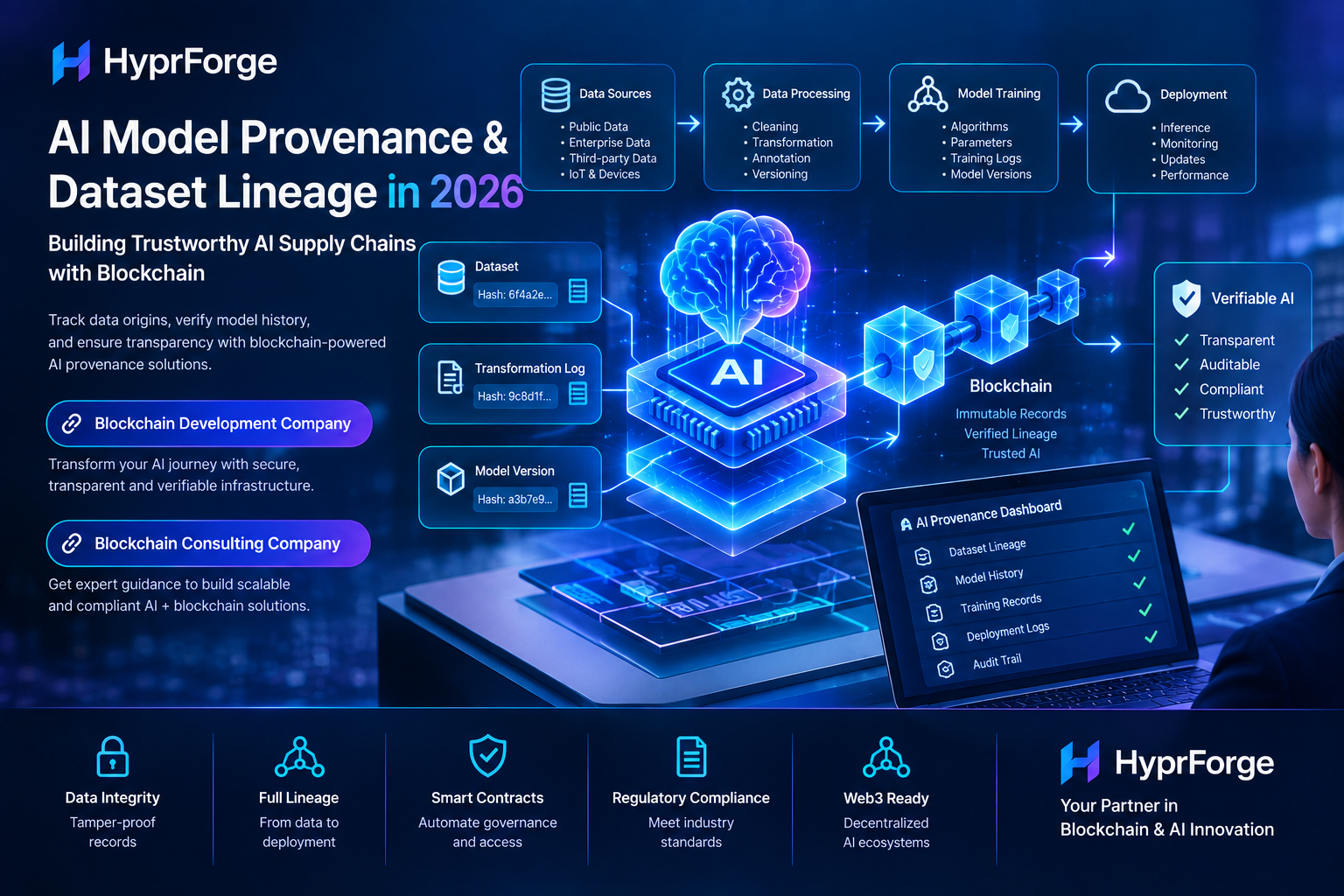
Knowledge is becoming one of the most valuable resources in the AI economy. Businesses, researchers, publishers, creators, consultants, and professionals produce enormous amounts of specialized information every day.
At the same time, artificial intelligence systems increasingly depend on high-quality knowledge to generate useful answers, recommendations, and decisions.
This creates a new challenge: How can knowledge creators control, verify, license, and monetize the information used by AI systems?
Blockchain and AI together can provide a potential foundation for solving this problem.
AI can discover, classify, summarize, and utilize knowledge, while blockchain can provide verifiable ownership references, licensing records, permissions, and transaction histories.
For organizations building these next-generation platforms, working with a specialized Blockchain Development Company can help connect decentralized infrastructure with intelligent AI systems.
The Growing Value of Digital Knowledge
Traditional digital content was generally created for human consumption.
Today, content is increasingly consumed by machines.
AI systems process:
-
Research papers
-
Technical documentation
-
Books
-
Enterprise knowledge
-
Databases
-
Product information
-
Professional expertise
-
Educational resources
-
Creative works
As AI adoption increases, the value of high-quality knowledge is also increasing.
However, conventional content platforms were not designed for an economy where AI systems continuously access, transform, and generate value from knowledge.
A decentralized knowledge economy could introduce more transparent mechanisms for access and licensing.
What Is Decentralized Knowledge Licensing?
Decentralized knowledge licensing is an approach where digital knowledge assets can have programmable access and licensing conditions.
Instead of relying entirely on centralized platforms, a knowledge creator could register a verifiable reference to a dataset, document collection, research resource, or specialized knowledge asset.
Smart contracts could define licensing conditions.
AI applications could then request access according to those conditions.
A simplified model could look like:
Knowledge Asset → Verification → License → AI Access → Usage Record → Compensation
This creates a more structured relationship between knowledge creators and AI systems.
The Role of Blockchain
Blockchain can provide several important functions in this ecosystem.
Provenance
Blockchain can help establish when a knowledge asset was registered and provide a verifiable history of important ownership or licensing events.
Licensing
Smart contracts can represent licensing rules, usage permissions, and payment conditions.
Access Control
Blockchain-based identity and authorization systems can help determine which applications or AI agents are permitted to access particular resources.
Payment Records
Blockchain networks can provide transparent transaction infrastructure for digital licensing payments.
Importantly, the actual knowledge does not necessarily need to be stored on-chain. Sensitive or large files can remain in secure off-chain infrastructure while blockchain stores verification and licensing information.
How AI Enhances Knowledge Licensing
Blockchain provides the trust infrastructure, but AI can make the knowledge economy intelligent.
AI systems can automatically classify knowledge assets based on subject, quality, relevance, and intended use.
They can also help match knowledge buyers with appropriate resources.
For example, an AI research platform could identify that a particular model-development project requires specialized industry data. It could search an authorized knowledge marketplace, compare available datasets, review licensing conditions, and recommend suitable resources.
An AI agent could then initiate the licensing workflow.
AI Agents as Knowledge Buyers
The rise of AI agents creates an especially interesting opportunity.
An AI agent may need access to external knowledge while performing a task.
Instead of requiring a human to manually search for resources and negotiate every license, the agent could operate within predefined spending and authorization limits.
For example:
Find an authorized dataset → Verify its license → Confirm permitted AI usage → Purchase access → Retrieve data → Record transaction
Blockchain can provide verifiable records of these steps.
This could eventually create autonomous knowledge marketplaces where AI agents interact with content providers and service providers.
Creating a Knowledge Marketplace
A decentralized knowledge marketplace could connect:
-
Researchers
-
Publishers
-
Enterprises
-
Developers
-
Data providers
-
AI companies
-
Independent experts
-
Educational organizations
-
Content creators
Each participant could define licensing conditions for their knowledge assets.
Potential licensing models could include:
-
One-time access
-
Subscription access
-
Pay-per-use
-
Time-limited access
-
AI-training licenses
-
Inference-use licenses
-
Commercial-use licenses
-
Research-only licenses
Smart contracts could automate parts of these agreements.
AI Training Data Licensing
AI model development depends heavily on training and evaluation data.
Organizations increasingly need to understand where their data originated and whether its use is properly authorized.
A blockchain-backed licensing system could create records showing that a dataset was made available under a particular set of conditions.
A blockchain technology development company can help design infrastructure where dataset provenance, licensing metadata, and access events are connected to AI development workflows.
This does not eliminate legal or copyright requirements, but it can improve technical traceability.
Knowledge Licensing for Enterprises
Enterprise knowledge represents another major opportunity.
Large companies have valuable internal information distributed across:
-
Documents
-
Databases
-
Technical manuals
-
Customer knowledge
-
Research
-
Internal procedures
-
Product documentation
-
Industry expertise
Organizations may eventually create controlled knowledge marketplaces where specific information can be licensed to partners, AI systems, or external applications.
A blockchain app development company can build the infrastructure needed to connect enterprise knowledge repositories with permission systems, AI services, and blockchain verification.
Web3 and Knowledge Ownership
Web3 infrastructure can make knowledge ownership more programmable.
A Web3 Development Agency can create decentralized platforms where knowledge assets have verifiable digital identities.
A Web3 Development Company can integrate these assets with wallets, decentralized identities, smart contracts, marketplaces, and AI agents.
This can create a new category of digital assets where value comes not only from ownership but also from controlled access to useful information.
Smart Contracts and Royalty Automation
One of the strongest blockchain applications is automated payment distribution.
Suppose a knowledge asset is used by multiple AI applications.
A smart contract could distribute payments according to predefined rules.
For example:
AI platform payment → Smart contract → Knowledge creator + data provider + platform participants
This could reduce the need for manual reconciliation.
A blockchain smart contract development agency can design these royalty and payment mechanisms while implementing appropriate security controls.
Applications Across Industries
Research
Researchers could license specialized datasets, technical knowledge, and scientific resources to AI platforms.
Education
Educational institutions could create controlled knowledge libraries accessible to AI tutors and learning applications.
Healthcare
Organizations could develop permission-controlled knowledge ecosystems for research and specialized applications, with strong privacy protections.
Finance
Financial institutions could license specialized datasets, research resources, and market intelligence under controlled conditions.
Manufacturing
Industrial organizations could monetize specialized technical knowledge, process information, and engineering resources.
Media
Publishers and creators could explore programmable licensing models for AI-based content consumption.
Decentralized Exchanges and Knowledge Markets
The concept can also extend into tokenized knowledge marketplaces.
A Decentralized Exchange Development Company could potentially build infrastructure for exchanging tokenized access rights or digital licenses.
A Decentralized Exchange Software Development Company could integrate automated pricing, settlement, and liquidity mechanisms into decentralized knowledge marketplaces.
A dex development company could also explore specialized markets where access rights rather than traditional cryptocurrencies represent the primary traded asset.
Cryptocurrency Development and Knowledge Economies
Cryptocurrency development can provide payment infrastructure for decentralized knowledge marketplaces.
Tokens could potentially be used for:
-
Licensing payments
-
Creator rewards
-
Access credits
-
Marketplace fees
-
Governance
-
Reputation mechanisms
However, token design should be based on genuine utility rather than speculation.
The underlying platform must provide clear economic value before introducing token-based mechanisms.
Why Blockchain Consulting Is Important
Decentralized knowledge licensing requires careful architecture.
Businesses need to determine what information should remain private, what should be recorded on-chain, how licensing should work, how AI agents receive authorization, and how payments should be managed.
A Blockchain Consulting Company can help organizations evaluate these requirements and develop an appropriate technology strategy.
This can include blockchain architecture, AI integration, smart-contract planning, decentralized identity, data governance, security, and scalability.
Why HyprForge Can Help
HyprForge can help businesses explore blockchain, AI integration, Web3 applications, smart contracts, decentralized marketplaces, and intelligent digital infrastructure.
Organizations can use these capabilities to investigate new approaches to knowledge ownership, licensing, AI access, digital assets, and automated transactions.
Whether a business needs cryptocurrency development, a blockchain developer company, a Web Development Agency, or broader Web Development Company capabilities, the focus should remain on creating a practical architecture aligned with business goals.
The Future of the Knowledge Economy
AI is turning knowledge into an increasingly valuable programmable resource.
As AI agents become more capable, they may need to discover and access specialized information automatically.
This creates an opportunity for decentralized infrastructure to provide transparent licensing, verifiable provenance, controlled access, and automated compensation.
The future could move toward a model where knowledge has a verifiable identity, AI has permission-based access, and creators can receive programmable compensation when their knowledge generates value.
Blockchain does not replace AI, and AI does not replace blockchain. Instead, they can form complementary layers of a new digital economy.
In 2026 and beyond, decentralized knowledge licensing could become an important foundation for building a more transparent and programmable relationship between knowledge creators, AI systems, enterprises, and digital marketplaces.

 English
 French
 Spanish
 Portuguese
 Deutsch
 Turkish
 Dutch
Dutch
 Italiano
 Russian
 Romaian
 Portuguese (Brazil)
 Greek
Greek
