


Precision Design for Demanding Fluid Handling Applications
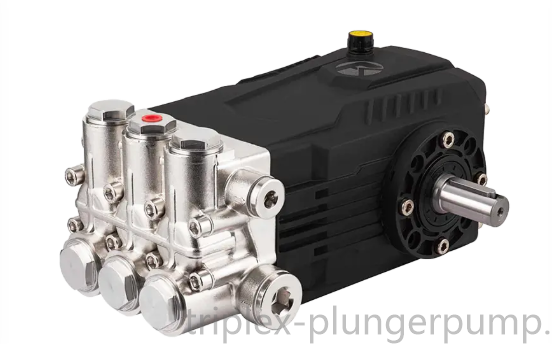
Material selection can have a significant influence on the reliability and suitability of industrial fluid-handling equipment. A Stainless Steel Pump can be considered for applications where corrosion resistance, structural durability, cleanable surfaces, and stable material performance are important. Such construction is relevant to water treatment, food processing, chemical handling, pharmaceutical production, industrial cleaning, and general manufacturing. Nevertheless, choosing stainless steel alone does not determine equipment suitability; the fluid, environment, component design, and maintenance requirements must also be evaluated.
Stainless steel provides corrosion resistance through the formation of a passive surface layer that helps protect the underlying metal. Different grades offer different combinations of corrosion resistance, strength, fabrication characteristics, and environmental compatibility. As a result, engineers should identify the actual operating conditions before selecting materials for pump housings, chambers, shafts, valves, fittings, and other components.
Fluid compatibility is one of the most important factors. Water may create relatively straightforward conditions, while saline solutions, cleaning chemicals, acids, alkaline liquids, or process fluids can introduce additional challenges. Concentration and temperature may also affect how materials behave. Suspended particles can create another form of stress by increasing mechanical wear. A complete evaluation should therefore consider the chemical composition and physical properties of the fluid throughout the intended operating cycle.
Surface quality is particularly relevant where cleanliness and maintenance are important. Smooth, properly finished surfaces can reduce areas where residues or contaminants accumulate and may make cleaning procedures more practical. Precision machining also helps maintain the dimensions required for valves, shafts, chambers, and other components. In moving assemblies, surface quality can influence friction and sealing behavior, making manufacturing accuracy an important part of overall equipment performance.
Mechanical strength must also be considered. Industrial pumping equipment may experience repeated pressure changes, vibration, mechanical movement, and temperature variation. Stainless steel can provide useful structural properties, but the final component design still needs to account for the loads involved. Shafts, connection points, valve assemblies, and pumping chambers should be designed according to their individual functions rather than treating every component in the same way.
The interaction between different materials is another consideration. Pump assemblies often contain metals, elastomers, polymers, and other engineered materials. These components may respond differently to temperature, chemicals, and mechanical movement. Incompatible combinations can contribute to wear or degradation. Engineers should therefore consider the complete material system, including seals and valve components, rather than evaluating the main metal housing separately.
Sealing technology plays an essential role in fluid containment. A corrosion-resistant housing cannot compensate for a seal that is incompatible with the working medium. Seal materials should be selected according to fluid composition, temperature, pressure, surface characteristics, and movement. Proper sealing can help control leakage while allowing mechanical components to operate effectively. Accessible sealing arrangements can also simplify routine inspection and replacement.
Safety is an important part of industrial fluid equipment design. Systems may contain pressure, moving machinery, hot fluids, or chemically active substances. Appropriate pressure monitoring, relief arrangements, protective components, and correctly selected fittings can help reduce operational risks. Before maintenance, operators should isolate and depressurize the system according to established procedures. Regular inspections can help identify leakage, surface damage, unusual vibration, or other changes in operating behavior.
Hygienic design can make stainless construction especially relevant in food and pharmaceutical applications. However, hygienic performance depends on more than the base material. Weld quality, surface finish, joint configuration, drainage, sealing, and cleaning procedures all influence how easily equipment can be maintained. Equipment designers should consider potential retention areas and ensure that cleaning and inspection can be performed effectively.
Automation is also influencing modern industrial pumping systems. Sensors can monitor pressure, temperature, vibration, and flow, while control systems can coordinate equipment operation with valves and other production machinery. Such integration can help manufacturers respond to changing process requirements and collect useful operational information. Monitoring data can also contribute to predictive or preventive maintenance strategies.
Maintenance remains important even when corrosion-resistant materials are used. Cleaning procedures should be compatible with the equipment construction, and operators should inspect seals, valves, connections, and moving parts at appropriate intervals. Mechanical damage, unsuitable chemicals, contamination, or poor installation conditions can still affect equipment condition. Detailed maintenance records can help identify recurring issues and improve service planning.
When selecting a Stainless Steel Pump, industrial users should therefore evaluate material grade, fluid compatibility, surface quality, mechanical construction, sealing technology, hygiene requirements, safety provisions, automation integration, and maintenance accessibility together. This broader approach can help ensure that the selected equipment is appropriate for the complete operating environment.
For manufacturers and engineering teams, an experienced pump supplier can provide useful support when material engineering and mechanical requirements need to be evaluated together. Different industrial processes may require different component materials, pumping structures, sealing arrangements, and control methods. Companies interested in additional FEIKE pumping solutions can explore the available product range at https://www.triplex-plungerpump.com/product/pumps/ when planning reliable industrial fluid-transfer equipment.

 English
 Arabic
 French
 Spanish
 Deutsch
 Turkish
 Dutch
Dutch
 Italiano
 Russian
 Romaian
 Portuguese (Brazil)
 Greek
Greek
