


What to Expect During Your First Driving Lesson in Brampton
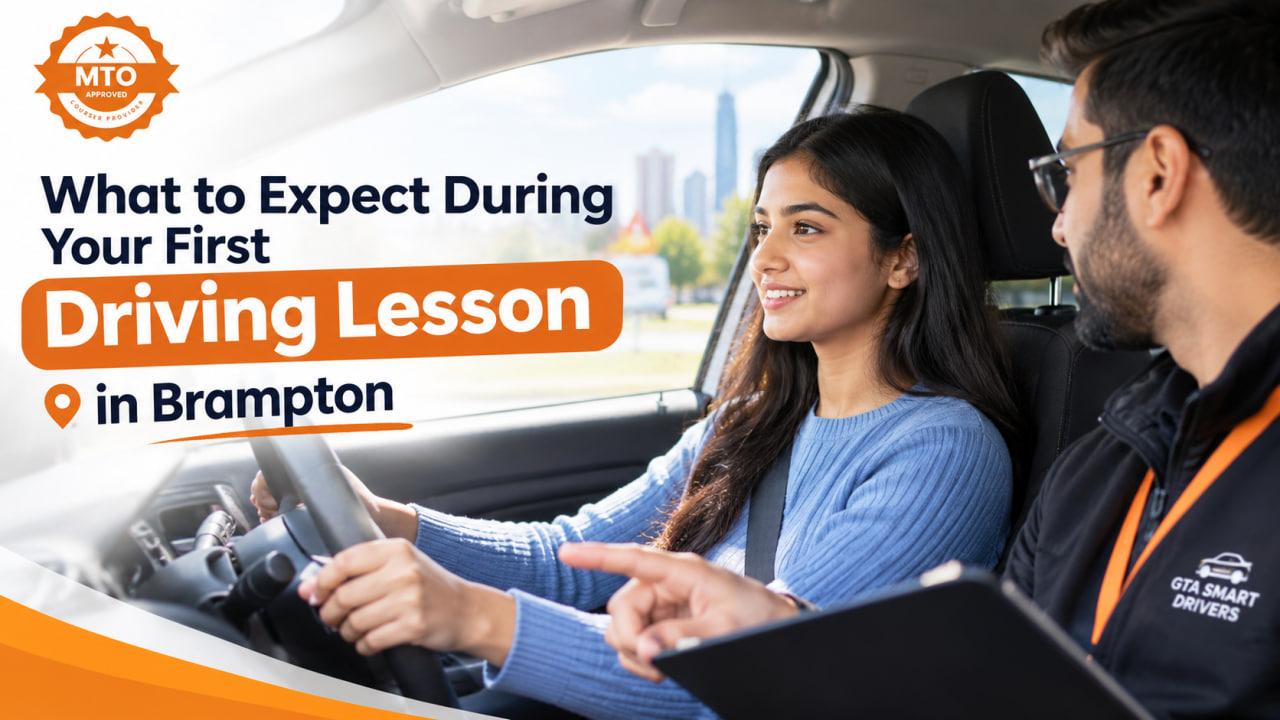
Starting to drive for the first time can feel exciting and a little intimidating. You may have questions about how the lesson will work, what your instructor will teach you, whether you will drive on busy roads, and how quickly you are expected to learn.
Understanding what happens during your first lesson can make the experience much easier. Professional Driving Lessons Brampton programs are generally designed to introduce beginners to the vehicle, basic controls, road awareness, and safe driving habits at a comfortable pace.
For new drivers in Brampton, the first lesson is not about becoming a perfect driver immediately. It is about building a safe foundation that you can develop through practice and future lessons.
What Should You Know Before Your First Driving Lesson?
Before starting your first lesson, make sure you understand your current licensing stage. In Ontario, you must be at least 16 years old and pass a vision test and knowledge test to obtain a G1 licence. A G1 driver is considered a beginner and must gain driving experience under the conditions of the graduated licensing system.
If you already have your G1, you can begin practical driver training.
It is also useful to bring your G1 licence, wear comfortable clothing and footwear, and arrive a few minutes early. You should feel comfortable asking questions throughout the lesson.
A good instructor understands that beginners have different levels of confidence and previous experience. For example, someone who has never sat behind the wheel will need a different introduction from someone who has already practised with a family member.
1. Your Instructor Will Start With an Introduction
Your first lesson will usually begin with a short introduction between you and the instructor.
The instructor may ask about:
-
Your previous driving experience
-
Whether you have driven before
-
Your comfort level behind the wheel
-
Your learning goals
-
Your knowledge of basic road rules
-
Your upcoming G2 road test, if applicable
This conversation helps the instructor understand where to begin.
At GTA Smart Drivers, the initial lesson can be approached as an assessment of your current abilities rather than simply a test. The objective is to identify what you already understand and which areas require more practice.
2. You Will Learn About the Vehicle
Before moving the vehicle, your instructor should explain the basic controls and safety features.
Depending on the vehicle, this may include:
-
Steering wheel
-
Accelerator and brake pedals
-
Gear selector
-
Parking brake
-
Turn signals
-
Headlights
-
Windshield wipers
-
Mirrors
-
Dashboard indicators
-
Seat and steering adjustments
You will also learn why the correct seating position matters.
Your seat should allow you to reach the pedals comfortably while maintaining proper control of the vehicle. Your mirrors should be adjusted so you have an appropriate view of the surrounding traffic.
This initial vehicle orientation is important because new drivers need to know where controls are located before they start dealing with traffic.
3. Safety Checks Come Before Driving
One of the most important habits introduced during professional Driving Lessons Brampton is preparing the vehicle before moving.
Your instructor may demonstrate a basic pre-driving routine, including checking that:
-
Your seat is properly adjusted.
-
Your mirrors are positioned correctly.
-
Your seat belt is fastened.
-
The vehicle is in the correct gear.
-
The surrounding area is clear.
-
You understand the controls you will need.
These small steps can eventually become automatic habits.
Good driving is not only about controlling the steering wheel. It is also about consistently observing your surroundings and making safe decisions.
4. You May Begin in a Quiet Area
Do not be surprised if your first practical driving experience begins in a relatively quiet area rather than immediately on a busy road.
For a complete beginner, the first priority is vehicle control.
Your instructor may initially help you practise:
-
Starting and stopping smoothly
-
Steering
-
Maintaining a straight path
-
Basic turns
-
Using signals
-
Braking correctly
-
Checking mirrors
-
Maintaining an appropriate speed
The exact sequence depends on your experience and confidence.
A beginner should not feel pressured to handle complex traffic situations before mastering basic control.
5. Steering and Lane Position Are Key Skills
One of the first things you will notice is that steering requires more attention than expected.
New drivers sometimes make large steering movements or focus too closely on the road immediately in front of the vehicle. An instructor will teach you to look farther ahead and make controlled steering adjustments.
You may also learn how to maintain a proper road position.
This includes understanding where your vehicle should be within a lane and how to maintain a safe position when approaching turns, intersections and parked vehicles.
Developing these skills early makes later lessons much easier.
6. Your Instructor Will Introduce Basic Traffic Awareness
As your vehicle control improves, the lesson can gradually involve more traffic awareness.
You may begin learning how to identify:
-
Stop signs
-
Yield signs
-
Traffic lights
-
Pedestrian crossings
-
Lane markings
-
Intersections
-
Parked vehicles
-
Cyclists
-
Other road users
The goal is to develop situational awareness.
A safe driver does not simply look straight ahead. Drivers must continuously scan the road, check mirrors, identify potential hazards and anticipate what other road users might do.
This is one reason structured Driving Lessons Brampton can be valuable for beginners.
7. Mirror Checks and Blind Spots Will Be Explained
Mirror use is another fundamental skill.
Your instructor may explain how and when to check your mirrors while driving. You will also learn about blind spots, which are areas around the vehicle that cannot be fully observed through mirrors.
Before changing lanes or moving laterally, drivers need to understand the importance of checking their surroundings properly.
Learning these habits from the beginning can reduce the risk of developing unsafe driving patterns.
8. You May Practise Turning and Intersections
Once you become more comfortable with basic vehicle control, your instructor may introduce simple turns and intersections.
You may practise:
-
Left turns
-
Right turns
-
Signalling before turns
-
Checking mirrors
-
Observing pedestrians
-
Positioning the vehicle correctly
-
Stopping where required
-
Proceeding safely through intersections
Intersections require multiple decisions at once, so beginners often need repeated practice.
Do not worry if your first few turns feel awkward. Developing smooth coordination takes time.
9. You Are Not Expected to Be Perfect
One of the biggest mistakes beginners make is expecting themselves to drive perfectly during the first lesson.
Learning to drive involves several skills working together:
Vehicle control + observation + road rules + decision-making + communication
It is normal to forget a signal, brake too suddenly, turn too wide or need reminders about mirror checks during your first few lessons.
The purpose of professional instruction is to identify these mistakes and help you correct them safely.
At GTA Smart Drivers, learners can use feedback from each lesson to understand what they need to practise before the next session.
10. Expect Feedback Throughout the Lesson
A professional instructor will usually provide continuous feedback.
This may include comments about:
-
Speed control
-
Steering
-
Braking
-
Mirror checks
-
Following distance
-
Lane position
-
Signalling
-
Observation
-
Intersections
-
Overall confidence
Constructive feedback is an important part of learning.
Instead of simply being told that something is wrong, you should understand why it is wrong and what you can do differently next time.
This helps turn individual corrections into long-term driving habits.
How Long Does It Take to Become Comfortable Driving?
There is no universal number of lessons that makes someone a confident driver.
Learning speed depends on factors such as:
-
Previous experience
-
Frequency of lessons
-
Practice between lessons
-
Ability to understand road rules
-
Confidence level
-
Traffic conditions
-
Individual learning pace
Consistency is generally more useful than trying to learn everything in one session.
Ontario's graduated licensing system is designed to help new drivers gain experience progressively. A G1 driver eventually takes a Level One road test to move to G2, while the Level Two road test is part of the process toward full Class G privileges.
How to Get More From Your First Driving Lesson
You can make your first lesson more productive by following a few simple tips.
Ask Questions
If you do not understand an instruction, ask your instructor to explain it again. It is better to clarify something than to guess while driving.
Stay Focused
Avoid distractions and keep your attention on the road and your instructor's instructions.
Do Not Rush
Trying to learn too quickly can create unnecessary stress. Focus on mastering one skill at a time.
Practise Between Lessons
If you are legally permitted to practise with a qualified accompanying driver, use that opportunity to reinforce the skills taught during professional instruction.
Remember Your Mistakes
Instead of becoming frustrated by mistakes, treat them as learning opportunities. Identifying recurring problems can help you improve faster.
Why Professional Driving Instruction Matters
Learning from friends or family can provide useful practice, but professional instruction offers structured guidance.
According to Ontario's Ministry of Transportation, government-approved Beginner Driver Education programs combine classroom or digital learning with in-vehicle training and flexible instruction. Approved training can also help eligible new drivers take their first road test sooner.
Professional instruction can also introduce defensive driving concepts, risk awareness, distraction management and strategies for dealing with different road conditions.
When choosing a driving school, check whether it is government-approved if you are specifically looking for an approved BDE program. Ontario also advises students to avoid schools making claims such as guaranteed licences or passing without a road test.
What Happens After Your First Lesson?
Your first lesson is only the beginning.
Future Driving Lessons Brampton sessions can gradually build on the skills you learned during your first session. Depending on your progress, lessons may move into more challenging traffic situations and cover areas such as lane changes, parking, busy intersections, residential driving, highway driving and road-test preparation.
The important thing is progression.
A good learning plan should focus not only on passing a road test but also on developing the observation, judgement and vehicle-control skills required for safe everyday driving.
Frequently Asked Questions
1. What happens during the first driving lesson in Brampton?
Your first lesson generally focuses on getting comfortable with the vehicle, adjusting your seat and mirrors, understanding the controls, learning basic safety checks and practising fundamental skills such as steering, braking, starting and stopping. The exact lesson depends on your experience and instructor's assessment.
2. Do I need a G1 licence before taking driving lessons in Brampton?
If you are beginning practical driving as an Ontario novice driver, you generally need to have obtained your G1 licence before driving on public roads. Ontario requires applicants to be at least 16 and pass vision and knowledge tests to obtain a G1.
3. How many driving lessons do I need before my G2 test?
There is no fixed number of lessons that guarantees readiness. Your required practice depends on your previous experience, confidence, road knowledge and ability to consistently perform essential driving skills. A professional instructor can assess your progress and identify areas that need more practice.
4. Can nervous beginners take Driving Lessons Brampton?
Yes. Nervousness is common among first-time drivers. A structured lesson should introduce skills progressively rather than expecting a beginner to handle every driving situation immediately. Communicating your concerns with your instructor can help create a more comfortable learning process.
5. Is a government-approved driving school worth considering in Brampton?
If you are looking for a Beginner Driver Education program, choosing a government-approved school is important. Ontario states that approved BDE programs must meet specific training requirements, and successful completion may provide benefits such as earlier eligibility for the first road test and potentially an insurance discount, depending on your insurer.
Final Thoughts
Your first driving lesson is about much more than simply moving a car. It is the starting point for developing safe habits that can remain with you for years.
From understanding vehicle controls and checking mirrors to managing speed, observing traffic and making safe decisions, every skill builds toward becoming a responsible driver.
If you approach your Driving Lessons Brampton with patience, regular practice and an open attitude toward feedback, you can gradually develop the confidence and practical skills needed for independent driving.
GTA Smart Drivers can be part of that learning journey by helping beginners understand the fundamentals and progressively develop their driving abilities through structured instruction.
For More Information Click Here:- https://gtasmartdrivers.ca/

 English
 Arabic
 French
 Spanish
 Deutsch
 Turkish
 Dutch
Dutch
 Italiano
 Russian
 Romaian
 Portuguese (Brazil)
 Greek
Greek
