


Chemical Engineering Consultant: How Modular Plant Design Supports Modern Processing Facilities
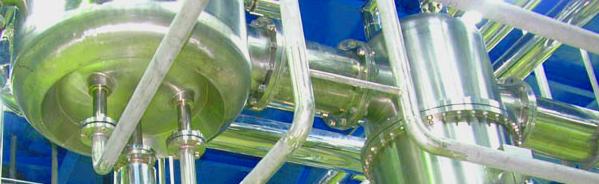
Chemical processing projects are becoming increasingly complex. Companies must consider production targets, capital costs, safety requirements, construction schedules, environmental considerations, and the ability to adapt facilities as market conditions change. These factors make early engineering decisions particularly important.
Working with an experienced chemical engineering consultant can help companies evaluate process requirements and develop practical solutions before major capital is committed. One approach that can support flexibility and construction efficiency is modular plant design, which allows significant portions of a processing facility to be engineered and fabricated as separate modules before being assembled at the final site.
What Is Modular Plant Design?
Understanding the Modular Approach
Modular plant design involves dividing a processing facility into prefabricated sections that can be manufactured, assembled, tested, and transported before final installation. A module may incorporate process equipment, piping, valves, instrumentation, structural components, and other supporting systems.
Unlike conventional construction, where much of the work occurs at the final site, modularization can move a substantial portion of fabrication into a controlled environment. This approach can be particularly useful for projects with difficult site conditions, limited infrastructure, or demanding construction schedules.
Why Early Engineering Matters
Modularization needs to be considered during the initial engineering stages. Module dimensions, equipment arrangement, transportation limitations, lifting requirements, piping connections, utilities, and maintenance access can all affect the final configuration.
A chemical engineering consultant can help determine whether modularization is appropriate for a particular process and identify requirements that need to be addressed before detailed fabrication begins.
How Chemical Engineers Support Modular Projects
From Process Concept to Design
The foundation of any processing facility is the process itself. Before equipment can be packaged into modules, engineers need to understand material balances, operating conditions, feed characteristics, product specifications, utility requirements, and process constraints.
A consultant can use process engineering principles and simulation tools to evaluate how the proposed facility should operate. This analysis can then inform equipment sizing, process configuration, piping requirements, and module boundaries.
Coordinating Multiple Disciplines
A modular project requires coordination between several engineering disciplines. Process decisions can affect mechanical equipment, structural requirements, electrical systems, instrumentation, and transportation.
Important areas of coordination can include:
-
Process engineering: Establishing operating conditions and equipment requirements.
-
Mechanical engineering: Selecting and sizing process equipment.
-
Piping engineering: Developing practical process and utility connections.
-
Structural engineering: Designing frames and supports for modules.
-
Instrumentation: Integrating measurement and control systems.
-
Electrical engineering: Addressing power distribution and equipment requirements.
This multidisciplinary coordination helps ensure that the modules function as components of one complete facility.
Advantages of Modular Plant Design
Improving Construction Efficiency
One of the most recognized benefits of modularization is the ability to complete substantial fabrication away from the operating site. Equipment and piping can be assembled under controlled conditions while site preparation takes place separately.
This can reduce the amount of field fabrication required and potentially improve construction coordination. Depending on the project's location and complexity, it may also reduce exposure to challenging weather or site conditions.
Potential Project Benefits
The exact advantages depend on the process and project circumstances, but modularization can offer several potential benefits:
-
Controlled fabrication: Modules can be assembled in a dedicated facility.
-
Reduced site work: More components can be completed before delivery.
-
Concurrent activities: Fabrication and site preparation can progress simultaneously.
-
Repeatability: Similar modules may be reproduced for comparable facilities.
-
Scalability: Certain designs can accommodate future expansion.
-
Remote deployment: Modular systems can be useful where conventional construction is difficult.
These benefits should be evaluated against transportation costs, site access, module size, lifting requirements, and other project-specific factors.
Using Process Simulation Before Fabrication
Evaluating Process Performance
Process simulation can provide valuable information before equipment is fabricated. Engineers can model material and energy balances, evaluate operating conditions, and investigate different process configurations.
For modular projects, this analysis can help establish equipment requirements before the physical layout is finalized. It can also provide insight into potential bottlenecks and interactions between process units.
Reducing Design Uncertainty
Changes made during fabrication or construction can be expensive and disruptive. Identifying potential issues during engineering is generally more manageable than discovering them after modules have been delivered.
A chemical engineering consultant can use simulation and engineering analysis to investigate scenarios such as changes in throughput, feed composition, temperature, pressure, and equipment capacity. This supports decisions based on process behavior rather than assumptions alone.
Designing for Safety and Reliability
Integrating Process Safety
Chemical processing facilities may involve high temperatures, pressures, flammable materials, hazardous chemicals, and complex reactions. These risks require systematic attention throughout the design process.
Modularization does not remove the need for process hazard analysis, pressure protection, appropriate instrumentation, emergency shutdown systems, containment, and other safeguards. In fact, engineers need to consider additional conditions associated with transportation, lifting, assembly, commissioning, and operation.
Planning for Maintenance
A compact module must still provide adequate access for inspection, maintenance, and equipment replacement. Poorly positioned components can make routine servicing unnecessarily difficult once the system is installed.
Maintenance requirements should therefore influence equipment arrangement, walkways, valve locations, instrumentation placement, and module accessibility. Designing for maintainability can support reliability throughout the facility's operating life.
When Should Companies Consider Modularization?
Evaluating the Project
Modularization is not automatically the best choice for every chemical processing project. Its suitability depends on factors such as facility size, process complexity, site accessibility, transportation limitations, construction costs, and anticipated expansion.
A feasibility assessment can compare conventional and modular approaches before a project moves into detailed engineering. This can help companies understand where modularization provides genuine value and where conventional construction may remain more practical.
Considering the Entire Lifecycle
The decision should also account for the facility's complete lifecycle. Engineering, fabrication, transportation, installation, commissioning, operation, maintenance, and future modifications can all influence the economics and practicality of modularization.
Taking this broader view can prevent companies from focusing only on fabrication costs while overlooking transportation, installation, or long-term operational considerations.
The Value of Experienced Engineering Support
Turning Complex Requirements Into Practical Solutions
Modular projects require engineering decisions that connect process performance with real-world construction constraints. An experienced consultant can help bridge this gap by evaluating technical requirements alongside practical project considerations.
Costello provides chemical engineering consulting and process design services covering process simulation, plant optimization, process safety, troubleshooting, biofuels, sulfur processing, and specialized process technologies. Its multidisciplinary capabilities can support companies evaluating complex chemical processing projects.
Supporting Projects From Concept to Implementation
Engineering support can extend from feasibility studies and process modelling through detailed design, construction assistance, startup, and troubleshooting. This continuity can help maintain alignment between the original process objectives and the final facility.
For companies considering modular plant design, involving engineering expertise early can make it easier to identify suitable module boundaries, assess transportation requirements, and address safety and operational considerations before fabrication begins.
Conclusion
Modular plant design can provide a flexible approach to developing chemical processing facilities by moving substantial fabrication and assembly work into controlled environments. It may help reduce field activities, improve construction coordination, and support projects where site conditions or scheduling create challenges.
An experienced chemical engineering consultant can help determine whether modularization is suitable and guide the engineering process from initial concept through implementation. By combining process simulation, equipment analysis, safety considerations, and multidisciplinary design, companies can develop modular facilities that are not only easier to construct but also practical to operate, maintain, and expand over time.

 English
 Arabic
 French
 Spanish
 Portuguese
 Deutsch
 Dutch
Dutch
 Italiano
 Russian
 Romaian
 Portuguese (Brazil)
 Greek
Greek
