


Brand Refresh Services: When Is It Time to Refresh Your Brand?
In today's competitive marketplace, your brand identity is often the first impression customers have of your business. Yet many companies maintain visual identities and messaging strategies that haven't evolved in years, if not decades. A strategic brand refresh can reposition your company, improve market perception, and drive measurable business growth.
But when is the right time to pursue brand refresh services? How do you know if a refresh, a complete redesign, or a comprehensive repositioning strategy is what your business needs? This guide explores the key indicators that signal it's time to update your brand identity.
Understanding Brand Refresh Services vs. Logo Redesign
Before diving into when to refresh your brand, it's important to clarify what brand refresh services actually entail.
What Is a Brand Refresh?
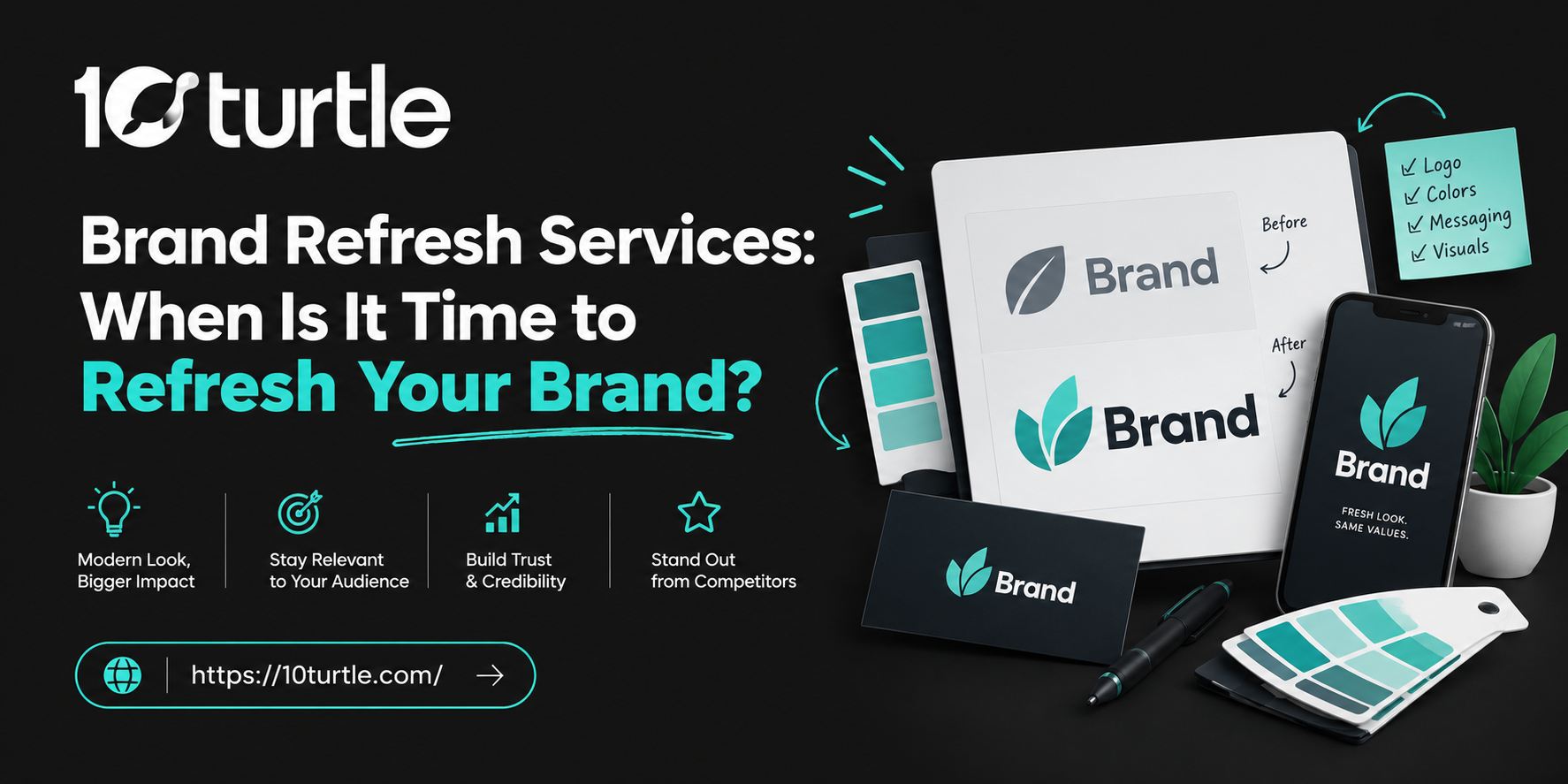
A brand refresh is a strategic update to your visual identity and messaging while maintaining core brand recognition. It typically includes:
- Logo refresh – updating design elements to appear modern without losing recognition
- Color palette updates – evolving color choices to align with current design trends
- Typography refinement – selecting fonts that resonate with today's audiences
- Messaging refinement – clarifying your brand story and value proposition
- Visual consistency – ensuring your brand appears cohesive across all platforms
A refresh preserves your existing brand equity while modernizing your appearance.
Brand Redesign vs. Brand Refresh
A complete brand redesign is more comprehensive. It involves:
- Completely reimagining your logo
- Shifting your brand strategy or positioning
- Changing target audience or market focus
- Addressing fundamental brand perception problems
Most established companies benefit from periodic refreshes (every 3-5 years) rather than complete redesigns (every 7-10 years).
7 Signs It's Time to Refresh Your Brand
1. Your Brand Looks Outdated Compared to Competitors
Consumer expectations evolve. Design trends shift. If your logo, color scheme, or overall visual presence feels dated compared to industry competitors, customers may perceive your business as outdated—even if your products and services are excellent.
What to look for:
- Heavy drop shadows, gradients, or design elements from the 1990s-2000s
- Fonts that no longer reflect modern aesthetics
- Color palettes that feel dull or disconnected from current market leaders
- Inconsistent visual presentation across websites, social media, and physical materials
Refreshing your brand identity signals to customers that your business is current and evolving.
2. Your Company Has Undergone Significant Changes
Whether you've expanded service offerings, merged with another company, entered new markets, or pivoted your business model, your brand should reflect these changes.
Common triggers for brand refresh:
- New service offerings – If you've diversified beyond your original focus, your brand positioning may no longer accurately represent what you do
- Company merger or acquisition – A unified brand identity strengthens market presence
- Market expansion – Entering new geographic regions or customer segments may require brand repositioning
- Change in company culture – If your workplace values or mission have shifted, your brand should communicate this
A professional brand refresh service can help align your visual identity, messaging, and positioning with your evolved business.
3. Your Target Audience Has Changed
If your ideal customer profile has shifted—perhaps you're now targeting enterprise clients instead of small businesses, or you've expanded from B2B to B2C—your brand messaging and visual identity should reflect this evolution.
Consider a refresh if:
- Your original audience has aged out of your target market
- You're attracting a demographic different from your intended audience
- Your messaging no longer resonates with current customer sentiment
- Competitors have stronger brand loyalty among your target audience
A brand repositioning strategy can realign your identity to better speak to new customer segments.
4. Your Brand Awareness or Market Share Has Declined
If you've noticed declining customer acquisition, reduced brand recognition, or increased competition taking market share, a brand refresh can help you stand out.
A modern, cohesive brand identity—combined with updated messaging—can:
- Improve customer differentiation in crowded markets
- Communicate improvements or innovations your company has made
- Rebuild perception after negative events or market challenges
- Create renewed interest from dormant or potential customers
5. Customer Feedback Indicates Confusion or Disconnect
Direct feedback from customers is invaluable. If customers:
- Misunderstand what your business offers
- Don't perceive your brand as innovative or forward-thinking
- Express that your visual identity doesn't match their experience with your company
- Suggest you seem "old-fashioned" or "out of touch"
then brand refresh services—particularly messaging refinement and visual modernization—can address these perception gaps.
6. Your Brand Doesn't Work Well Across Digital Channels
Older logos and visual identities were often designed for print and billboards. Modern brands must work seamlessly across:
- Websites and mobile apps
- Social media platforms (Instagram, LinkedIn, TikTok)
- Email marketing
- Digital advertising
- Video content
If your logo becomes unrecognizable when scaled down, or if your color palette looks wrong on digital screens, a professional brand refresh can ensure your identity works everywhere your customers encounter your brand.
7. It's Been 5+ Years Since Your Last Update
Even without specific problems, most brands benefit from a refresh every 3-5 years. A periodic update keeps your brand:
- Aligned with current design trends
- Relevant to evolving customer expectations
- Competitive in your industry
- Fresh and modern
You don't need a complete overhaul—often subtle refinements to typography, color, or visual elements are sufficient.
How to Know: Refresh vs. Redesign
Choose a Refresh if:
- Your logo is still recognizable and well-received by customers
- Your core brand identity is strong
- You're making incremental improvements
- Your company's positioning hasn't fundamentally changed
- You want to minimize disruption and maintain existing brand equity
Choose a Redesign if:
- Your current logo is frequently misunderstood or disliked
- Your business model or market positioning has shifted dramatically
- You're struggling to differentiate from competitors
- Customer perception of your brand is significantly negative
- Your brand identity no longer aligns with your business
The Brand Refresh Process
A professional brand refresh service typically involves:
1. Brand Audit
Assess your current brand perception, visual consistency, messaging clarity, and competitive positioning through customer research, competitor analysis, and internal stakeholder interviews.
2. Strategy Development
Define your brand positioning, key differentiators, target audience, and desired market perception. This informs all visual and messaging updates.
3. Visual Identity Redesign
Refine your logo, color palette, typography, imagery style, and overall visual language to reflect your updated brand strategy.
4. Messaging Refinement
Clarify your brand story, value proposition, and key messaging to better resonate with your target audience.
5. Implementation & Rollout
Update your website, marketing collateral, social media profiles, signage, and internal materials. Communicate the refresh to customers and employees.
6. Monitoring & Refinement
Track how the refreshed brand is received by customers and make adjustments as needed.
Brand Refresh Cost Considerations
The investment in professional brand refresh services varies widely based on scope:
- Logo-only refresh: $1,000–$5,000
- Comprehensive brand refresh: $5,000–$25,000+
- Full rebranding/redesign: $25,000–$100,000+
The ROI of a strategic brand refresh typically justifies the investment through:
- Improved customer acquisition
- Higher brand recognition and recall
- Increased perceived value and pricing power
- Better employee recruitment and retention
- Competitive advantage in crowded markets
Frequently Asked Questions
How often should a company refresh its brand?
Most established businesses benefit from a brand refresh every 3-5 years to stay current with design trends and market expectations. A complete redesign typically occurs every 7-10 years. Startups and rapidly evolving companies may refresh more frequently.
Will a brand refresh hurt my existing customer relationships?
A well-executed refresh maintains recognizability while modernizing appearance, so existing customers should easily recognize your brand. Communicate the refresh to your audience to explain the strategic reasoning and benefits.
What's the difference between a brand refresh and a rebrand?
A refresh is an update keeping your core identity while modernizing elements. A rebrand (or redesign) is a more comprehensive change to your positioning, identity, and market perception. Rebrands are typically more disruptive but may be necessary when your business has fundamentally changed.
Can I DIY a brand refresh, or do I need professional services?
While DIY branding tools exist, professional brand refresh services bring strategic expertise, design quality, and market research that DIY approaches often lack. A professional ensures your refresh aligns with business goals and resonates with your target audience.
How do I know if my brand refresh was successful?
Track metrics like:
- Brand awareness and recall (surveys, social listening)
- Customer acquisition cost and conversion rates
- Website traffic and user engagement
- Social media reach and follower growth
- Employee sentiment and recruitment
- Competitive positioning and market share
Compare these metrics before and after your refresh to quantify the impact.
Should I refresh my brand before or after launching new products?
Ideally, refresh your brand before launching new products. A modernized brand identity provides a strong foundation for new product introductions and maximizes the impact of new offerings.
Conclusion
Refreshing your brand is a strategic investment in your company's future. Whether your goal is to modernize your visual identity, reposition your business in a changing market, or communicate recent company evolution, professional brand refresh services can help you accomplish these objectives.
The key is recognizing when a refresh is needed whether triggered by aging design, competitive pressure, business changes, or simply the passage of time and taking action before your outdated identity negatively impacts customer perception.
A refreshed brand that's modern, cohesive, and strategically aligned with your business can drive measurable improvements in customer acquisition, market differentiation, and long-term business growth.

 English
 Arabic
 French
 Spanish
 Portuguese
 Deutsch
 Dutch
Dutch
 Italiano
 Russian
 Romaian
 Portuguese (Brazil)
 Greek
Greek
