


Hotel Website Optimization: A Free Course Module to Boost Direct Bookings with Ease My Hotel
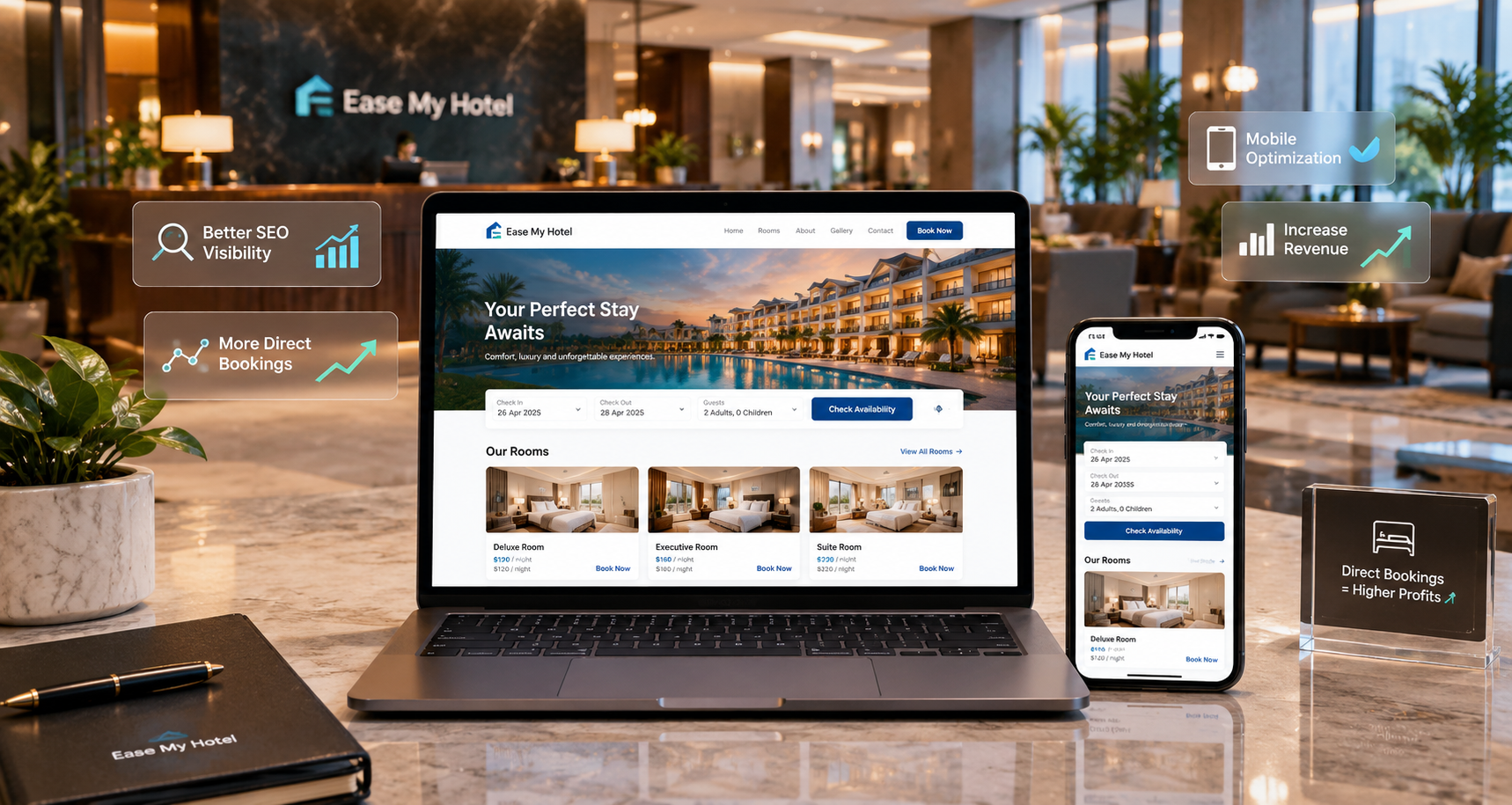
For hotels competing for travelers online, having a website is no longer enough. Your hotel website needs to attract the right visitors, answer their questions quickly, build trust, and make booking as effortless as possible.
This is where Digital Marketing for Hotel strategies become valuable. A well-optimized hotel website can reduce dependence on online travel agencies (OTAs), increase direct reservations, improve the guest experience, and create a stronger digital presence for your property.
This free course module from Ease My Hotel explains the essential principles of hotel website optimization, helping hotel owners and managers turn website traffic into more direct bookings.
Why Hotel Website Optimization Matters
Travelers often compare several properties before making a reservation. They may discover your hotel through Google, social media, paid advertising, travel websites, or recommendations. Once they reach your website, the experience can determine whether they book with you or return to an OTA.
An effective hotel booking website should immediately communicate what makes your property worth choosing. Clear room information, professional photography, transparent pricing, reviews, location details, amenities, and an easy booking process all contribute to conversion.
Website optimization also supports broader hotel digital marketing efforts. There is little value in generating thousands of visitors through SEO or advertising if the website makes booking difficult.
The objective is simple: attract qualified travelers and make it easy for them to become paying guests.
Module 1: Build a Strong Hotel Website Foundation
The first step in hotel website optimization is creating a website that works smoothly across desktop, tablet, and mobile devices.
Mobile optimization is especially important because travelers frequently research hotels using smartphones. A slow or difficult-to-navigate mobile website can cause potential guests to abandon the booking process.
Your website should include:
- A clear homepage
- Easy-to-find room and rate information
- High-quality property images
- Hotel amenities
- Location and nearby attractions
- Guest reviews and testimonials
- Frequently asked questions
- Contact information
- A prominent booking button
- Secure online booking functionality
Use straightforward navigation rather than forcing visitors to search through multiple pages for basic information.
A strong hotel website design should guide users toward one primary action: making a reservation.
Module 2: Optimize Your Website for Hotel SEO
Search engine optimization is a fundamental part of Digital Marketing for Hotel campaigns.
When travelers search phrases such as “hotels near me,” “best hotels in [destination],” or “hotel rooms near [attraction],” your website needs to have relevant content capable of appearing in search results.
Start with hotel SEO fundamentals:
- Optimize page titles and meta descriptions.
- Use relevant keywords naturally.
- Create useful destination-focused content.
- Optimize room and service pages.
- Improve website loading speed.
- Use descriptive image alt text.
- Build relevant internal links.
- Maintain a mobile-friendly website.
- Create dedicated pages for important services and locations.
Your keyword strategy should include both broad and long-tail terms. For example, instead of targeting only “hotel in Delhi,” a property could also target phrases such as “hotel near Delhi airport,” “family hotel in Delhi,” or “business hotel in Delhi.”
This allows your website to reach travelers with specific booking intentions.
Module 3: Create High-Converting Landing Pages
Not every visitor should be sent to the homepage.
A traveler searching for a specific room type, hotel package, meeting facility, or local attraction may respond better to a dedicated landing page.
Effective hotel landing pages should match the user's search intent and provide the information needed to make a decision.
For example, a hotel promoting a weekend package can create a page containing:
- Package benefits
- Available dates
- Room options
- Pricing information
- Terms and conditions
- Hotel amenities
- Guest reviews
- Professional images
- A direct booking CTA
The page should avoid unnecessary distractions. Keep the booking option visible throughout the user's journey.
This approach can improve hotel booking conversion rates while making paid campaigns and organic search traffic more valuable.
Module 4: Improve the Direct Booking Experience
A complicated booking process can undo all your other marketing efforts.
Your direct booking engine should allow guests to check availability, select a room, review pricing, enter their information, and complete payment with minimal friction.
Avoid unnecessary form fields and confusing steps.
The booking interface should clearly display:
Room → Rate → Availability → Guest Details → Payment → Confirmation
Transparent pricing is equally important. Unexpected fees appearing late in the process can create distrust and increase booking abandonment.
An optimized hotel reservation system should also provide instant confirmation and make essential reservation details easy for guests to access.
This is one area where a centralized hotel technology platform can provide significant operational value.
Module 5: Use Strong Calls to Action
Every important page on your hotel website should give visitors a clear next step.
Instead of vague buttons such as “Click Here,” use action-oriented CTAs such as:
- “Book Your Stay”
- “Check Availability”
- “Reserve Your Room”
- “View Room Rates”
- “Book Direct & Save”
Your CTA should stand out without overwhelming the page.
For hotel online booking, the objective is to reduce uncertainty and make the next action obvious.
Position booking CTAs strategically on the homepage, room pages, promotional pages, and relevant blog content.
Module 6: Build Trust Before Asking for the Booking
Travelers are making a financial decision when they reserve accommodation. Trust therefore plays a major role in conversion.
Include recognizable trust signals throughout your website, including genuine guest reviews, ratings, secure payment indicators, professional photography, clear policies, and accurate contact information.
A dedicated hotel reviews and testimonials section can help prospective guests understand the real experience of staying at your property.
You can also highlight differentiators such as:
- Free Wi-Fi
- Breakfast availability
- Parking
- Airport transfers
- Swimming pool
- Business facilities
- Family-friendly services
- Flexible cancellation policies
Only promote features your hotel actually provides. Accurate information creates confidence and prevents negative guest experiences.
Module 7: Optimize Website Speed and Mobile Performance
Website performance directly affects usability.
Large images, unnecessary scripts, poor hosting, and inefficient website structures can make pages load slowly. Travelers are unlikely to wait indefinitely for a booking page to appear.
Improve hotel website performance by compressing images, minimizing unnecessary scripts, enabling browser caching where appropriate, and using reliable hosting.
Also test the website regularly on different smartphones and browsers.
A fast website supports both user experience and your broader hotel marketing strategy.
Module 8: Connect Website Optimization With Hotel Technology
Website optimization works best when it connects with the hotel's operational systems.
For example, a hotel can integrate its website with a hotel PMS, booking engine, and hotel channel manager to help manage reservations, room availability, and distribution more efficiently.
This reduces the need to manage information manually across multiple systems.
Ease My Hotel provides an integrated approach to hotel operations with tools designed to help properties manage bookings, inventory, rates, housekeeping, and other hotel processes from a centralized platform.
By connecting technology with your hotel direct booking strategy, your website becomes more than an online brochure. It becomes an active sales channel.
Module 9: Track What Actually Generates Bookings
You cannot optimize what you do not measure.
Use analytics tools to monitor important hotel marketing metrics, such as:
- Website traffic
- Booking conversion rate
- Direct booking revenue
- Traffic sources
- Most visited landing pages
- Mobile versus desktop performance
- Booking abandonment
- Cost per acquisition
- Return on advertising spend
Tools such as Google Analytics and Google Search Console can provide valuable insight into visitor behavior and organic search performance.
If a page attracts significant traffic but generates very few bookings, investigate why. The problem could be unclear pricing, weak CTAs, slow loading, limited information, or a complicated booking process.
Module 10: Turn Optimization Into an Ongoing Strategy
Hotel website optimization is not a one-time project.
Traveler expectations, search behavior, technology, competitors, and booking trends continually change. Review your website regularly and identify opportunities for improvement.
Test different headlines, CTAs, promotional offers, page layouts, images, and booking experiences when appropriate.
Your hotel conversion optimization strategy should focus on small improvements that collectively produce meaningful results.
Free Hotel Website Optimization Checklist
Before considering your website ready for direct-booking growth, check whether you have:
- A mobile-friendly design
- Fast-loading pages
- Clear room descriptions
- Professional photography
- Visible pricing
- Simple navigation
- Strong booking CTAs
- An easy booking engine
- Guest reviews
- Secure payment options
- SEO-optimized pages
- Location-focused content
- Analytics tracking
- Integrated hotel management technology
Final Takeaway
A hotel website should do more than tell travelers where you are and what rooms you offer. It should actively persuade qualified visitors to book directly.
When combined with hotel SEO, content marketing for hotels, paid advertising, social media, reputation management, and an optimized hotel booking engine, website optimization can become a powerful component of Digital Marketing for Hotel.
For properties looking to streamline operations while strengthening their direct booking strategy, Ease My Hotel offers an integrated hotel management solution that brings key hotel processes together.
The goal is not simply to generate more website traffic. The goal is to transform the right traffic into more reservations, stronger guest relationships, and sustainable direct revenue.

 English
 Arabic
 French
 Spanish
 Portuguese
 Turkish
 Dutch
Dutch
 Italiano
 Russian
 Romaian
 Portuguese (Brazil)
 Greek
Greek
