


How to Build a Fintech App That Users Actually Trust?
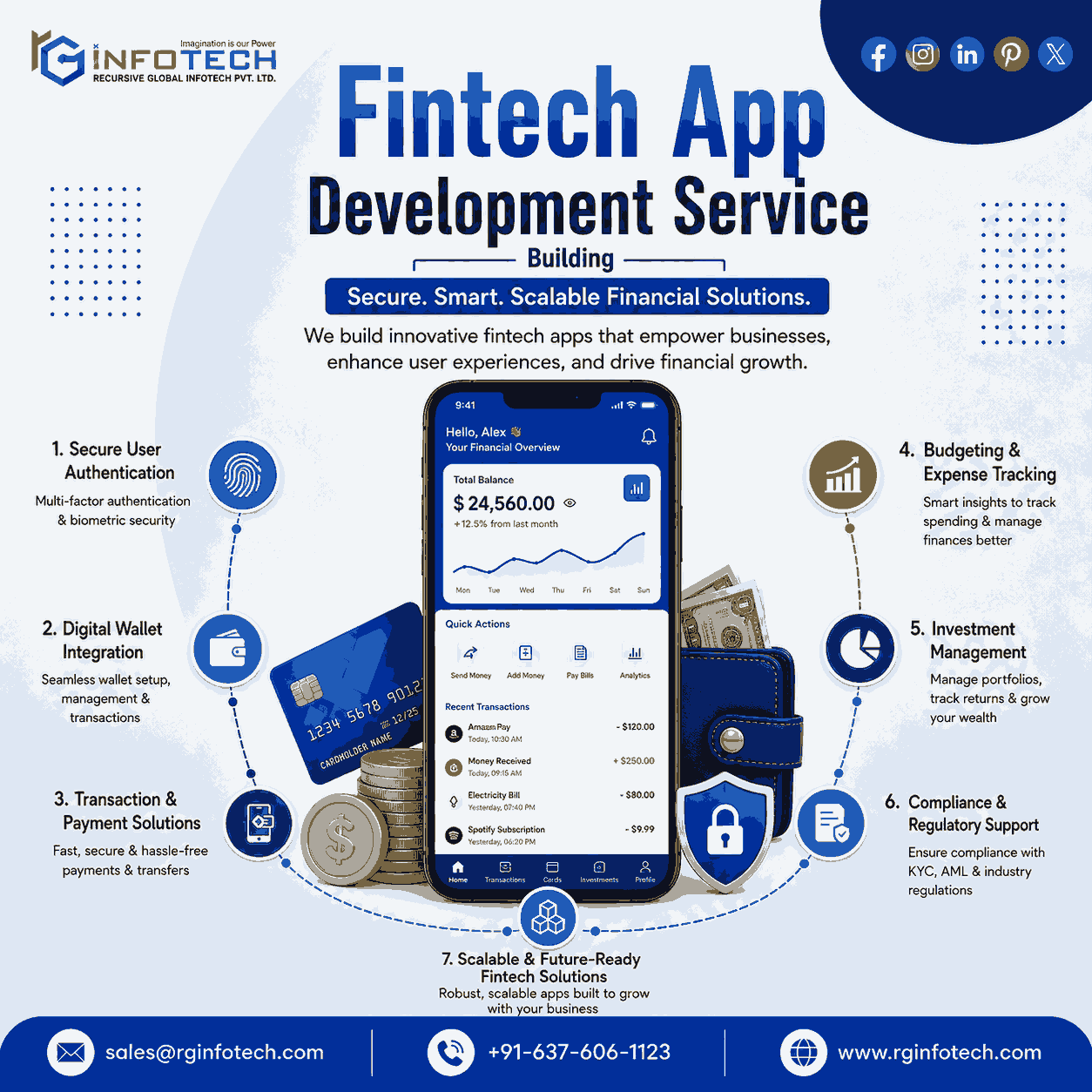
Trust is one of the most important factors determining whether users will adopt and continue using a fintech application. People expect financial apps to protect their money, personal information, and transactions while providing a smooth and reliable experience. Even a feature-rich app can struggle if users do not feel confident using it.
Building trust requires more than adding security features. It involves combining strong technology, transparent communication, intuitive design, dependable performance, and responsible data management. If you are planning a fintech product, working with an experienced Fintech App Development Company can help you create an application designed around security and user confidence.
1. Make Security a Core Priority
Security should be built into the application from the beginning rather than added after development. Financial applications can become targets for fraud, phishing, account takeovers, and data breaches.
Implement measures such as end-to-end encryption where appropriate, secure APIs, multi-factor authentication, biometric verification, session management, and role-based access controls. Sensitive information should be protected both during transmission and while stored.
Regular security testing, vulnerability assessments, and code reviews can further reduce potential risks.
2. Be Transparent About Data
Users want to know how their financial and personal information is being collected, stored, and used. Complicated or unclear privacy policies can create uncertainty.
Explain data practices using simple language. Clearly communicate what information the application requires and why it is necessary. Give users appropriate controls over permissions and preferences.
A transparent approach demonstrates that your application respects user privacy instead of treating personal information as an unlimited resource.
3. Use Strong Authentication
Passwords alone may not provide enough protection for financial accounts. Multi-factor authentication can add another layer of security by requiring users to verify their identity through an additional method.
Depending on the application's requirements, you can support biometrics, one-time passwords, device verification, or authentication applications.
At the same time, authentication should remain convenient. If security measures become unnecessarily complicated, users may abandon the application. The goal is to create strong protection without creating unnecessary friction.
4. Keep Transactions Clear
Financial transactions should never leave users wondering what happened to their money.
Every transaction should provide clear information about the amount, recipient, fees, date, and status. Users should receive timely notifications when important financial activities occur.
If a transaction fails or is delayed, explain the reason and provide clear next steps. Transparency during unexpected situations can significantly strengthen user confidence.
5. Design for Simplicity
Fintech products often involve complex financial concepts, but the user interface does not need to be complicated.
Use simple navigation, readable dashboards, clear buttons, understandable terminology, and straightforward workflows. Important information such as balances, payments, investment activity, and transaction history should be easy to locate.
An experienced Fintech App Development Company can combine user experience design with secure technical architecture to create interfaces that make financial activities easier to understand.
6. Provide Real-Time Alerts
Real-time notifications can help users stay informed about activity on their accounts. Alerts for transactions, login attempts, payments, withdrawals, and unusual activity can provide users with greater control.
For example, if a user receives an immediate notification about an unfamiliar transaction, they can investigate it quickly rather than discovering it weeks later.
Notifications should be relevant and customizable so that users receive important information without being overwhelmed by unnecessary messages.
7. Build Reliable Customer Support
Technology cannot eliminate every financial problem. Users may experience failed payments, verification issues, account access problems, or unfamiliar transactions.
Provide accessible customer support through channels such as in-app chat, email, help centers, and appropriate human assistance. AI-powered support can handle common questions, while complex financial issues should be escalated to qualified support teams.
Fast and helpful support reassures users that they are not alone when something goes wrong.
8. Prevent Fraud With AI
Artificial intelligence can help fintech applications identify suspicious patterns and potentially fraudulent activity.
Machine learning models can analyze transaction behavior, login patterns, device information, and other signals to identify unusual activity. Depending on the use case, the system can flag transactions for additional verification or alert users about potential risks.
However, AI-driven decisions should be carefully tested and monitored to reduce false positives and ensure responsible implementation.
9. Maintain Compliance
Trust also depends on regulatory responsibility. Financial applications may need to follow privacy, payment, identity verification, anti-fraud, and other applicable requirements based on their services and markets.
Compliance should be considered during product planning rather than treated as a final checklist. Maintain appropriate records, access controls, audit trails, and security processes.
A professional Fintech App Development Company can help integrate technical controls that support your compliance strategy while developing the application's core functionality.
10. Keep Improving After Launch
Launching a fintech application is not the end of the trust-building process. User expectations and security threats continue to evolve.
Monitor application performance, collect user feedback, address vulnerabilities, update dependencies, and improve features regularly. Analyze support requests and user behavior to identify areas where the experience can be simplified.
Regular improvements demonstrate that your business takes both security and customer experience seriously.
Conclusion
Building a fintech app that users genuinely trust requires a combination of security, transparency, simplicity, reliability, and continuous improvement. Strong authentication, encrypted data, clear transactions, fraud detection, responsive support, and responsible data practices can create a safer financial experience.
The right technology partner can make this process more efficient. RG Infotech helps businesses develop secure, scalable, and user-focused fintech applications with modern technologies and robust development practices. As a trusted Fintech App Development Company, RG Infotech can help turn your financial product idea into a reliable digital solution designed to earn user confidence.

 English
 Arabic
 French
 Portuguese
 Deutsch
 Turkish
 Dutch
Dutch
 Italiano
 Russian
 Romaian
 Portuguese (Brazil)
 Greek
Greek
