


Ratlami Sev Explained: What It Is, How It Differs, and Why People Love It
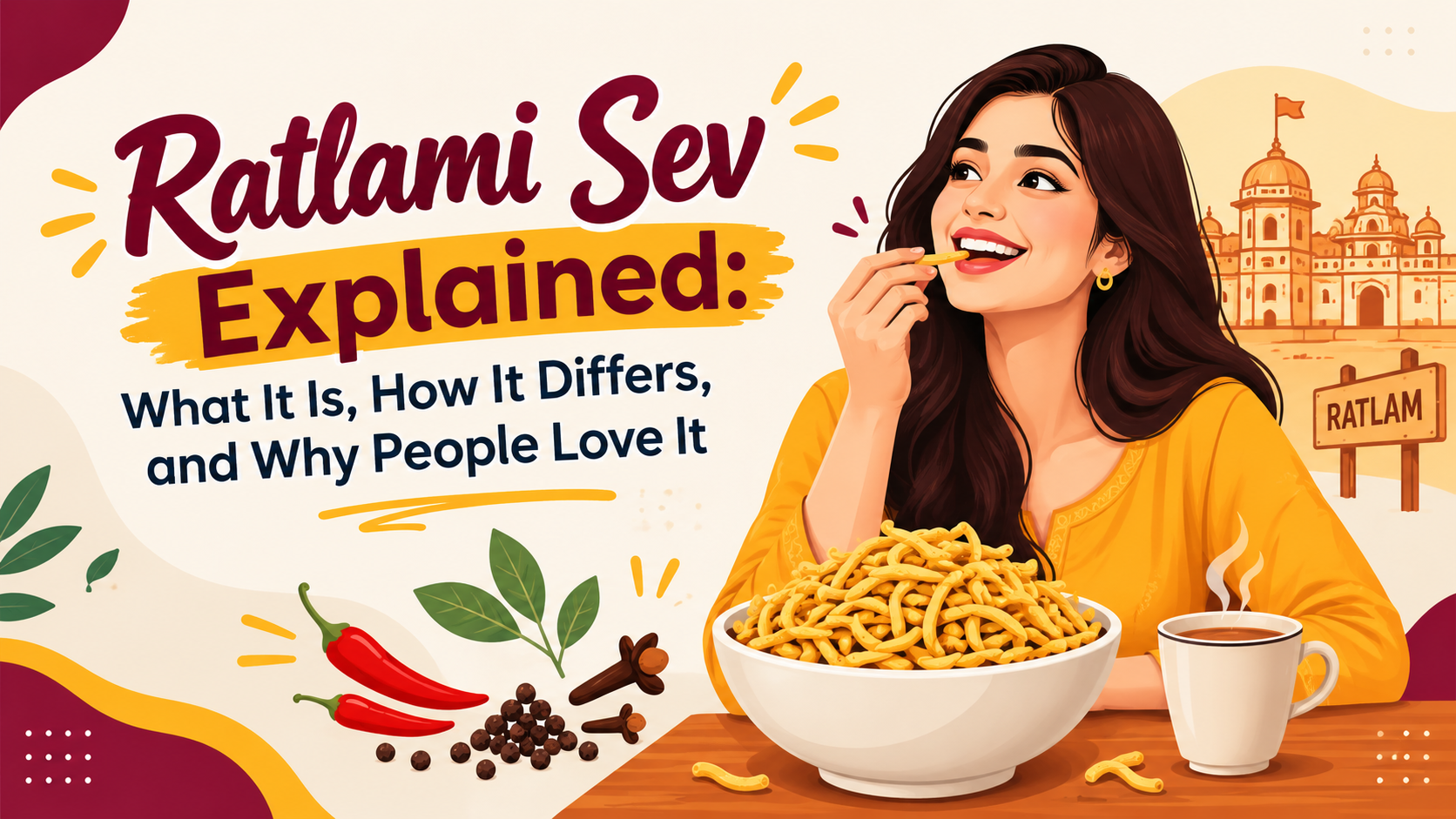
If you've ever dug into a bowl of Indian snacks and pulled out a handful of thin, golden strands that hit you with a warm rush of pepper and clove, there's a good chance it was Ratlami Sev. It's one of those snacks people either already adore or fall for on the very first bite.
Despite how popular it is, Ratlami Sev often gets grouped in with every other sev on the shelf, which honestly undersells it. It has its own history, its own spice blend, and its own distinct personality. This guide covers what Ratlami Sev really is, how it stacks up against the other sev varieties you'll come across, and why it has built such a loyal following, both in India and among UK snack lovers.
Chandra Foods has been making traditional Indian snacks in the UK since 1985, so we'll use our own version as a point of reference throughout.
What is Ratlami Sev?
Before getting into Ratlami specifically, it's worth understanding sev itself. Sev is a classic Indian namkeen — a dry, savoury snack — made by pushing seasoned gram flour (besan) dough through a perforated press to form fine strands, which are then fried until crisp and golden. It's eaten by the handful, scattered over chaat, or mixed into snack bowls, and it's been part of Indian food culture for generations.
Ratlami Sev is the bold, spicy member of that family. Where much everyday sev is mild and light, Ratlami Sev is thicker, crunchier, and built around a distinctive blend of warm spices. Our version is made with gram flour, rapeseed oil, and a seasoning of black pepper, cloves, red chilli, cumin, ginger, carom seeds and a touch of asafoetida. That clove-and-pepper backbone is what gives it its unmistakable aroma and its signature kick.
Where the name comes from
"Ratlami" isn't a flavour description; it's a place name. Ratlam is a city in Madhya Pradesh, in central India, and it's the birthplace of this style of sev. Like a lot of great regional foods, it started as a local speciality and gradually spread well beyond its origins, carried by families, traders, and eventually the wider diaspora. Today you'll find it in Gujarati and Indian households right across the UK, made to the same bold recipe despite the distance from where it began.
What's actually in it
At its core, Ratlami Sev is a gram-flour snack, which quietly makes it more interesting than it first appears. Gram flour is naturally higher in plant protein and fibre than the refined wheat behind many mainstream crisps and savoury snacks, so a handful delivers a bit more than pure indulgence.
Our version keeps the ingredient list honest: gram flour, oil and real spices, with no artificial colours, flavours or preservatives. It's entirely plant-based too, with no dairy, eggs or meat, and it's Vegetarian Society approved, which makes it an easy choice for both vegan and vegetarian snackers. It's still a fried snack, of course, so it's best enjoyed as part of a varied diet rather than by the bagful.
How Ratlami Sev differs from other sev
Line a few types of sev up side by side and the differences show quickly. Thickness, texture and heat are the three things that really set them apart.
Nylon sev sits at one end of the spectrum. It's named for its ultra-fine, almost weightless strands, and it has a mild, lightly seasoned flavour that makes it endlessly versatile. It's the sev you scatter over bhel puri or dahi papdi chaat, or nibble straight from the pack when you want something light.
Ratlami Sev sits firmly at the other end. The strands are thicker, the crunch more substantial, and the flavour spice-forward rather than gentle. It reads less as a background topping and more as a snack in its own right — the kind you keep eating because every piece carries a proper hit of clove, pepper and chilli.
A quick way to picture the two extremes:
-
Nylon sev — very thin, delicate and mild; ideal for topping chaat and everyday snacking.
-
Ratlami Sev — thicker, crunchier and boldly spiced with clove and pepper; satisfying enough to eat on its own.
Between those two extremes sit middle-ground options, including finer but still spicy sev and rounded masala varieties that balance crunch with a warmer, everyday seasoning. It's worth exploring the wider sev range if you want to see where Ratlami sits against its relatives.
People sometimes ask how Ratlami Sev compares to bhujia, too. Bhujia, the Bikaneri style especially, is usually finer and often blends moth-bean flour into the besan, giving a softer bite. Ratlami Sev is defined far more by its clove-heavy spicing and its firmer, crunchier texture. Both are delicious; they just serve different roles in the snack bowl.
Why Ratlami Sev is so popular
Plenty of snacks are pleasant. Ratlami Sev is memorable, and that's a big part of why it's stuck around for so long.
The first reason is flavour. That clove-and-pepper seasoning is genuinely distinctive — warming rather than simply hot, and it lingers in a way that makes you want the next handful. In a market full of similar-tasting savoury snacks, something with this much character stands out.
The second is versatility, covered in more detail below. Ratlami Sev works well on its own, but it also lifts all sorts of dishes, which means a single bag rarely sits idle in the cupboard.
Then there's nostalgia. For many in the UK's Indian and Gujarati communities, the smell of Ratlami Sev is tied to evenings at home, festival tables, and cups of chai with family. A good spicy sev doesn't just taste of spice; it tastes of somewhere. That kind of emotional pull is hard to manufacture and impossible to fake.
Finally, there's the gram-flour factor. Because it's besan-based and made without artificial additives, Ratlami Sev feels a touch more wholesome than the average crisp, which appeals to shoppers reading labels more carefully than they used to. It travels well, keeps its crunch, and pairs with almost anything — all of which help explain why it remains a snack-cupboard staple decades on.
How to enjoy Ratlami Sev
Part of the fun of Ratlami Sev is how many ways there are to eat it. A few favourites:
-
With chai. The classic pairing, and for good reason. A handful of spicy sev alongside a hot cup of tea is a small, reliable pleasure.
-
Over poha or upma. Scatter it across your breakfast for an instant crunchy, spicy finish that wakes the whole plate up.
-
As a chaat topping. It adds crunch and heat to bhel puri, sev puri and dahi puri, tying the flavours together at the end.
-
Stirred through curd or yoghurt. A spoonful in chilled curd gives you a quick spicy-creamy snack with contrasting textures.
-
In a homemade snack mix. Combine it with boondi, papdi and peanuts for a fast, Bombay mix-style bowl to share.
-
As a desk or lunchbox snack. Portion a little into a tub for an afternoon pick-me-up that's far more interesting than a packet of crisps.
Buying Ratlami Sev in the UK
The simplest way to keep Ratlami Sev on hand is to buy it on its own, so there's always a bag ready for tea time. Because it's made in the UK to a traditional recipe, you get the authentic spice profile without waiting on an import.
If you're a heat-seeker who likes more than one bold snack in the cupboard, Ratlami Sev also features in the Spicy Crunch Combo, which pairs it with other spicy favourites like thikhi sev, thikha gathiya and masala papdi for people who take their crunch seriously.
And if you'd rather sample it as part of a wider spread before committing to a full bag, it's one of the nine snacks in the Best of Chandra Combo, sitting alongside gathiya, fafda, chakri and a sweet para. That's an easy way to see how Ratlami Sev fits into a proper Indian snack spread.
Ratlami Sev: quick questions
Is Ratlami Sev vegan? Yes. It's made without any meat, dairy or eggs, and it's Vegetarian Society approved, so it suits both vegan and vegetarian diets.
Is it gluten-free? Ratlami Sev is made from gram flour, which is naturally gluten-free. That said, it's produced on premises that also handle gluten, so anyone with coeliac disease or a serious gluten allergy should check the allergen advice on the pack before eating.
How spicy is it? Bold, but balanced. The heat comes mainly from black pepper, clove and chilli, so it's warming and aromatic rather than sharply fiery. Most people who enjoy a well-spiced snack find it very moreish.
How should I store it? Keep it in a cool, dry place away from direct sunlight, and reseal the pack after opening to protect that crunch.
The bottom line
Ratlami Sev has earned its reputation. It's bolder, crunchier and more characterful than the everyday sev most people start with, built around a clove-and-pepper spice blend that traces all the way back to Ratlam. Add in its versatility, its gram-flour base, and the nostalgia it carries for so many, and it's easy to see why it remains such a firm favourite.
Once you know what sets it apart, the milder stuff can start to feel a little quiet by comparison. Whether you enjoy it by the handful with chai or scatter it over your favourite chaat, Ratlami Sev is a proper classic that more than lives up to the fuss.

 English
 Arabic
 French
 Spanish
 Portuguese
 Deutsch
 Turkish
 Dutch
Dutch
 Italiano
 Russian
 Portuguese (Brazil)
 Greek
Greek
