


Lab-Grown vs Natural Diamonds - And Where to Actually Buy Them
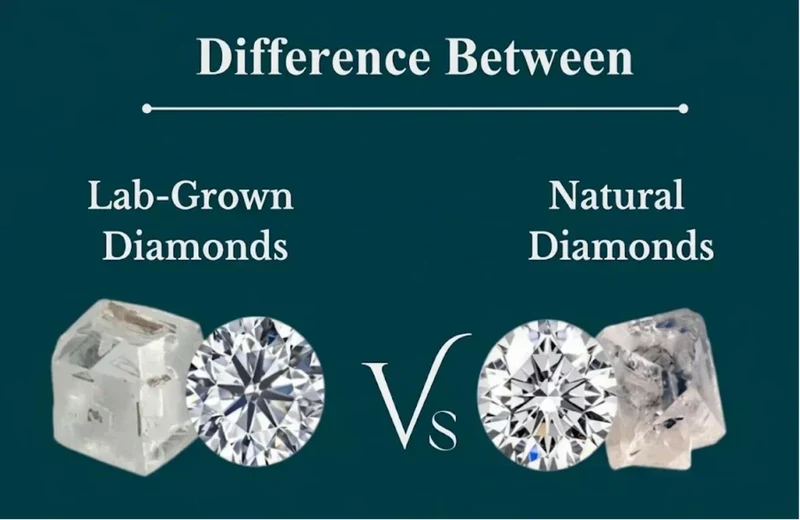
Deciding between a lab-grown and a natural diamond is only half the job. The other half is figuring out where to actually buy one without overpaying or ending up with an uncertified stone. Here's a quick, honest look at both.
Lab-Grown or Natural: What Actually Sets Them Apart
Lab-grown diamonds are chemically and physically identical to natural ones — both are pure carbon, both score a 10 on the Mohs hardness scale, and neither can be told apart from the other with the naked eye. The real differences show up in price, origin, and long-term value.
Lab-grown diamonds typically cost 60-80% less than a natural diamond of the same size and quality. A 1-carat lab-grown stone might run $800-$1,200, compared to $4,000-$8,000 for a natural one with similar specs. That gap only widens as carat size goes up.
Where natural diamonds pull ahead is resale value. Natural stones tend to hold 40-60% of their retail price, while lab-grown diamonds usually hold onto just 10-15%, since production keeps scaling up and prices keep falling. So if you're buying for long-term investment or as a future heirloom, natural is the safer bet. If you just want more sparkle for your budget with no plans to resell, lab-grown makes a lot of sense.
Ethics is often oversimplified too. Natural diamond mining has real environmental costs—land disturbance, water use, and emissions. Lab-grown diamonds skip the mining, but growing them takes significant energy, and their footprint depends heavily on how that energy is generated. Neither side is as black-and-white as the marketing suggests.
For a deeper breakdown of pricing, resale value, and how each type is made, our full comparison guide covers it in detail: 2026 Guide: Lab-Grown vs Natural Diamond Comparison.
Once You've Decided, Where You Buy Matters Just as Much
Whichever type you choose, the jeweler you buy from determines whether you actually get what you're paying for. A few non-negotiables:
Certification first. Every diamond, lab-grown or natural, should come with grading from IGI or GIA confirming its cut, color, clarity, and carat weight. No certificate, no purchase—that's the simplest rule to follow.
Check the store's reputation. Read reviews across the store's own site and independent platforms like Google. A jeweler with a consistent track record on quality, packaging, and delivery is worth more than one with a slightly lower price.
Be wary of prices that seem too good. Lab-grown diamonds are already affordable; if a deal looks unrealistically cheap, there's usually a reason—often an uncertified or lower-quality stone.
Look at return and warranty policies. A trustworthy jeweler makes returns, exchanges, and repairs easy to understand before you buy, not something you have to dig for afterward.
Confirm secure payments and insured shipping. Your purchase should be protected from checkout to delivery, with SSL encryption on the site and insurance on the shipment.
We cover all of this in more depth, including questions to ask before checkout, in Choose the Right Place to Buy Lab-Grown Diamond Jewelry.
Final Thoughts
There's no universally "right" choice between lab-grown and natural diamonds—it comes down to whether you value long-term resale potential or more brilliance for your budget. But regardless of which one you pick, the fundamentals of buying it right don't change: insist on certification, verify the seller's reputation, and don't let price alone make the decision for you. Get those two calls right—the diamond type and the jeweler—and everything else falls into place.

 English
 Arabic
 French
 Portuguese
 Deutsch
 Turkish
 Dutch
Dutch
 Italiano
 Russian
 Romaian
 Portuguese (Brazil)
 Greek
Greek
