


Oral Dental Surgery: Procedures, Recovery, Care & What to Expect
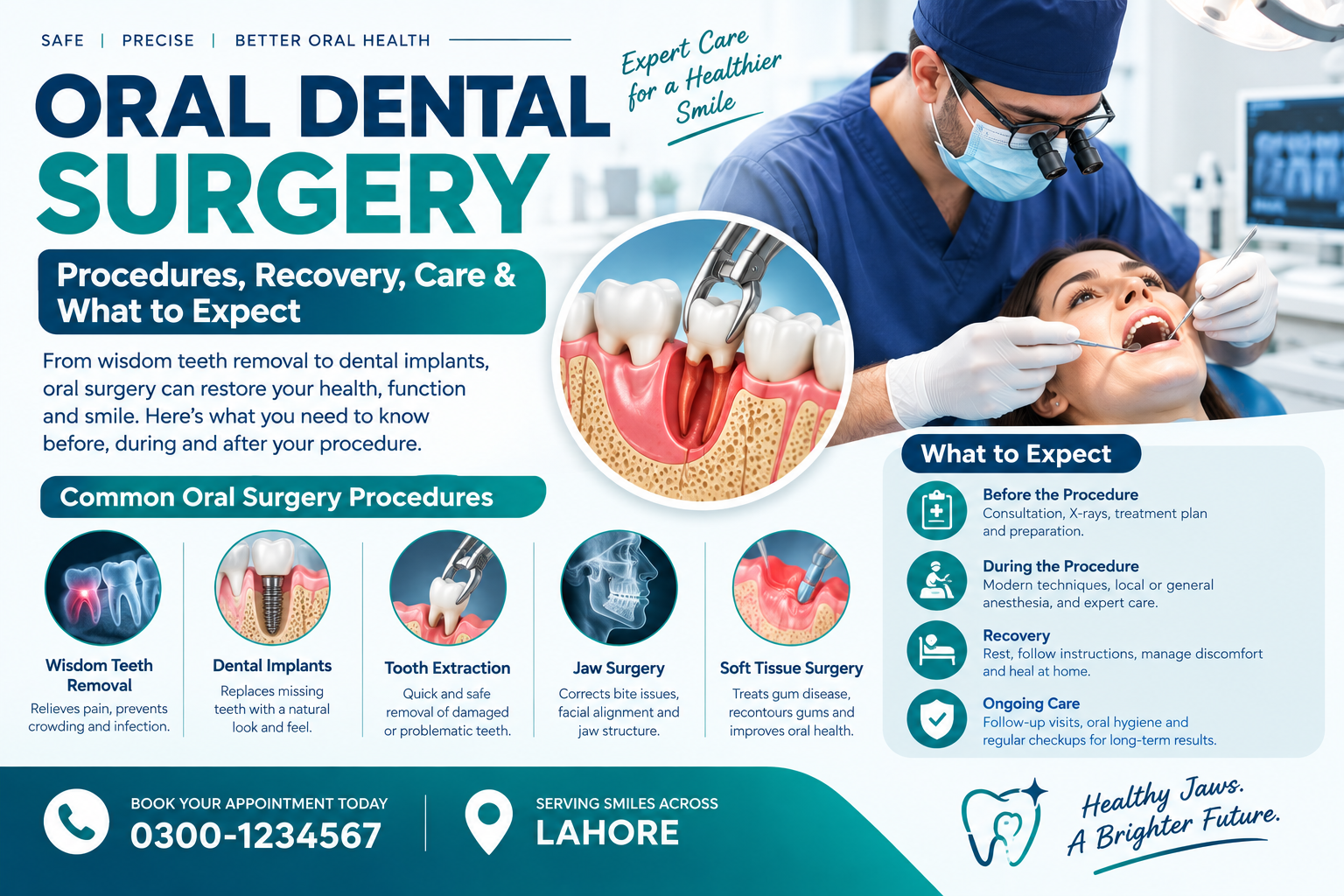
The phrase oral dental surgery can sound intimidating the first time a dentist mentions it, but in reality it covers a wide range of procedures, from a routine tooth extraction to more involved work on the jaw and gums. Most people will need some form of oral dental surgery at least once in their life, whether it is removing a stubborn wisdom tooth, placing a dental implant, or correcting a structural issue that is affecting the bite. Understanding what oral dental surgery actually involves, why it is recommended, and what recovery looks like can turn a nerve-wracking appointment into a manageable, even straightforward, experience.
At Dental Aesthetics, oral dental surgery is treated as a precise, planned process rather than a last resort. Every procedure begins with a thorough evaluation, including a review of dental history, imaging where needed, and an honest conversation about what the treatment will involve. This guide walks through the essentials of oral dental surgery in Lahore so you know exactly what to expect before you ever sit in the chair.
What Does Oral Dental Surgery Actually Involve?
Oral dental surgery is a broad category that refers to any surgical treatment performed on the teeth, gums, jawbone, or surrounding soft tissue. It is different from routine dental work such as fillings or cleanings because it typically involves cutting into tissue, removing structures, or reshaping bone. Some procedures are minor and completed in under an hour with local anesthesia, while others are more complex and may require sedation or a referral to a specialist for staged treatment.
The goal of oral dental surgery is almost always one of three things: removing a source of pain or infection, restoring function that has been lost, or preventing a future problem from becoming a bigger one. A tooth that is impacted, for example, does not just sit quietly in the jaw. Left untreated, it can crowd neighboring teeth, trap bacteria, and eventually cause an abscess. Surgery in that case is preventive as much as it is corrective.
Common Types of Oral Dental Surgery
Several procedures fall under this umbrella, and patients are often surprised by how many familiar treatments technically count as oral dental surgery:
• Tooth extractions, including simple extractions and surgical removal of impacted or broken teeth
• Wisdom tooth removal, one of the most common procedures performed on teenagers and young adults
• Dental implant placement, which involves inserting a titanium post into the jawbone to replace a missing tooth root
• Bone grafting, used to rebuild jawbone density before implant placement or after tooth loss
• Apicoectomy, a minor surgery to remove infected tissue at the tip of a tooth's root when a root canal alone is not enough
• Gum surgery, including procedures to treat advanced gum disease or to reshape the gumline for cosmetic reasons
• Corrective jaw procedures for patients with bite misalignment or jaw joint problems
Signs You May Need Oral Dental Surgery
It is not always obvious that a dental issue has progressed to the point of needing surgical care. Some warning signs include persistent jaw or tooth pain that does not respond to over-the-counter medication, visible swelling in the gums or face, a tooth that has become loose without an obvious injury, difficulty opening the mouth fully, or a tooth that has broken below the gumline. Recurring infections, cysts found on an X-ray, and teeth that never fully erupted are also common reasons a dentist will recommend surgical evaluation.
If you notice any of these symptoms, it is worth scheduling a consultation sooner rather than later. Many oral surgery cases are far simpler to treat when caught early, and delaying care usually makes the eventual procedure more involved.
What to Expect During the Procedure
Before any surgical treatment, the dental team will review your medical history, current medications, and any allergies. Imaging, such as a digital X-ray or 3D scan, helps map out the exact position of teeth, nerves, and bone so the procedure can be planned with precision. On the day of surgery, local anesthesia numbs the treatment area, and depending on the complexity of the case, sedation options may also be offered to help anxious patients stay relaxed throughout.
Most oral dental surgery procedures are completed in a single visit. The dentist works carefully to minimize trauma to surrounding tissue, which directly affects how comfortable the recovery period will be. Once the procedure is finished, you will receive clear aftercare instructions along with information on managing any swelling or discomfort in the following days.
Recovery and Aftercare
Recovery time varies depending on the type of surgery performed. A simple extraction might heal within a few days, while implant placement or bone grafting can take several weeks to months for full integration. Regardless of the procedure, a few general aftercare habits help speed up healing: sticking to soft foods for the first day or two, avoiding smoking, keeping the surgical site clean without disturbing it directly, and taking any prescribed medication exactly as directed.
Mild swelling and discomfort are normal for the first 48 to 72 hours. Applying a cold compress in short intervals can reduce swelling, and most patients find that over-the-counter pain relief is sufficient once the initial numbness wears off. If pain worsens instead of improving, or if you notice a fever, unusual discharge, or a bad taste that will not go away, it is important to contact your dentist right away, as these can be signs of infection.
Why Patients Choose Dental Aesthetics for Oral Dental Surgery
Dental Aesthetics approaches every surgical case with a focus on comfort, precision, and clear communication. Before any procedure, patients are walked through the treatment plan, the expected timeline, and the reasoning behind each recommendation, so there are no surprises on the day of surgery. Modern imaging technology allows for accurate planning, which reduces treatment time and improves outcomes for procedures ranging from a single extraction to full implant placement.
Beyond the technical side, the clinic places real emphasis on patient comfort during and after treatment, from sedation options for anxious patients to detailed aftercare support that is available whenever questions come up during recovery.
Frequently Asked Questions
Is oral dental surgery painful?
The procedure itself is performed under local anesthesia or sedation, so pain during surgery is minimal. Some soreness in the days after is normal and is generally well managed with prescribed or over-the-counter pain relief.
How long does recovery from oral dental surgery take?
It depends on the procedure. Simple extractions often heal within a few days, while more involved treatments like bone grafting or implant placement can take several weeks to a few months for complete healing.
Will I need someone to drive me home after the procedure?
If sedation is used, yes, you should arrange for someone to accompany you and drive you home. If only local anesthesia is used, most patients are able to drive themselves once the appointment is over.
Can I eat normally after oral dental surgery?
Soft foods are recommended for the first day or two. Most patients can gradually return to their normal diet within a week, depending on how the surgical site is healing.
How do I know if I need oral dental surgery or if a filling or root canal will be enough?
This depends on the extent of the damage or infection. A dentist will examine the tooth and review imaging to determine whether conservative treatment is sufficient or whether surgical intervention is the better long-term solution.
Final Thought
Oral dental surgery is far more common, and far less frightening, than most people assume. With the right preparation, an experienced team, and clear aftercare guidance, most procedures fit smoothly into everyday life with only a short recovery window. If you are dealing with persistent pain, a problem tooth, or simply want an honest opinion on whether surgery is the right path forward, Dental Aesthetics offers thorough evaluations and treatment plans built around what actually works best for your situation.

 Arabic
 French
 Spanish
 Portuguese
 Deutsch
 Turkish
 Dutch
Dutch
 Italiano
 Russian
 Romaian
 Portuguese (Brazil)
 Greek
Greek
