


IPTV Resellers Turn Streaming Access Into a Scalable Venture
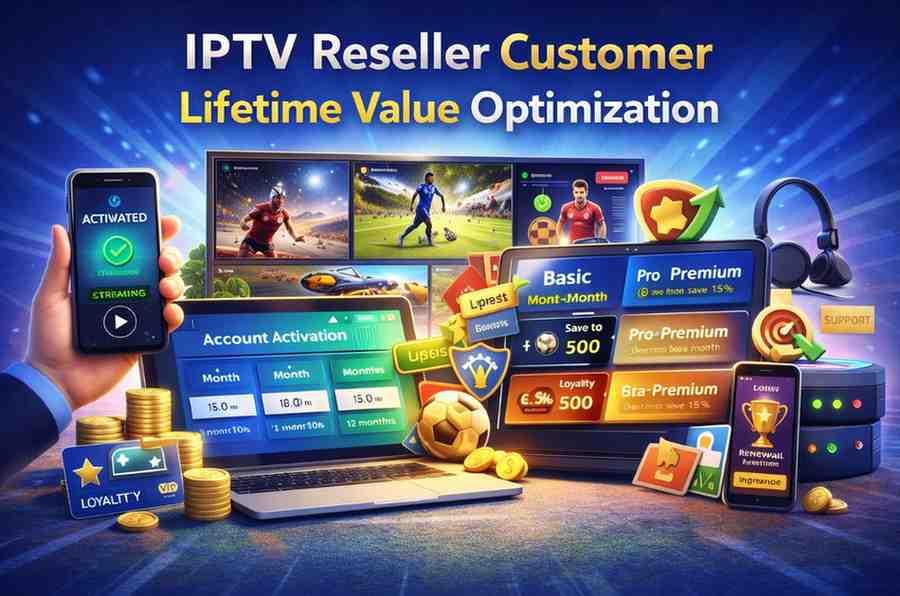
See how IPTV reselling operates, what shapes its earning potential, and which factors can influence a sustainable streaming-focused business.
IPTV Resellers: Building a Legitimate Streaming Business
For entrepreneurs interested in the streaming market, IPTV resellers can represent a different route into digital television than launching an entire platform from scratch. A reseller typically sits between a service operator or licensed content distributor and the end customer, handling sales, subscriptions, customer communication, and sometimes first-line support.
But there is an important distinction that should come before revenue projections or customer acquisition:
Reselling IPTV is only a sustainable business proposition when the underlying service has the necessary rights and permissions for the content and territories being offered.
IPTV itself is simply a method of delivering television and audiovisual programming over internet networks. The technology is not inherently illegal. The legal question is what content is being distributed, who owns the rights, where it can be offered, and whether the provider has permission to transmit or redistribute it.
That distinction matters even more in 2026. Brazil, for example, has strengthened its administrative framework for unauthorized audiovisual offerings online through ANCINE's 2026 rules, including procedures addressing unauthorized digital distribution and blocking measures.
For someone considering the reseller route, the opportunity therefore needs to be evaluated as a distribution business, not merely as a way to sell access codes.
🤝 Connect With a Trusted Provider
What Are IPTV Resellers?
An IPTV reseller is a business or individual that markets and sells access to an IPTV service supplied by another operator, platform, distributor, or rights holder.
Instead of developing every component internally, the reseller may rely on an upstream provider for elements such as:
- Stream infrastructure
- Content delivery
- Subscriber provisioning
- Account management
- Technical systems
- Channel packages
- Video-on-demand infrastructure
The reseller then focuses on the commercial side.
That can include:
- Customer acquisition
- Subscription sales
- Renewals
- Support
- Billing
- Account administration
- Marketing
- Customer retention
- Localized service positioning
The exact arrangement varies considerably. Some reseller programs are little more than wholesale subscription distribution. Others provide dashboards, APIs, branding tools, customer-management functions, or white-label capabilities.
The terminology can therefore be misleading.
A company selling an IPTV subscription is not automatically a licensed broadcaster, content owner, or authorized distributor. Before entering the market, the reseller needs to understand exactly what rights the upstream supplier possesses.
💡 Plan Your IPTV Business Model
Why the Reseller Model Attracts Entrepreneurs
Launching a complete streaming platform requires substantial infrastructure, technical knowledge, capital, content relationships, and operational expertise.
A reseller arrangement can reduce some of those barriers.
The reseller may not need to develop:
- A complete streaming architecture
- Every customer-facing application
- A proprietary content library
- An entire video-delivery network
- A sophisticated provisioning system
Instead, the business can concentrate on finding customers and providing a reliable commercial experience.
That makes the model potentially attractive to entrepreneurs who are stronger at sales, marketing, customer service, or niche positioning than software development.
However, lower technical barriers do not eliminate business risk.
A reseller remains dependent on its upstream partner. If that partner experiences outages, loses important rights, changes wholesale terms, or disappears, the reseller may have limited control over the situation.
That dependency is one of the biggest differences between reselling and owning the underlying platform.
The IPTV Reseller Revenue Model Explained
The IPTV reseller revenue model generally revolves around purchasing or receiving subscription capacity under agreed commercial terms and selling authorized access to customers at a retail price.
At a simplified level:
Retail revenue − wholesale cost − operating expenses = operating margin
But that calculation can become considerably more complicated.
Expenses may include:
- Payment processing
- Advertising
- Customer support
- Website and software costs
- Taxes
- Refunds
- Chargebacks
- Business administration
- Compliance costs
- Customer acquisition
- Staff
- Technical support
A reseller should therefore avoid evaluating an opportunity solely by looking at the difference between a wholesale price and advertised retail price.
A seemingly attractive margin can disappear when acquisition costs, refunds, support requirements, and failed payments are included.
Recurring subscriptions can change the economics
Subscription businesses have an important characteristic: customers can potentially generate revenue more than once.
For example, suppose a legitimate service sells monthly subscriptions. A reseller may acquire a customer in January and retain that customer for several months.
The business therefore becomes less dependent on constantly replacing every customer.
This is where customer lifetime value becomes more meaningful than a single sale.
A basic conceptual calculation is:
Customer lifetime value ≈ average contribution per customer × expected customer lifespan
It is not a guaranteed forecasting formula. Actual results depend on churn, pricing, support costs, acquisition expenses, refunds, and other variables.
IPTV Reseller Service Growth Depends on More Than Subscriber Numbers
IPTV reseller service growth is often described in terms of subscriber count, but that measurement alone can hide problems.
Imagine two businesses:
- Reseller A has 1,000 customers but loses 20% of them each month.
- Reseller B has 600 customers and loses only 5% each month.
The first company looks larger at one moment, but the second may have a healthier customer base.
A better assessment considers several indicators.
Customer acquisition
How many new customers arrive during a defined period?
Churn
How many subscribers cancel or fail to renew?
Average revenue per customer
How much does an average subscriber contribute?
Support burden
How much staff time is required to keep customers satisfied?
Retention
How long do customers remain active?
Payment stability
How frequently do transactions fail or result in disputes?
Infrastructure reliability
Can the underlying service consistently deliver what customers were promised?
Growth becomes much more durable when these measurements improve together.
Building an IPTV Reseller Customer Base
An IPTV reseller customer base should not be treated as a collection of anonymous subscriptions.
It is an audience with particular viewing habits, expectations, budgets, devices, and support requirements.
That creates an opportunity for specialization.
Instead of attempting to appeal to everyone, a reseller might position a legitimate service around a clearly defined audience.
Potential segments could include:
- Multilingual households
- International viewers seeking authorized regional programming
- Sports-focused audiences where appropriate commercial rights exist
- Families seeking centralized television access
- Hospitality businesses requiring properly licensed commercial viewing solutions
- Niche-language communities
- Customers interested in specific legitimate content packages
The critical point is that audience specialization should never be used to bypass geographic or licensing restrictions.
If a channel is licensed only for certain territories, marketing it elsewhere does not become permissible simply because customers want it.
Trust Can Become a Competitive Advantage
Streaming customers have plenty of reasons to be cautious.
They may encounter services that advertise huge channel counts, extremely low prices, anonymous operators, unclear billing, or vague claims about content availability.
A legitimate reseller can differentiate itself through transparency.
That means clearly explaining:
- Who operates the service
- What is included
- Which territories are supported
- What devices are compatible
- How billing works
- How cancellations work
- What customer support covers
- What limitations apply
- Which content is actually authorized
A professional website should not need exaggerated promises to convince customers.
Clear information can do more for long-term credibility than an enormous channel-count claim.
Licensing Is the Line Resellers Cannot Ignore
This is the most important section for anyone considering the business.
IPTV technology does not automatically provide permission to distribute television programs, films, sports broadcasts, or other protected material.
In the United States, copyright owners generally possess exclusive rights concerning reproduction, distribution, and public performance, subject to statutory limitations and licensing arrangements. The U.S. Copyright Office also maintains specific licensing frameworks for certain transmission activities.
In the UK, copyright protection covers television recordings and broadcasts, and using protected material generally requires permission or a relevant legal exception.
The European Union has its own coordinated framework governing audiovisual media and copyright, while individual Member States implement relevant rules through national law.
Canada also maintains copyright protection for creative works through its federal copyright framework.
Brazil has taken particularly visible steps recently. ANCINE's Instrução Normativa nº 174/2026 establishes procedures concerning representations involving unauthorized audiovisual content online, while ANCINE states that its current framework can address unauthorized audiovisual use through administrative measures.
What should a reseller verify?
Before selling a service, ask the upstream supplier for evidence that it has the necessary rights.
Important questions include:
- Who owns the content?
- Who holds the distribution rights?
- Which countries are covered?
- Which channels are authorized?
- Are sports rights included?
- Are movie and VOD rights included?
- Is commercial use permitted?
- Can the supplier legally appoint resellers?
- What happens when a licensing agreement expires?
- Can the reseller review the relevant contractual terms?
If a supplier refuses to provide meaningful information about licensing, that should be treated as a serious warning sign.
How to Evaluate an IPTV Reseller Program
Not every reseller arrangement deserves the same level of consideration.
A structured evaluation can help separate a genuine commercial opportunity from a fragile operation.
1. Investigate the upstream provider
Start with the company behind the service.
Look for:
- Legal business identity
- Physical business presence where appropriate
- Clear terms
- Contact information
- Commercial documentation
- Service history
- Licensing information
- Reseller agreement
An anonymous seller operating only through messaging apps presents a very different risk profile from an established business with documented operations.
2. Examine the rights structure
Do not accept vague statements such as “fully legal” as sufficient evidence.
Ask what those claims actually mean.
A legitimate supplier should be able to explain the rights supporting its service.
3. Read the reseller agreement
Check:
- Wholesale pricing
- Minimum commitments
- Payment terms
- Renewal conditions
- Cancellation provisions
- Refund responsibility
- Support obligations
- Branding rules
- Geographic restrictions
- Content changes
- Termination provisions
The contract may matter more than the advertised reseller dashboard.
4. Test the support process
Before taking customers, determine who handles technical problems.
A reseller that has no reliable escalation route can quickly become overwhelmed.
5. Assess the customer experience
A business cannot depend entirely on having a large catalog.
Consider:
- App usability
- Device compatibility
- Account management
- Stream stability
- Electronic program guide availability
- Search
- Parental controls where offered
- Accessibility
- Support response
Only claim features that the service actually provides.
Common Warning Signs in Reseller Offers
Low prices can be attractive, but they can also hide serious weaknesses.
Be cautious when a reseller program features several of these characteristics:
Extremely broad content claims
Promises of virtually every channel, premium sports event, film, and international package for a tiny fee should trigger further questions.
No licensing information
A provider unwilling to explain its rights structure creates substantial commercial uncertainty.
Anonymous operators
If you cannot establish who you are contracting with, enforcing an agreement or resolving a dispute becomes more difficult.
Pressure to pay quickly
Urgency should not replace due diligence.
Unclear ownership
If nobody can clearly explain who controls the streams, customers, or infrastructure, the reseller is taking on unnecessary risk.
Disposable infrastructure
Frequent domain changes, unexplained service migrations, and constantly changing payment methods can indicate instability.
No formal agreement
A professional reseller relationship should have defined responsibilities.
Legal IPTV Reselling Is Different From Selling Unauthorized Access
The distinction deserves direct attention because the terminology used online can blur two very different businesses.
A legitimate reseller distributes a service for which the relevant rights and permissions exist.
An unauthorized operator may instead sell access to protected television channels, films, or sporting broadcasts without permission.
The latter can expose participants to legal and commercial consequences.
UK government guidance specifically warns that unauthorized streaming can involve copyright infringement and that illicit services can also create fraud and data-security risks.
Brazil's current framework is also explicit about unauthorized digital offers of protected audiovisual content and provides procedures for reporting and addressing such activity.
For a business owner, legality is therefore not merely an ethical consideration. It affects continuity, payment relationships, reputation, contracts, and the ability to build a business that can survive.
Customer Retention Matters More Than Constant Acquisition
A reseller can spend heavily on advertising and still struggle if customers leave after one billing cycle.
Retention begins with the basic service experience.
Customers generally expect:
- Reliable access
- Accurate billing
- Clear package information
- Responsive support
- Reasonable cancellation procedures
- Consistent communication
- Transparent service limitations
When something goes wrong, the way the reseller communicates can be just as important as the technical fix.
For example, saying that an issue is being investigated is more useful than promising that every problem will disappear immediately.
A trustworthy reseller should also avoid guaranteeing uninterrupted service when it does not control the underlying infrastructure.
Marketing Strategies That Fit the Reseller Model
A reseller does not necessarily need aggressive advertising.
A more sustainable approach can center on information and audience relevance.
Educational content
Create useful material explaining:
- IPTV terminology
- Supported devices
- Legal considerations
- Subscription management
- Streaming quality factors
- Network requirements
- Troubleshooting
This can attract people who are already researching the category.
Localized positioning
Language, regional customer service, and culturally relevant support can make a service easier to understand for a particular market.
Transparent product pages
Explain exactly what customers receive rather than relying on vague superlatives.
Customer referrals
Satisfied customers may become a valuable acquisition channel, provided referral practices comply with applicable laws and platform rules.
Retention communication
Reminders, service updates, billing notifications, and useful support information can reduce avoidable cancellations.
What About Pricing?
There is no universal “correct” reseller price.
The appropriate price depends on:
- Wholesale cost
- Licensing structure
- Content package
- Infrastructure
- Support level
- Market
- Taxes
- Payment processing
- Customer acquisition expenses
- Desired margin
A reseller should calculate its economics before choosing a retail figure.
For example:
Monthly contribution = subscription price − wholesale cost − variable customer costs
Then add fixed business expenses to determine whether the operation can realistically support itself.
The mistake is to copy a competitor's price without knowing that competitor's underlying costs.
Two services charging the same customer price can have completely different financial outcomes.
International Reselling Requires Extra Care
Your target markets—such as the USA, UK, Canada, Brazil, and European countries—do not form one uniform legal market.
Rights can vary by territory.
A channel available legally in one country may not be authorized for distribution in another.
The EU itself has coordinated rules for audiovisual services and online transmissions, but national implementation and rights arrangements still matter.
This means a reseller targeting multiple countries should investigate:
- Territorial licensing
- Consumer-protection requirements
- Tax obligations
- Data-protection requirements
- Payment regulations
- Advertising rules
- Content restrictions
- Commercial viewing permissions
- Local business-registration requirements
A generic “worldwide” IPTV package should therefore be treated cautiously unless its territorial rights can be demonstrated.
A Practical Launch Framework for New Resellers
For someone seriously considering this business, the following sequence is more useful than immediately buying a reseller package.
Step 1: Define the audience
Choose a market based on genuine customer needs rather than attempting to reach everyone.
Step 2: Identify legitimate suppliers
Research operators that can demonstrate their authorization and commercial structure.
Step 3: Review the contract
Understand your obligations before taking payment from customers.
Step 4: Calculate the economics
Model acquisition costs, churn, payment fees, support expenses, taxes, and wholesale pricing.
Step 5: Build the customer experience
Prepare billing, support, onboarding, FAQs, policies, and account-management processes.
Step 6: Test before scaling
Start with a controlled customer group where legally and commercially appropriate.
Step 7: Measure retention
Track renewal rates and support issues rather than celebrating subscriber totals alone.
Step 8: Scale cautiously
Increase marketing only after the underlying service and economics demonstrate stability.
Advantages and Limitations of the Reseller Route
Potential advantages
- Lower technical barrier than building an entire platform
- Ability to concentrate on sales and customer relationships
- Potential recurring subscription revenue
- Opportunity to target specific audiences
- Faster market testing
- Less need to develop proprietary streaming infrastructure
Potential limitations
- Dependence on an upstream provider
- Licensing exposure
- Variable wholesale economics
- Customer-support demands
- Payment and chargeback risks
- Competition
- Churn
- Service outages outside the reseller's control
- Territorial restrictions
- Regulatory differences between markets
The reseller model can therefore be attractive, but it is not passive income.
It is a customer-facing distribution business with operational responsibilities.
Who Is the Model Best Suited To?
IPTV reselling may suit someone who has strengths in:
- Digital marketing
- Customer service
- Sales
- Subscription businesses
- Community building
- Technical support
- Niche audience development
It may be less suitable for someone expecting to buy a package once and generate effortless recurring revenue.
The most durable operators understand that subscribers are customers, not merely account numbers.
Questions to Ask Before Signing With a Supplier
Before committing money or attaching your brand to an upstream IPTV service, create a written checklist.
Ask:
- What company am I contracting with?
- What content rights does it possess or control?
- Which territories are covered by those rights?
- Does the agreement explicitly permit resale?
- What happens if a channel loses its rights?
- Who handles technical support?
- Who handles refunds?
- What are the payment terms?
- Are there minimum commitments?
- What happens when the reseller relationship ends?
- Can I use my own branding?
- What customer data is collected and who controls it?
- What service-level commitments actually exist?
- Are commercial viewing rights different from household subscriptions?
If the supplier cannot answer basic commercial questions clearly, pause before proceeding.
FAQs
What does an IPTV reseller actually do?
An IPTV reseller typically markets and sells subscriptions supplied by another IPTV operator or authorized distributor. Depending on the arrangement, the reseller may also manage billing, customer accounts, support, renewals, and marketing.
Is IPTV reselling legal?
The technology itself is not inherently illegal. Legality depends on the service and the rights behind the content being distributed. Resellers should verify that their supplier has the necessary authorization for the programming and territories involved. UK and Brazilian authorities, for example, have published guidance and regulatory measures addressing unauthorized audiovisual distribution.
How do IPTV resellers make money?
A typical commercial structure involves acquiring authorized subscription capacity under wholesale terms and selling subscriptions at a retail price. The actual business margin depends on wholesale costs, pricing, customer acquisition, payment fees, support, refunds, taxes, and retention.
Is a large IPTV channel list a sign of a good reseller opportunity?
Not necessarily. Channel quantity says little about licensing, reliability, customer support, or business stability. A smaller authorized package with clear rights and dependable service may represent a stronger commercial proposition.
What should a new reseller check first?
The first priorities should be the supplier's identity, licensing position, territorial rights, reseller agreement, pricing structure, technical support, payment arrangements, and cancellation terms.
Can IPTV resellers serve customers in multiple countries?
Potentially, but international distribution introduces additional considerations. Content rights can be territorial, while consumer, tax, privacy, advertising, and other requirements can differ between countries. European audiovisual rules also interact with national implementation and individual licensing arrangements.
What makes an IPTV reseller customer base valuable?
Retention is more important than raw subscriber volume. A stable customer base with strong renewal behavior can provide more predictable recurring revenue than a much larger audience with high churn.
Should resellers promise uninterrupted streaming?
No. A reseller should avoid guarantees it cannot control. The upstream infrastructure, network conditions, content rights, and other external factors can affect availability. Clear service terms are more credible than absolute promises.
Conclusion
IPTV resellers can occupy an interesting position within the modern streaming economy. Rather than building an entire television platform from the ground up, a reseller can focus on distribution, customer acquisition, support, and audience development.
But the commercial opportunity depends heavily on what sits underneath the subscription.
A sustainable operation needs more than attractive pricing and a large channel catalog. It needs a credible supplier, appropriate content rights, clear territorial permissions, sound unit economics, dependable support, transparent customer policies, and a retention strategy.
The legal environment also deserves serious attention. Copyright and audiovisual rules continue to evolve across major markets, with recent Brazilian measures demonstrating how actively unauthorized online distribution can be addressed.
For prospective resellers, the strongest starting point is therefore not “How many subscriptions can I sell?”
It is:
“What exactly am I authorized to sell, who stands behind the service, and can the economics support a trustworthy customer experience?”
Answer those questions first, and the reseller model becomes much easier to evaluate realistically.

 English
 Arabic
 French
 Portuguese
 Deutsch
 Turkish
 Dutch
Dutch
 Italiano
 Russian
 Romaian
 Portuguese (Brazil)
 Greek
Greek
