


Complete Guide of AWS Cloud Cost Optimization Tools for Smarter Spending
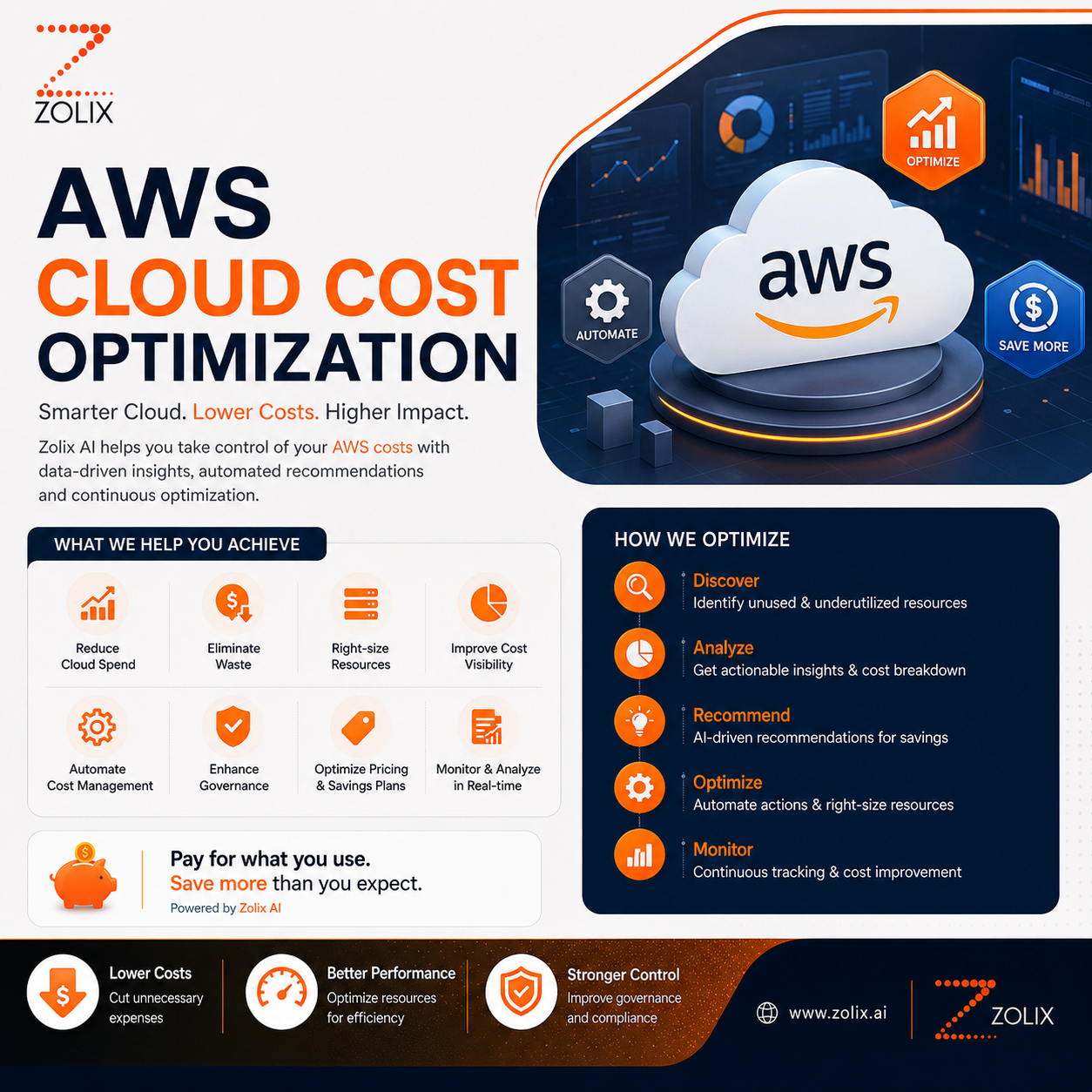
Cloud infrastructure gives businesses the flexibility to scale applications quickly, but growing usage can also make cloud expenses difficult to control. Without proper monitoring, organizations may spend money on unused resources, oversized workloads, or inefficient configurations. AWS Cloud Cost Optimization Tools help businesses analyze cloud consumption, identify waste, and improve the efficiency of their infrastructure while maintaining required performance.
What Are AWS Cloud Cost Optimization Tools?
AWS Cloud Cost Optimization Tools are solutions and technologies designed to help organizations understand, monitor, and improve their AWS spending. They can provide information about resource usage, cost trends, budgets, utilization, and potential savings opportunities.
Rather than relying only on monthly billing information, businesses can use these tools to gain more detailed visibility into how different workloads contribute to overall cloud expenditure.
Why Cost Optimization Matters
AWS environments can change rapidly as applications scale and new resources are introduced. A development server that was created temporarily may continue running, while storage volumes or snapshots can accumulate over time.
These small inefficiencies can become significant when multiplied across a large cloud environment. Cost optimization tools help organizations detect such patterns and take corrective action before unnecessary expenses grow.
Monitoring Cloud Spending
One of the most important capabilities of aws cloud cost optimization tools is centralized cost monitoring. Businesses can review spending patterns and compare costs across services, projects, accounts, or environments.
Detailed reporting makes it easier to understand which resources are responsible for increased expenditure. Teams can also monitor changes over time to determine whether optimization efforts are producing measurable results.
Identifying Underused Resources
Underutilized infrastructure is a common source of cloud waste. Resources may have significantly more capacity than workloads actually require.
Cost optimization tools can help identify resources with low utilization. Businesses can then evaluate whether these resources should be resized, scheduled, consolidated, or removed. This approach can reduce unnecessary spending without requiring major architectural changes.
Improving Compute Efficiency
Compute resources often represent a substantial portion of cloud expenses. Selecting the appropriate instance type and capacity is therefore essential for efficient infrastructure management.
Optimization tools can analyze utilization patterns and highlight potential right-sizing opportunities. Businesses can use these insights to align computing capacity more closely with actual workload requirements.
Managing Storage Costs
Storage expenses can gradually increase as applications generate backups, logs, snapshots, and other data. Some information may no longer need frequent access but can remain in relatively expensive storage environments.
Cost optimization solutions can help teams review storage usage and identify opportunities for better data organization. Retention policies and appropriate storage options can further support long-term cost efficiency.
Budgets and Spending Alerts
Unexpected cloud expenses can affect financial planning. Budget monitoring and alerts allow organizations to establish spending thresholds and receive notifications when costs approach predefined limits.
These alerts give teams an opportunity to investigate unusual consumption before it becomes a larger financial issue. They also encourage greater accountability across departments and projects.
Automation and Policy-Based Optimization
As cloud environments expand, manually reviewing every resource becomes increasingly difficult. Automation can help organizations monitor resources and enforce predefined cost-management policies.
Scheduled shutdowns for non-production environments, automated cleanup processes, and policy-based controls can reduce waste caused by forgotten or unnecessary resources.
Supporting Better Cloud Decisions
The real value of AWS Cloud Cost Optimization Tools goes beyond reducing a monthly bill. They provide information that helps technical and financial teams make better infrastructure decisions.
By combining cost information with utilization and performance data, organizations can determine where optimization is appropriate without compromising critical workloads.
Building a Continuous Cost Strategy
Cloud optimization should not be treated as a one-time activity. Resource requirements change as applications grow, traffic fluctuates, and business priorities evolve.
Regular reviews using AWS Cloud Cost Optimization Tools can help businesses discover new savings opportunities and keep infrastructure aligned with current requirements.
Conclusion
AWS Cloud Cost Optimization Tools provide businesses with greater visibility and control over cloud expenditure. Through spending analysis, resource monitoring, right-sizing, storage management, budget alerts, and automation, organizations can reduce unnecessary consumption and improve infrastructure efficiency. A continuous optimization strategy helps businesses make smarter cloud decisions while balancing cost, performance, scalability, and reliability.

 English
 Arabic
 French
 Spanish
 Portuguese
 Turkish
 Dutch
Dutch
 Italiano
 Russian
 Romaian
 Portuguese (Brazil)
 Greek
Greek
