


Fungal Acne After Monsoon? Chemical Peeling Treatment Can Help
Monsoon weather can be challenging for your skin. Increased humidity, sweat, pollution, dampness, and frequent exposure to rain can create an environment where certain skin concerns become more noticeable. For some people, this may include small, itchy, uniform bumps that are sometimes mistaken for conventional acne.
What people commonly call "fungal acne" may actually refer to Malassezia folliculitis, a condition involving yeast in hair follicles. Because it can look similar to acne but may require different management, getting the right diagnosis is important.
A Chemical Peeling Treatment may have a role in managing certain acne-related concerns, but it is not automatically the right treatment for every case of suspected fungal acne. Professional assessment should come first.
Why Monsoon Can Trigger Skin Concerns
Humidity and increased sweating can change the skin environment. During the monsoon, people may also spend more time outdoors, wear masks or helmets, use heavier products, or leave sweat on the skin for longer periods.
These factors can contribute to clogged pores, irritation, and follicular concerns.
For individuals prone to Malassezia folliculitis, the warm and humid environment may make symptoms more noticeable.
What Is "Fungal Acne"?
Despite the popular name, fungal acne is not traditional acne. Malassezia is a type of yeast that normally exists on human skin. Under certain conditions, it can contribute to inflammation around hair follicles, resulting in Malassezia folliculitis.
Common features can include:
-
Small, relatively uniform bumps
-
Itching
-
Bumps concentrated around the forehead, hairline, chest, shoulders, or upper back
-
Symptoms that may worsen with heat and sweating
However, these symptoms can overlap with bacterial folliculitis and acne. That is why self-diagnosis can be difficult.
Why Correct Diagnosis Matters
Treating every monsoon breakout as ordinary acne may not provide the expected results. Similarly, assuming that every small bump is fungal acne can lead to inappropriate skincare choices.
A dermatologist can assess the appearance, distribution, symptoms, and history of the condition and determine the most appropriate management approach.
Once the underlying concern is identified, a professional can decide whether topical or other treatments are appropriate and whether a cosmetic procedure should be considered.
Where Does Chemical Peeling Fit In?
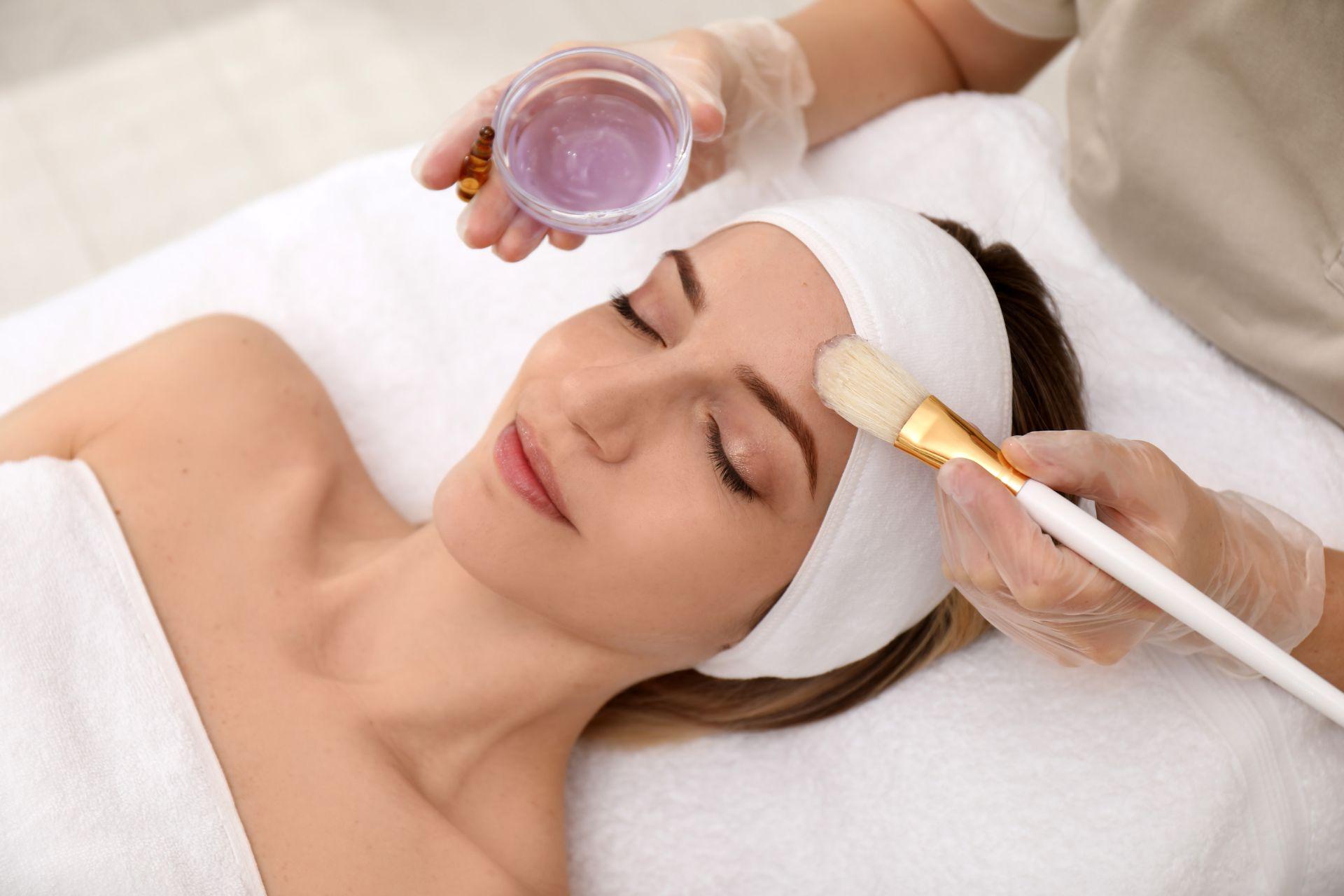
A Chemical Peeling Treatment involves applying a carefully selected chemical solution to the skin to exfoliate controlled layers of the skin. Different peels use different ingredients and strengths, and their suitability depends on the individual's skin type and concern.
Chemical peels are commonly used for concerns such as acne, uneven skin tone, superficial pigmentation, and certain types of textural irregularities.
However, they should not be viewed as a universal treatment for suspected fungal acne. If active Malassezia folliculitis is present, appropriate medical management of the underlying condition is generally more important than simply performing an exfoliating procedure.
Can Chemical Peels Help Acne-Prone Skin?
Depending on the formulation, a professionally selected peel may help improve certain acne-related concerns by promoting exfoliation and reducing the buildup of dead skin cells.
Some peel ingredients may also be selected for their effects on oiliness, clogged pores, or post-acne marks.
The exact peel should be chosen by a qualified professional after assessing the individual's skin. Stronger is not necessarily better, especially when the skin is already irritated.
Don't Use a Peel on Irritated Skin Without Advice
One of the biggest mistakes people can make during monsoon skincare is performing aggressive exfoliation when the skin barrier is already irritated.
If your skin is red, burning, inflamed, peeling excessively, or experiencing an active rash or infection, consult a dermatologist before undergoing a cosmetic peel.
Applying acids without professional guidance can potentially worsen irritation or cause unwanted pigmentation, particularly in deeper skin tones.
Chemical Peeling vs Fungal Acne Treatment
It is useful to understand that these are not interchangeable approaches.
Fungal acne management focuses on addressing the underlying Malassezia-related follicular problem and controlling contributing factors.
Chemical peeling is a cosmetic dermatological procedure that can be used for selected skin concerns, including certain types of acne and pigmentation.
A dermatologist may determine that a peel is appropriate after the active condition has been evaluated and managed.
Monsoon Skincare Tips for Acne-Prone Skin
Professional treatments work best when combined with appropriate daily skincare.
Keep the Skin Clean
Gently cleanse the skin after sweating, especially after outdoor activities. Avoid excessive scrubbing because it can irritate the skin.
Change Out of Sweaty Clothes
If possible, change damp clothing after exercising or spending time outdoors. This is particularly useful when follicular bumps occur on the chest, shoulders, or back.
Avoid Heavy Products Without Guidance
Some oily or occlusive products may not suit individuals who are prone to follicular concerns. Choose products based on your skin type and professional advice.
Keep Hair Products Away From the Face
Hair oils, styling products, and heavy conditioners can sometimes contribute to bumps around the hairline and forehead.
Don't Pick the Bumps
Picking or squeezing bumps can increase irritation and may leave temporary or persistent marks.
When Should You See a Dermatologist?
Consider professional evaluation if bumps are persistent, itchy, repeatedly returning, spreading, or not improving with your usual acne routine.
A dermatologist can distinguish between acne, Malassezia folliculitis, bacterial folliculitis, irritation, and other conditions that can look similar.
This is particularly important before starting a Chemical Peeling Treatment, because the skin should be assessed for suitability and the appropriate treatment plan should be selected.
What to Expect From a Chemical Peel
The experience varies depending on the type and strength of the peel.
During a professional procedure, the skin is generally prepared before the selected solution is applied for a controlled period. You may experience temporary tingling or warmth depending on the formulation.
After treatment, some people may experience mild redness, dryness, or peeling. Your provider should explain the expected recovery period and appropriate aftercare.
Do not assume that visible peeling is necessary for a peel to be effective. Different peels work at different depths and can produce different responses.
Post-Treatment Care Is Important
After a Chemical Peeling Treatment, following the recommended aftercare is essential.
Depending on the peel, your provider may recommend:
-
Gentle cleansing
-
Appropriate moisturization
-
Regular broad-spectrum sunscreen
-
Avoiding unnecessary exfoliation
-
Avoiding picking or peeling the skin
-
Temporarily reducing certain active skincare ingredients
The exact aftercare should be based on the peel used and your skin's response.
Avoid DIY Chemical Peels
Online skincare trends can make professional-strength acids appear easy to use at home. However, incorrect concentration, application time, or product combinations can cause irritation, burns, pigmentation changes, or other complications.
A professional treatment allows the formulation and application to be selected according to the individual's skin and concern.
If you are experiencing suspected fungal acne, diagnosing the condition should come before experimenting with acids.
Final Thoughts
Monsoon humidity can contribute to a variety of skin concerns, including acne and Malassezia folliculitis. If you notice small, itchy, persistent bumps, avoid automatically assuming that they are conventional acne or trying multiple treatments without guidance.
A chemical peeling treatment can be useful for selected acne, pigmentation, and texture concerns when appropriately chosen and professionally performed. However, suspected fungal acne requires proper assessment so that the underlying condition can be managed appropriately.
The smartest approach is to consult a qualified dermatologist, follow a suitable monsoon skincare routine, and consider professional treatments only when they are appropriate for your skin. With the right diagnosis and personalized care, you can work toward healthier-looking skin without unnecessarily irritating it.

 English
 Arabic
 French
 Spanish
 Portuguese
 Turkish
 Dutch
Dutch
 Italiano
 Russian
 Romaian
 Portuguese (Brazil)
 Greek
Greek
