


Saudi Arabia Halal Food Market: Growth Across Meat, Dairy, Grains and Confectionery
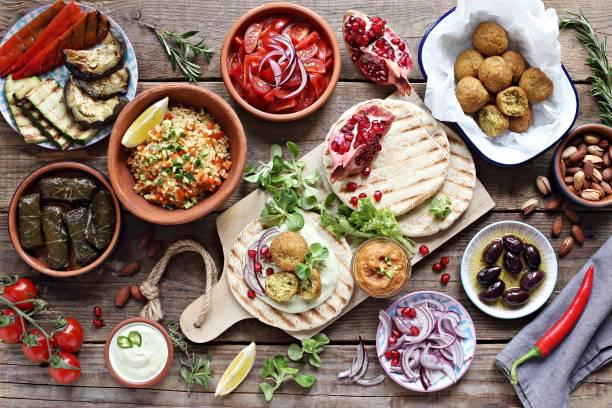
The Saudi Arabia Halal Food Market driven by the rising popularity of premium and value-added halal food offerings, increasing consumer awareness of food quality and safety, expanding e-commerce penetration, tourism development, and Saudi Arabia's growing ambition to establish itself as a global halal food hub.
The market is experiencing strong growth momentum as halal food continues to evolve from a religious dietary requirement into a broader ecosystem covering food manufacturing, certification, traceability, foodservice, retail, and international trade. Saudi Arabia halal food market size reached USD 48.5 Billion in 2025. Looking forward, IMARC Group expects the market to reach USD 130.1 Billion by 2034, exhibiting a growth rate (CAGR) of 11.58% during 2026-2034. Growing consumer preference for certified products is encouraging food manufacturers to expand halal-certified portfolios across meat, poultry, seafood, dairy, confectionery, cereals, and ready-to-eat categories. At the same time, Saudi Arabia's strategic location and expanding food manufacturing capabilities are creating opportunities for companies to use the Kingdom as a production and export base for halal products.
Saudi Arabia's government is also strengthening the regulatory and institutional framework surrounding halal food. The Saudi Food and Drug Authority (SFDA) operates the Saudi Halal Center, which provides halal certification services for food-related establishments and products. The certification process includes eligibility assessment, facility audits, and decision-making by the relevant committee.
How AI is Reshaping the Future of Saudi Arabia Halal Food Market?
- AI-Powered Halal Supply Chain Traceability: AI and advanced data analytics can help food manufacturers monitor ingredients, suppliers, production processes, storage conditions, and distribution activities across complex halal supply chains. By connecting product data across multiple stages, companies can improve traceability, identify potential compliance risks, and provide greater transparency to retailers and consumers.
- Intelligent Demand Forecasting for Halal Food Manufacturers: Machine learning systems can analyze purchasing behavior, seasonal consumption, tourism activity, promotional campaigns, and regional demand patterns to improve production planning. This can help manufacturers optimize inventory levels, reduce food waste, and ensure adequate availability of halal products across supermarkets, specialized stores, foodservice operators, and online channels.
- AI-Driven Product Innovation and Consumer Personalization: Food companies can use AI to analyze online reviews, social media discussions, purchasing patterns, and consumer preferences to identify demand for premium, healthy, organic, plant-based, high-protein, and convenience-oriented halal products. These insights can support faster product development and more targeted marketing campaigns.
- AI-Enabled Quality and Certification Management: Computer vision, predictive analytics, and automated data systems can support quality control throughout food production. Such technologies can help manufacturers monitor labeling, packaging, ingredient information, production parameters, and documentation, complementing formal halal certification and food safety procedures.
Grab a sample PDF of this report: https://www.imarcgroup.com/saudi-arabia-halal-food-market/requestsample
Market Growth Factors
The Saudi Arabia halal food market is being driven by strong consumer adherence to Islamic dietary principles and increasing demand for halal-certified food products across both traditional and modern retail channels. Halal certification provides consumers with assurance regarding ingredient sourcing, production practices, and compliance with Islamic dietary requirements. The SFDA's Saudi Halal Center provides certification services for food-related establishments and products, including facility assessment and audits, strengthening institutional confidence in the halal ecosystem.
Saudi Arabia's ambitions to become a global halal hub are creating significant opportunities for domestic production, international investment, and export-oriented food manufacturing. During the Makkah Halal Forum in February, Saudi officials emphasized the transformation of halal from a growing market into an integrated industry supported by quality, governance, and transparency. The forum also introduced the "Golden Halal" logo and announced the Halal Academy, while Saudi authorities signed cooperation agreements with Indonesia's halal assurance authority and Thailand's Central Islamic Council to strengthen halal standards and international recognition.
Food manufacturing localization is another important market driver. In July, Halal Products Development Company, a Public Investment Fund subsidiary, announced local manufacturing operations for Sadia products in Saudi Arabia through a partnership with BRF. The initiative is intended to strengthen domestic halal food production and support Saudi Arabia's position as a regional and global halal manufacturing hub. Sadia products are distributed across more than 100 countries, creating potential export opportunities from the Kingdom.
Growing investment in production infrastructure is simultaneously strengthening Saudi Arabia's halal food supply chain. In January, JBS highlighted the expansion of its Saudi operations through a manufacturing facility in Jeddah backed by an investment of approximately SAR 303.75 Million. The facility is intended to support local food security while serving halal markets across the Middle East, Africa, and Southeast Asia. JBS also indicated plans to increase production capacity, reinforcing Saudi Arabia's emerging role as an export-oriented halal food production base.
Innovation in halal ingredients is also creating opportunities beyond traditional meat and poultry products. In May, Tanmiah Food Company announced partnerships with Griffith Foods and Poulta Inc. aimed at advancing halal innovation, smart agriculture, and local food manufacturing. The Griffith Foods collaboration includes plans for a Saudi production and R&D facility focused on 100% halal-certified ingredients, including sauces, seasonings, and spice blends.
The growing role of sustainability and responsible production is further reshaping the market. In December, the Saudi Halal Center launched a Halal Mark Track aligned with Environmental, Social, and Governance principles. The initiative, developed with Halal Products Development Company and THIQAH, aims to integrate approved halal standards with ESG requirements and strengthen trust and sustainability across the halal ecosystem.
E-commerce is also expanding access to halal food products by allowing consumers to discover and purchase a broader range of certified products without relying exclusively on physical stores. Online platforms can support personalized recommendations, subscription models, digital promotions, product traceability information, and convenient home delivery, creating additional opportunities for halal food manufacturers and retailers.
Market Segmentation
Product Type Insights:
- Meat
- Poultry and Seafood
- Fruit and Vegetables
- Dairy Product
- Cereals and Grains
- Oil, Fats and Waxes
- Confectionery
- Others
Meat represents a major component of the Saudi Arabia halal food market, supported by strong consumer demand for halal-certified animal protein and the country's well-established halal food culture. Poultry and seafood also represent important categories, while dairy products, cereals, confectionery, and other packaged foods are expanding the range of halal-certified choices available to consumers. The growing availability of premium and value-added products is encouraging manufacturers to diversify their halal portfolios beyond traditional categories.
Distribution Channel Insights:
- Online Stores
- Hypermarkets and Supermarkets
- Specialized Stores
- Others
Hypermarkets and supermarkets represent important distribution channels due to their extensive product ranges, established cold-chain infrastructure, and strong presence across major Saudi cities. Specialized stores provide consumers with targeted halal product selections, while online stores are gaining importance as digital commerce makes certified products increasingly accessible. The combination of physical and digital retail is enabling manufacturers to reach consumers across multiple purchasing occasions.
Regional Insights:
- Northern and Central Region
- Western Region
- Eastern Region
- Southern Region
The Northern and Central Region represents an important market, supported by population concentration, commercial activity, and the presence of Riyadh as a major economic and business center. The Western Region benefits from the large consumer base and tourism activity associated with Makkah, Madinah, and Jeddah, while the Eastern Region is supported by strong commercial and industrial activity. The Southern Region also contributes to market expansion as modern retail infrastructure and food distribution networks continue to develop across the Kingdom.
Recent Developement & News
- February: The third Makkah Halal Forum brought together international halal industry representatives, regulators, and economic organizations. Saudi Arabia introduced the "Golden Halal" logo and announced the Halal Academy, while the SFDA signed cooperation agreements with Indonesia's BPJPH and Thailand's CICOT to strengthen halal standards and certification recognition.
- January: JBS expanded its Saudi operations with a manufacturing facility in Jeddah supported by approximately SAR 303.75 Million in investment. The company positioned Saudi Arabia as an important production and export base for halal markets across the Middle East, Africa, and Southeast Asia.
- July: Halal Products Development Company and BRF launched local manufacturing operations for Sadia products in Saudi Arabia. The initiative represents a major step toward localizing halal food production and strengthening the Kingdom's role in international halal food manufacturing.
- August: BRF and Halal Products Development Company announced plans for an innovation center at BRF's processed food plant in Jeddah, focusing on food innovation, safety, quality, and regulatory compliance. The companies also established a center of excellence for information and data management.
- December: The Saudi Halal Center launched the Halal Mark Track, integrating approved halal standards with ESG requirements. The initiative is designed to strengthen reliability, sustainability, and transparency across the Kingdom's halal ecosystem.
If you require any specific information that is not covered currently within the scope of the report, we will provide the same as a part of the customization.
About Us
IMARC Group is a global management consulting firm that helps the world's most ambitious changemakers to create a lasting impact. The company provides a comprehensive suite of market entry and expansion services. IMARC offerings include thorough market assessment, feasibility studies, company incorporation assistance, factory setup support, regulatory approvals and licensing navigation, branding, marketing and sales strategies, competitive landscape and benchmarking analyses, pricing and cost research, and procurement research.
Contact Us
IMARC Group
134 N 4th St. Brooklyn, NY 11249, USA
Email: sales@imarcgroup.com
Tel No: (D) +91 120 433 0800
United States: +1-201971-6302

 English
 Arabic
 French
 Spanish
 Deutsch
 Turkish
 Dutch
Dutch
 Italiano
 Russian
 Romaian
 Portuguese (Brazil)
 Greek
Greek
