


150 Amp Alternator Fits Indmar Marine Engines: Complete Guide
Introduction
You're out on the water, running the stereo, the livewell pump, and the GPS all at once, and you notice the gauges start to dim before you've even made it back to the dock. For boat owners running Indmar marine engines, a weak or failing alternator is one of the most common culprits behind that slow electrical fade, and it's a problem that only gets worse the longer it's ignored. This guide walks through what your alternator actually does, the warning signs that it's on its way out, the exact engines and OEM part numbers this replacement covers, and what to check before, during, and after installation, so your electrical system stays as dependable as the rest of your boat.
What Does an Alternator Do?
The alternator is the component responsible for keeping your battery charged and your electronics running once the engine is up and running. As the engine turns, the alternator converts that rotation into electrical current, which recharges the battery and simultaneously powers everything drawing electricity onboard navigation electronics, stereo systems, livewell pumps, GPS units, lighting, and fish finders. On a marine engine, the alternator has to work harder than its automotive counterpart, since boats tend to run more accessories at once and for longer stretches without a break. Once the alternator can no longer keep pace with that demand, the battery starts running on reserve power alone, and everything connected to it suffers.
Common Signs of a Failing Alternator
An alternator rarely fails all at once, it usually gives some warning first, if you know what to look for.
-
Dimming electronics while underway. Lights, stereo, or instrument gauges that dim or flicker, especially when multiple accessories are running together, point to an alternator struggling to keep up.
-
A battery that won't hold a charge. If the battery keeps dying even after a full charge, the alternator may not be replenishing it properly during use.
-
Slow cranking on startup. An engine that turns over sluggishly, even with a battery that tests fine, often means the alternator isn't fully recharging it between trips.
-
Warning light or gauge reading low. A charging system light or a voltage gauge reading below normal while the engine runs is a direct sign the alternator output has dropped.
-
Unusual noise from the alternator. A whining or grinding sound near the alternator can indicate worn bearings inside the unit.
If any of these sound familiar, it's worth checking the alternator before it leaves you with a dead battery farther from the dock than you'd like.
Compatible Vehicles & OEM Part Numbers
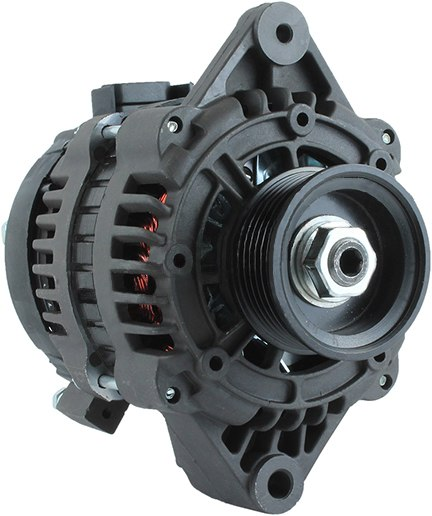
This alternator is a Delco 11SI design cross-referenced to:
DELCO: 8400013, 8600002 INDMAR: 575014
It's built for the following applications:
Indmar Marine Engine & Other Marine Applications — Aftermarket
Specifications include 12-volt operation, clockwise (CW) rotation, a 6-groove S6 pulley with a 63mm outer diameter, an internal fan (IF) design, internal regulation (IR), and a 3-terminal connection. Because Indmar-powered boats are built by a range of different manufacturers, matching the stamped numbers on your existing alternator against this cross-reference list is the most reliable way to confirm fitment more reliable than going by boat model alone.
Why Quality Matters
Not every replacement alternator built to a similar part number performs the same way once it's under load. A poorly built unit might spin up and even charge for a while, but weak internal windings, an undersized regulator, or mismatched bearings can lead to inconsistent output or early failure especially in a marine engine bay, where heat and vibration are constants. A quality alternator engineered to OEM cross-reference specs gives you three things a lesser option usually can't:
-
Reliability — steady charging output even when several accessories are running at once.
-
Safety — a charging system that fails unexpectedly on the water is more than an inconvenience.
-
Long-term value — a well-built alternator costs more upfront than the cheapest option, but it saves you from repeat failures and the labor of doing the job twice.
Features & Benefits
This alternator is a Delco 11SI design, built to the following specs:
-
Voltage: 12V
-
Rotation: Clockwise (CW)
-
Pulley type: S6, 6-groove, 63mm OD
-
Fan type: Internal (IF)
-
Regulator: Internal (IR)
-
Terminals: 3
The internally regulated, internally fanned design keeps this alternator compact and well suited to the enclosed engine compartments common on inboard-powered boats. Its output is built to support the multiple accessories a modern boat runs simultaneously, which means more consistent battery charging over a full day on the water compared to a lower-output or generic replacement.
Installation Tips
Replacing an alternator on an Indmar marine engine is a manageable job for a comfortable DIYer, though marine wiring calls for extra care throughout.
-
Disconnect the battery completely before touching the alternator or any wiring, marine electrical systems can arc dangerously if left live.
-
Photograph the wiring and belt routing before removing the old alternator, so reassembly is straightforward.
-
Remove the old alternator, supporting it as you take out the mounting bolts.
-
Mount the replacement alternator using the existing mounting points, no modification should be needed.
-
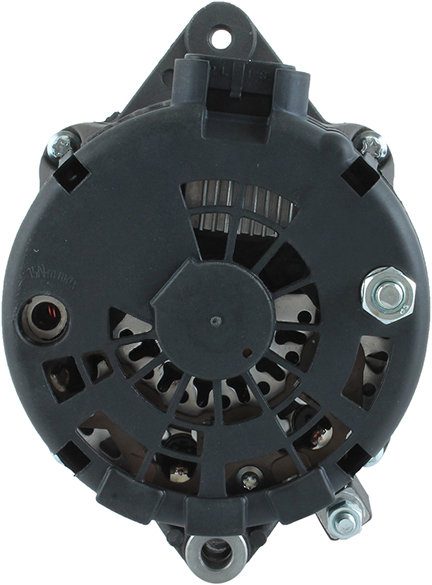
Reconnect the wiring to the 3-terminal connector carefully, matching each wire to its original position.
-
Adjust belt tension so the pulley engages properly without slipping or over-tightening the bearings.
-
Reconnect the battery, start the engine, and check charging voltage at the battery terminals with a multimeter.
Because marine electrical work carries higher stakes than automotive work, professional installation is recommended if you're not comfortable with marine wiring.
Maintenance Tips
An alternator itself needs little direct maintenance, but the systems around it have a big effect on how long it lasts.
-
Inspect the drive belt regularly. A loose or worn belt keeps the alternator from spinning at the speed it needs to produce full output.
-
Check terminal connections for corrosion. Marine environments accelerate corrosion, and a corroded connection can quietly reduce charging performance.
-
Keep the engine bay dry where possible. Trapped humidity in an enclosed compartment speeds up wear on electrical components.
-
Test output voltage a few times a season. Catching a weakening alternator early beats getting stranded away from the dock.
-
Store the boat properly in the off-season. Extended sitting with a partially charged battery strains the whole charging system once the boat comes back into use.
Conclusion
A dead battery on the water is more than an inconvenience, it's a sign your charging system needs attention before it leaves you stranded somewhere far less convenient than the dock. This Delco 11SI alternator (OEM 575014 / 8400013 / 8600002) delivers the exact fit, rotation, and output your Indmar marine engine was built around, no guesswork, no mismatched specs, just a verified cross-reference you can trust.
Don't wait for dimming electronics to become a dead battery. Confirm your OEM part number, and get a quality replacement in place before it fails on you. Order your 150 Amp alternator for Indmar marine engines from Denparts.ca today, and keep every system onboard running the way it should.

 English
 Arabic
 French
 Spanish
 Portuguese
 Turkish
 Dutch
Dutch
 Italiano
 Russian
 Romaian
 Portuguese (Brazil)
 Greek
Greek
