


3D Printer Buying Guide in India: How to Choose the Right 3D Printer
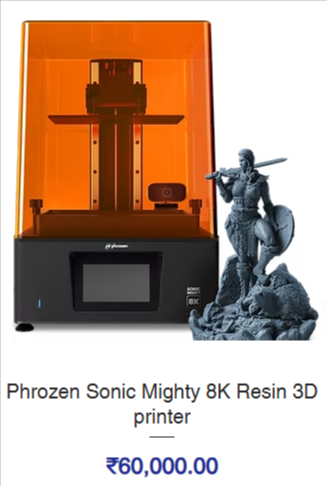
A 3D printer has become a valuable tool for students, engineers, designers, hobbyists, manufacturers and businesses. What was once considered specialised manufacturing equipment is now available in desktop formats suitable for homes, offices, workshops and educational institutions.
With so many models, technologies and materials available, choosing the right machine can be confusing. The best printer is not necessarily the most expensive one. Instead, it should match what you want to create, how frequently you plan to print and the materials your projects require.
For Indian buyers, factors such as after-sales support, spare parts, consumable availability and warranty can be just as important as specifications. Current Indian buying guides show that desktop FDM machines can start in the entry-level price range, while professional and industrial systems can cost considerably more.
What Is a 3D Printer?
A 3D printer is a machine that creates physical objects from digital 3D models. Instead of removing material from a block, additive manufacturing builds an object layer by layer.
The process generally involves three stages:
- Create or download a 3D model
- Prepare the model using slicing software
- Print the object using the selected material
Depending on the technology, the material can be deposited as plastic filament or cured from liquid resin.
This makes 3D printing useful for prototypes, functional components, educational models, decorative objects, customised products and many other applications.
Choosing the Right 3D Printer Technology
Before selecting a brand or model, decide which printing technology suits your application.
FDM 3D Printers
Fused Deposition Modelling, commonly called FDM, melts thermoplastic material and deposits it layer by layer.
FDM is popular because it can produce relatively large objects and functional parts while keeping running costs manageable.
Common materials include:
- PLA
- PETG
- ABS
- ASA
- TPU
- Nylon
- Carbon-fibre reinforced materials
FDM is generally a good starting point for beginners, students and makers. It is also useful for prototypes, brackets, enclosures and other functional parts.
Resin 3D Printers
A resin machine uses liquid photopolymer resin that is cured using UV light. Resin printing is particularly useful when fine detail and smooth surfaces are important.
Typical applications include:
- Miniatures
- Jewellery models
- Dental models
- Figurines
- Detailed prototypes
However, resin printing involves additional post-processing and requires appropriate handling, ventilation and protective equipment.
What Should You Look for When Buying a 3D Printer?
Choosing a printer involves more than checking the maximum print speed.
1. Build Volume
Build volume determines the maximum size of an object you can print.
A larger build area is useful if you plan to produce large prototypes or multiple smaller parts simultaneously. However, buying a very large printer when you only need small objects can unnecessarily increase your budget.
2. Print Quality
Print quality depends on several factors, including mechanical design, nozzle size, layer height, material and slicer settings.
For detailed models, look for a machine capable of producing the layer resolution required for your application.
3. Print Speed
Modern desktop printers can be significantly faster than older generations.
However, speed should not be considered independently from reliability and print quality. A printer that produces consistent results at a reasonable speed can be more useful than one that advertises a higher maximum speed but requires frequent adjustments.
4. Automatic Bed Levelling
Automatic levelling can make the initial setup easier, particularly for beginners.
A properly levelled and calibrated build surface is important because poor first-layer adhesion can cause print failures.
5. Material Compatibility
Think about the materials you expect to use before purchasing.
If you only need PLA, a basic FDM printer may be enough. If you need materials such as ABS, ASA, Nylon or carbon-fibre composites, you may need a printer with appropriate temperature capabilities and hardware.
3D Printer for Beginners
For someone buying a first machine, simplicity is often more valuable than having every advanced feature.
A beginner-friendly printer should ideally have:
- Straightforward setup
- Automatic calibration
- Reliable first-layer performance
- Easy-to-use slicing software
- Easily available spare parts
- Good documentation
- Local technical support
Starting with PLA can also make the learning process easier because it is generally more forgiving than many engineering materials.
Once you understand bed adhesion, temperature settings, retraction and slicing, you can experiment with more demanding materials.
3D Printer for Business
Businesses can use 3D printing for rapid prototyping, product development, replacement parts, jigs, fixtures and customised products.
For commercial use, reliability becomes particularly important.
Instead of focusing only on the purchase price, consider:
- Expected printing hours
- Maintenance requirements
- Consumable costs
- Spare-part availability
- Warranty
- Technical support
- Production capacity
A slightly more expensive printer with reliable local support can potentially provide better value over its lifetime than a cheaper machine with difficult-to-source parts.
Why After-Sales Support Matters in India
Buying a printer is only the beginning.
Like any piece of equipment, a 3D printer may eventually require replacement components, maintenance or troubleshooting.
For Indian users, local availability of:
- Nozzles
- Build plates
- Hotends
- Belts
- Fans
- Filament
- Resin
- Replacement components
can make a significant difference.
Hydrotech 3D, for example, states that it provides authorised printer sales and after-sales support in Chennai and across India, and lists brands including Bambu Lab, Elegoo and Phrozen.
Where Hydrotech Can Help
For buyers who are unsure which printer to choose, getting advice based on the intended application can be useful.
Hydrotech's current range includes FDM and resin machines, with options from brands such as Bambu Lab, Elegoo and Phrozen.
The company's buying guidance also recommends considering the actual application, materials and required workflow rather than simply selecting a printer based on specifications.
This approach is particularly useful for first-time buyers because the right machine depends heavily on what you intend to manufacture.
Common Mistakes When Buying a 3D Printer
Buying Only on Price
The cheapest machine is not always the most economical choice.
Consider maintenance, consumables and support as part of the total cost.
Choosing the Biggest Printer
A larger build volume is useful only if your projects require it.
Ignoring Materials
A printer designed primarily for PLA may not be appropriate for advanced engineering materials.
Forgetting Consumables
Budget for filament or resin, build surfaces, nozzles and other consumables.
Ignoring Support
A machine with strong local support can be easier to operate over the long term.
Final Thoughts
Choosing a 3D printer should begin with your application rather than a brand name.
If you need functional parts, prototypes and larger objects, an FDM printer may be a practical starting point. If your priority is extremely fine detail, a resin printer may be more appropriate.
Indian buyers should also consider the complete ownership experience, including consumable availability, spare parts, warranty and technical support.
With the right machine, 3D printing can become a powerful tool for education, product development, engineering, creativity and small-scale manufacturing.
Frequently Asked Questions
1. What is the best 3D printer for beginners?
For many beginners, an easy-to-use FDM printer with automatic calibration and good material availability is a practical starting point.
2. Is FDM or resin better?
Neither is universally better. FDM is generally suited to functional and larger parts, while resin is better for highly detailed models and smooth surfaces.
3. What can I make with a 3D printer?
You can create prototypes, models, replacement parts, enclosures, tools, decorative objects, miniatures and customised products.
4. Is 3D printing expensive?
The total cost depends on the printer, material, print volume and application. Entry-level machines can be relatively affordable, while professional systems cost significantly more.
5. Do I need technical knowledge to use a 3D printer?
Basic machines can be accessible to beginners, but learning slicing, calibration and material settings will help you achieve better results.
6. What should I consider before buying a 3D printer in India?
Consider application, build volume, material compatibility, print quality, maintenance, spare parts, warranty, consumable availability and after-sales support.
For more details please visit the website - https://www.hydrotech3dchennai.com/
Call us: +91-9445390912
Email: hydrotech3dps@gmail
Address: Valasaravakkam, Chennai 600087

 English
 Arabic
 French
 Spanish
 Portuguese
 Deutsch
 Dutch
Dutch
 Italiano
 Russian
 Romaian
 Portuguese (Brazil)
 Greek
Greek
