


Car & Truck Starters: How to Choose the Right Starter Motor for Your Vehicle
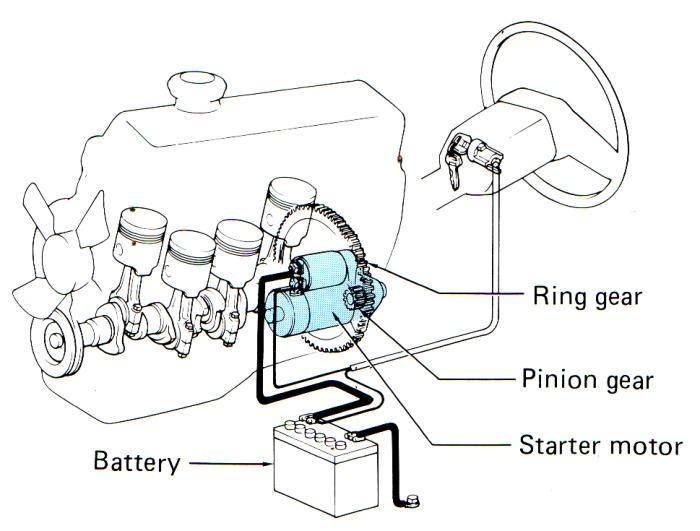
If your car cranks slowly, clicks instead of turning over, or just won't start at all, there's a good chance the starter motor is on its way out. But picking a replacement isn't as simple as searching "starter for my car" Engine application, mounting style, rotation direction, and the pinion gear all have to line up, or the new part won't work no matter how closely it resembles the old one. Here's what to know before you buy.
What Does a Starter Actually Do?
The starter is an electric motor that turns the engine over so the combustion process can begin. When you turn the key or press the start button, an electrical signal activates the starter solenoid, either directly or through the vehicle's starter-control circuit.
The solenoid performs two important functions: it closes the high-current circuit that powers the starter motor and moves the starter's pinion gear into engagement with the ring gear on the engine's flywheel or flexplate. Once the gears engage, the starter motor rotates the engine until it starts and runs under its own power.
Many modern vehicles use permanent-magnet reduction-gear (PMGR) starters. These compact designs use reduction gearing to provide high cranking torque while keeping the starter relatively small and lightweight. However, starter designs vary depending on the vehicle, engine, and application.
Signs Your Starter Is Failing
A failing starter can show several warning signs before it stops working completely:
-
Slow or sluggish cranking — the engine turns over more slowly than normal and may take longer to start. However, a weak battery or poor electrical connection can produce the same symptom.
-
A single click when turning the key — a click with little or no engine cranking can indicate a starter, solenoid, battery, cable, or electrical-control problem.
-
Intermittent starting — the vehicle may start normally one time and fail to crank the next. This can be a sign of a worn starter or solenoid, but electrical connections and control circuits should also be checked.
-
Grinding or unusual noises during startup — grinding can indicate improper engagement between the starter drive gear and the engine's flywheel or flexplate and should be investigated promptly.
Important: A weak battery, corroded battery terminals, poor ground connections, damaged cables, or other electrical faults can produce symptoms similar to a failing starter. Check the battery, terminals, cables, and connections before replacing the starter. This can prevent replacing a good starter while the actual no-start problem remains.
How to Choose the Correct Starter for Your Vehicle
This is where most wrong orders happen. Two vehicles with the same make, model, and even engine size can still need different starters depending on trim, drivetrain, or production year. Before you buy, check:
-
Voltage — has to match your electrical system
-
Rotation direction — the starter has to spin the engine the correct way
-
Pinion gear and tooth count — has to mesh properly with the flywheel/flexplate
-
Mounting configuration — number of holes, spacing, and mounting type (flange vs. saddle, for example)
-
Terminal type and location — a starter can look identical but wire up differently
The fastest way to get this right is to pull the part number off your old starter (or from your owner's manual/VIN lookup) and cross-reference it, rather than shopping by vehicle name alone. Because the same model can use more than one starter across its production run, always confirm the exact application against your vehicle's details before ordering.
Common Sprinter Starting Problems
Mercedes-Benz, Dodge, and Freightliner Sprinter vans often operate under demanding conditions, including long driving hours, frequent stops, and repeated engine starts. Over time, the battery, starter, fuel system, glow-plug system, and electrical connections can develop problems that make the van difficult to start or leave it unable to start.
Some common causes of Sprinter starting problems include:
-
Weak or failing battery: A discharged battery can cause slow cranking, clicking, or no cranking at all. If the dashboard lights and other electrical accessories are also weak or completely dead, inspect the battery, terminals, cables, and ground connections first.
-
Worn starter motor: A slow or labored crank, repeated clicking, or a no-crank condition can indicate a failing starter. However, the battery and starter circuit should also be tested before replacing the starter.
-
Glow plug or glow plug module problems: Diesel Sprinters depend on the glow-plug system to assist cold starts. Failed glow plugs or a faulty control module can cause hard starting, particularly in colder temperatures.
-
Fuel delivery problems: A clogged fuel filter, air in the fuel system, insufficient fuel pressure, or running out of fuel can cause the engine to crank without starting.
-
DEF/SCR “starts remaining” warning: On applicable diesel Sprinter models, an “XX starts remaining” message can indicate low DEF, incorrect/contaminated DEF, or an emissions-system fault. If the countdown reaches zero, the engine may be prevented from starting. This should be diagnosed and repaired promptly rather than treated as a starter problem.
-
Corroded grounds or wiring faults: Damaged battery cables, poor ground connections, corroded terminals, or other electrical faults can interrupt power to the starter and engine-management systems and mimic a failed battery or starter.
Because the starter is one of the more common wear items on these vans, it's worth ruling out the battery, grounds, and glow plug system first but if the starter itself is worn, it typically needs to be replaced rather than repaired.
Installing a Replacement Starter
A few basics that make the swap go smoothly:
-
Disconnect the negative battery cable first. The starter circuit carries very high current, so disconnecting the battery helps prevent accidental short circuits.
-
Safely support the vehicle with appropriate jack stands if you need to work underneath it. Never rely on a jack alone.
-
Identify and label the electrical connections before removing the old starter so each wire can be reinstalled correctly.
-
Compare the replacement starter with the original. Check the mounting points, terminal locations, electrical connections, and drive gear before installation.
-
Clean the mounting and electrical contact surfaces if corrosion or dirt is present. A clean mounting surface and good electrical connections are important for proper starter operation and grounding.
-
Install and torque the mounting bolts to the vehicle manufacturer's specifications. Route the wiring away from exhaust components, sharp edges, and moving parts.
-
Reconnect the battery and test the starter. If the engine cranks slowly, the starter makes unusual noises, or the starter does not engage properly, stop and inspect the installation, battery, connections, and wiring rather than repeatedly attempting to start the engine.
Keeping Your Starting System Healthy
Starters generally require little routine maintenance, but the electrical system supporting them does. Keep the battery terminals clean and free of corrosion, and make sure the battery cables and ground connections are secure. A weak battery, high-resistance cable, or poor ground can make a properly functioning starter appear to be failing.
If you notice slow or sluggish cranking, check the battery, battery cables, grounds, and starter control circuit before replacing the starter. Also, avoid repeated or excessively long cranking attempts when the engine won't start. Extended cranking can generate significant heat in the starter and cables, increasing stress on the starting system.
Finding the Right Starter at Denparts
Denparts.ca carries new, OEM-spec aftermarket starters, alternators, and related electrical parts for cars, trucks, vans, and SUVs domestic and imported across a wide range of makes and engine applications, including Sprinter vans. Before ordering, match your vehicle's engine application and part number against the product listing to make sure it's the right fit.

 English
 Arabic
 French
 Spanish
 Portuguese
 Deutsch
 Turkish
 Dutch
Dutch
 Italiano
 Romaian
 Portuguese (Brazil)
 Greek
Greek
