


How Accurate Are Online IQ Tests Based on Scientific Research
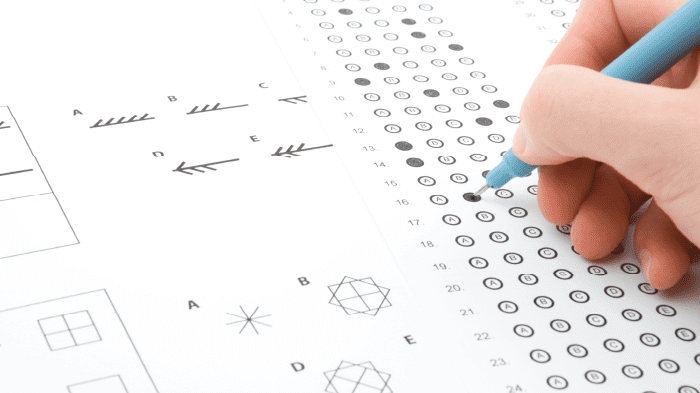
The question how accurate are online iq tests has become increasingly relevant as internet-based intelligence quizzes have grown in popularity. A quick search can produce hundreds of tests promising to estimate your IQ in just a few minutes. Some claim to provide results comparable to professional psychological assessments, while others are designed primarily for entertainment.
Scientific research provides a more nuanced answer. Online cognitive testing can produce reliable and meaningful results when a test is carefully designed, properly standardized, and supported by psychometric evidence. However, not every IQ test available online meets these standards. The accuracy of an online test depends heavily on its construction, scoring system, comparison group, testing conditions, and evidence of reliability and validity.
What Does an IQ Test Actually Measure?
An intelligence quotient, or IQ, is intended to summarize performance on specific cognitive tasks relative to a reference population. Modern intelligence tests commonly assess abilities such as reasoning, working memory, processing speed, verbal comprehension, and visual or spatial problem solving.
A scientifically developed IQ test does not simply count how many questions a person answers correctly. The raw performance is interpreted using standardized norms. This allows an individual's performance to be compared with that of people in an appropriate age group or reference population.
This distinction is important when evaluating online tests. A website may provide a numerical score, but the existence of a number does not automatically make that number a scientifically meaningful IQ score.
The International Test Commission states that tests should be supported by evidence of reliability and validity for their intended purpose. It also emphasizes that evidence supporting interpretations of test scores should be available for evaluation.
Can Online Tests Be Scientifically Reliable?
Yes, research suggests that internet-based cognitive testing can be reliable under appropriate conditions.
One important study examined internet-based cognitive tests involving more than 2,500 pairs of 10-year-old twins. Researchers found substantial stability in scores over time and reported correlations of approximately .80 between internet-based measures and comparable in-person testing for a subsample. The researchers concluded that internet testing could provide reliable and valid cognitive data when properly designed. Another study compared ability tests administered online with tests administered in a laboratory. Researchers found differences in average scores between samples, but these differences could be explained by characteristics such as age and education rather than the online testing environment itself. They also found no structural differences between the achievement scores associated with the testing settings. These findings demonstrate an important principle: online delivery itself does not automatically make an intelligence test inaccurate.
The quality of the assessment matters more than whether the questions appear on a computer screen or on paper.
Why Are Many Online IQ Tests Less Accurate?
Although online testing can work well, many free IQ tests found on the internet have not undergone the extensive development and validation expected of professional psychological assessments.
One major issue is standardization. A legitimate intelligence test requires a suitable normative sample. Researchers need to determine how different groups perform and establish appropriate scoring procedures. Without good norms, a score such as 120 or 135 may have little scientific meaning.
Another issue is test design. A scientifically developed assessment typically measures carefully selected cognitive abilities using items that have been evaluated statistically. Questions need appropriate difficulty levels and should discriminate effectively between different levels of ability.
Some online quizzes, by contrast, consist of a relatively small collection of puzzles. They may test pattern recognition or vocabulary but provide a score labeled “IQ” without demonstrating that the assessment measures general intelligence adequately.
This is why consumers should be cautious about interpreting an online score as an exact measurement of intelligence.
Reliability and Validity Are Different
Two important scientific concepts help answer the question of how accurate are online iq tests: reliability and validity.
Reliability concerns consistency. If someone takes a test under similar circumstances, does the assessment produce reasonably consistent results? A reliable test should minimize random measurement error.
Validity concerns whether the test actually measures what it claims to measure. An online quiz could be highly consistent while still failing to measure general intelligence accurately.
For example, imagine an online test that measures visual pattern recognition extremely consistently. It might produce similar scores every time someone takes it. That would provide evidence of reliability. However, additional evidence would be needed to establish whether the score represents general intellectual ability rather than simply performance on pattern-recognition puzzles.
The International Test Commission's technology-based assessment guidelines emphasize validity, reliability, fairness, accessibility, security, and appropriate test development when assessments are delivered digitally.
Testing Conditions Can Affect Your Score
Professional intelligence assessments are administered under controlled conditions. Online tests are often completed in uncontrolled environments.
Someone might take an online IQ test while tired, distracted, interrupted by notifications, or dealing with a slow internet connection. Another person might complete the same test in a quiet room after sleeping well.
These differences can affect performance.
There is also the issue of supervision. An unsupervised test cannot always determine whether someone is using a calculator, searching for answers, receiving assistance from another person, or taking notes.
Recent research examining remote intelligence testing found that proctoring did not necessarily produce a large overall effect across all cognitive tasks. However, the researchers noted that supervision can be particularly important for tasks that are easier to manipulate or cheat on, including certain memory tasks.
Therefore, an online score should be interpreted partly in light of the conditions under which the test was completed.
Even Professional IQ Scores Are Not Perfect
It is also important to understand that professional IQ tests do not provide an absolutely precise measurement of intelligence.
Psychological measurement always involves some degree of uncertainty. A person's score can be influenced by temporary factors such as concentration, motivation, fatigue, anxiety, familiarity with testing, and measurement error.
Research comparing different intelligence tests has also found that although scores can correlate substantially at the group level, exact individual IQ scores may not be perfectly interchangeable between different tests. One study concluded that the empirical support for interpreting exact IQ scores at the individual level can be limited, particularly when
Another study examining general intelligence composites found that individual-level comparability could be unsatisfactory, particularly toward the extreme ends of the IQ
This means that even a professionally administered IQ score should not be treated as an immutable statement about someone's intellectual ability.
How Can You Identify a More Accurate Online IQ Test?
If you want to use an online assessment, there are several signs that can help you distinguish a scientifically supported test from a simple entertainment quiz.
First, look for information about reliability and validity. A credible test provider should explain how the assessment was developed and whether it has been evaluated scientifically.
Second, look for information about normative samples. The test should explain how scores are standardized and what population was used to establish the norms.
Third, check whether the test identifies the specific cognitive abilities it measures. A serious assessment should provide more information than simply claiming that it measures intelligence.
Fourth, be cautious when a website makes exaggerated claims. Statements suggesting that a five-minute quiz can definitively determine your exact intellectual potential should be treated skeptically.
Finally, consider the purpose of the assessment. An online test may be perfectly suitable for curiosity, entertainment, or informal self-exploration while being inappropriate for diagnosis, educational placement, employment decisions, or other high-stakes purposes.
Online IQ Tests vs. Professional Assessments
The biggest difference is not necessarily that one is online and the other is offline. Instead, the difference is usually the degree of scientific development and control surrounding the assessment.
A professionally administered intelligence test has typically undergone extensive research, standardized administration procedures, normative development, and psychometric evaluation. A qualified professional can also interpret the results in the context of an individual's background and testing behavior.
A high-quality online cognitive assessment can potentially reproduce some of these advantages, particularly when it has been properly validated. Research has demonstrated that internet-based cognitive measures can achieve strong reliability and validity under suitable circumstances.
However, an arbitrary online quiz has no reason to receive the same level of confidence simply because it produces an IQ number.
So, How Accurate Are Online IQ Tests?
The best scientific answer is that how accurate are online iq tests depends entirely on the particular test.
Online intelligence testing is not inherently unreliable. Research demonstrates that carefully designed internet-based cognitive assessments can produce meaningful and
At the same time, many online IQ quizzes lack sufficient evidence to justify treating their scores as equivalent to professionally administered intelligence tests. Differences in test construction, norms, supervision, testing conditions, and statistical validation can make a substantial difference.
For casual curiosity, a well-designed online IQ test can offer an interesting indication of performance on certain cognitive tasks. However, an online score should not automatically be interpreted as an exact measurement of a person's intelligence.
If an IQ score is needed for a clinical, educational, employment, or other important decision, a standardized assessment administered and interpreted by a qualified professional is the more appropriate option.
Ultimately, the most important question is not whether an IQ test is online. The more important question is whether there is convincing scientific evidence that the test reliably and validly measures what it claims to measure.
The article is written for general readers while keeping the scientific claims appropriately qualified. I can also adapt it into a more SEO-focused version with a meta title, meta description, FAQs, and keyword variations if needed.

 English
 Arabic
 French
 Portuguese
 Deutsch
 Turkish
 Dutch
Dutch
 Italiano
 Russian
 Romaian
 Portuguese (Brazil)
 Greek
Greek
