


What Is the 20% Rule for Solar Panels?
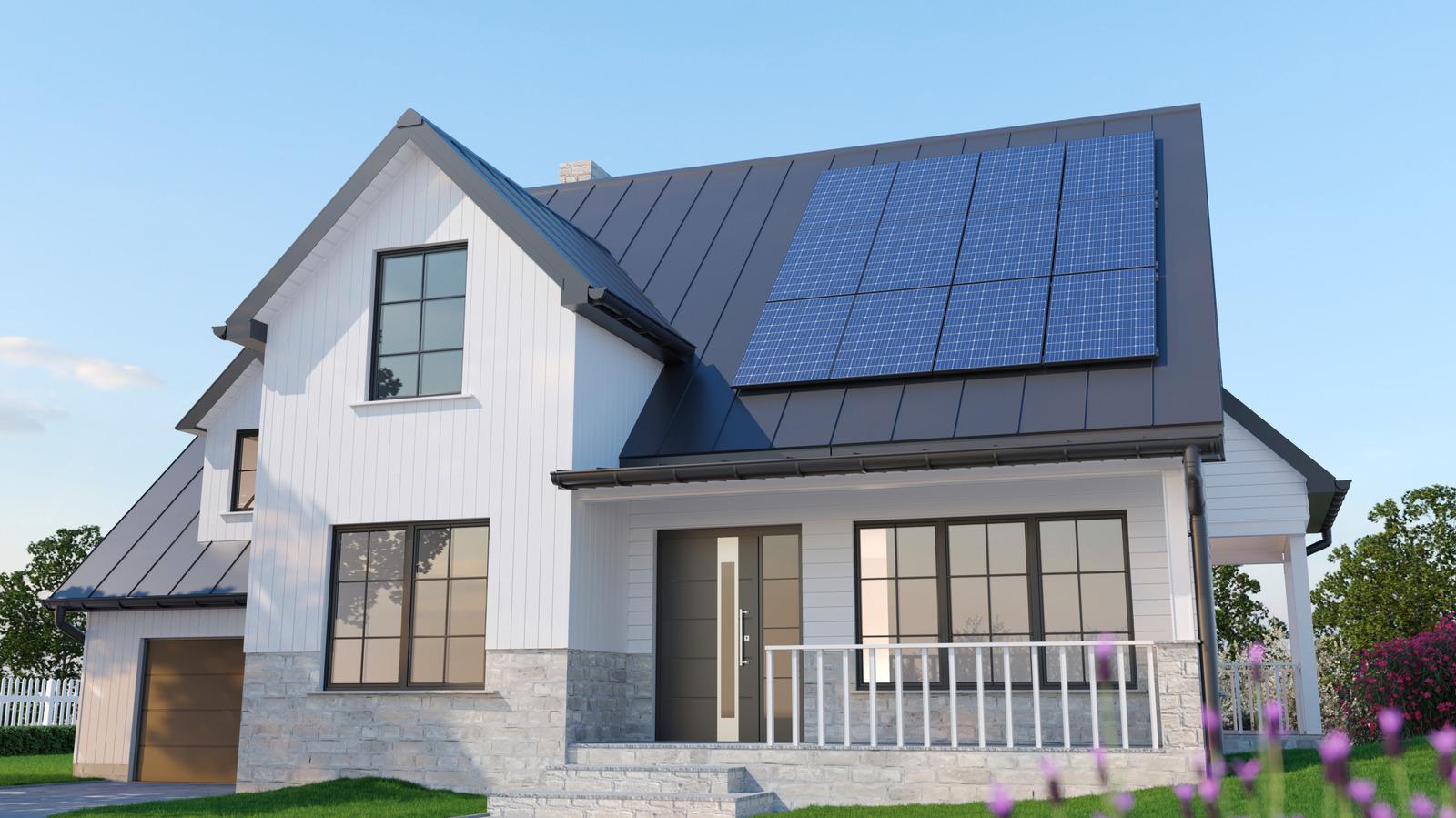
If you've started researching solar panels, chances are you've bumped into the phrase "20% rule for solar panels" somewhere along the way. It sounds official, almost like a regulation - but it isn't. Here's what it actually means.
In short, the 20% rule is a rough planning guideline that installers and homeowners use to build a bit of extra headroom into a solar system. The idea is simple: instead of sizing a system to match your exact average electricity use, you aim for roughly 20% more than that. That extra buffer helps absorb cloudy stretches, shading, temperature swings, normal system losses, and any future increase in how much power you use.
That said, don't treat this as gospel. It's not a law, and it doesn't apply the same way to every roof. Your actual system size should come down to things like how much electricity you use, which way your roof faces, its pitch, how much shade it gets, where you live, the panels and inverter you choose, and whatever local rules apply.
The Short Version
Put plainly, the 20% rule usually means planning for about 120% of what you typically use - not a system sized to match your usage one-for-one.
Say your home gets through 4,000 kWh a year. A quick 20% calculation would look like this:
|
Calculation |
Annual Energy |
|
Average electricity use |
4,000 kWh |
|
20% additional margin |
800 kWh |
|
Target production |
4,800 kWh |
That doesn't mean you go out and buy exactly enough panels to hit 4,800 kWh on the nose. A proper installer will still walk your property and run the numbers before landing on a final system size.
Why Bother With a Buffer at All?
Solar panels don't churn out the same amount of power every single day - not even close. Their rated output is measured under lab-controlled conditions that your roof will never actually experience. Real life brings weather, heat, shade, dust buildup, less-than-perfect panel angles, and losses in the cabling and inverter along the way.
Because of all that, sizing a system to match your usage exactly tends to leave you with almost no room to breathe. A 20% cushion gives the system some slack. If your usage creeps up, or the panels underperform for a stretch, you've got a bit of a safety net.
Take a household that burns through about 10 kWh a day on average. Size the system to exactly 10 kWh and it'll likely fall short the moment a run of cloudy days hits. Aim for 12 kWh instead, and there's more room to absorb the dip.
Worth repeating: the 20% is a planning cushion, not a promise. Your system won't magically produce 20% extra every single day - it's there so the average works out in your favor.
Is This Actually a Rule, Legally Speaking?
No - and this is probably the most important thing to understand about it.
The 20% figure people throw around is a rule of thumb, not something written into law. Every country, and often every regional grid operator, has its own technical and safety standards governing solar installations.
To muddy things further, there's a completely separate concept in the US called the NEC 120% rule, which is an electrical code requirement about how solar generation gets tied into a home's electrical panel. It has nothing to do with the sizing guideline discussed here, but the similar-sounding numbers cause plenty of confusion.
So if someone mentions "the 20% rule," it's worth asking exactly what they mean - system sizing, a production buffer, or something else entirely.
And for anyone in the UK: your system needs to be designed around UK standards, grid requirements, and your specific site - not an American electrical code.
If you're considering a system for your home, understanding the process of solar PV panel installation services can also help you put the sizing discussion into context.
Working Out the 20% Yourself
The math couldn't be simpler.
Pull your annual electricity usage from your bills, then add 20% on top:
Target solar production = annual electricity use × 1.20
So if your household gets through 3,500 kWh a year:
3,500 × 1.20 = 4,200 kWh
That gives you a rough production target of 4,200 kWh a year.
But that's only step one. Panel capacity is measured in kilowatts (kW), while your electricity bill is measured in kilowatt-hours (kWh). They're related, but not interchangeable - and how many panels you actually need depends on panel wattage and how much energy your property can realistically generate.
A Worked Example
Take a home using 4,000 kWh a year:
|
Item |
Example |
|
Annual electricity use |
4,000 kWh |
|
20% planning margin |
800 kWh |
|
Target annual generation |
4,800 kWh |
|
Example panel size |
400 W |
|
Final number of panels |
Depends on local solar yield and system design |
That last line matters - you can't just divide wattage into a target and call it done. An installer needs to estimate the actual expected yield per kW at your specific address.
What Actually Drags Down Solar Output?
This is exactly why the 20% concept exists in the first place - production isn't stable throughout the year.
Weather
Cloud cover cuts into the sunlight hitting your panels, and the UK's weather is famously inconsistent. Don't expect an even spread of generation across the twelve months.
Shading
Trees, chimneys, neighbouring buildings, garden walls - all of it can eat into your output. How much depends heavily on exactly where the obstruction sits and how wide it is; the same tree can matter a lot or barely at all depending on its position relative to the roof. That's why a proper shading assessment matters more than eyeballing it.
Heat
Counterintuitively, panels actually get less efficient as they heat up. For typical crystalline silicon panels, output tends to drop by roughly 0.4–0.5% for every 10°C the cell temperature climbs above 25°C.
Roof Direction and Pitch
Orientation and angle shape how much sun actually reaches the panels over a full year. Two identical roofs with identical panel counts can produce very different results if one faces a better direction or avoids shade the other can't.
Grime
Dust, leaves, bird mess, general grime - all of it blocks light and chips away at output. Keeping panels reasonably clean and inspected helps maintain performance.
Inverter and Cable Losses
Power loses a little efficiency at every stage between the panel and your wall socket - through the inverter, the cabling, the connections. It all adds up, which is another reason to plan around realistic output rather than the number printed on the panel itself.
Does Everyone Need That Extra 20%?
Not really, no.
Treating 20% as a fixed requirement for every home doesn't make sense. A property with steady, predictable usage, a great roof, and minimal shading might not need the same buffer as a trickier site.
Your future plans matter here too. Thinking about an EV, a heat pump, a home extension, or just using more electrical appliances down the line? Your usage could climb well above what your current bills show - and that's a reasonable case for planning extra capacity now.
On the flip side, cramming more panels onto your roof than your budget, usage, or export arrangement can actually make use of isn't necessarily a smart move financially.
The goal isn't the biggest system possible - it's the right-sized one.
Why This Actually Matters for UK Homes
Solar has taken off in the UK, which makes getting the sizing right more relevant than ever.
Government data released in May 2026 put the 2025 total at 269,000 solar installations during 2025, the highest annual total at that time, with around 255,000 being rooftop solar installations. The country also crossed 2 million total solar installations in March 2026, and officials estimated rooftop solar could save families up to £480 a year - though actual savings swing depending on system size, usage patterns, energy prices, and how much of the generated power you actually use yourself rather than export.
Even more recently, figures published on 27 August 2026 showed nearly 172,000 solar installations fitted across the UK since the start of 2026, with rooftop solar making up more than seven in ten installations during July.
All of which is to say: more people are going solar, and getting the size right matters more than just covering as much roof as possible.
So How Much Solar Does a UK Home Actually Need?
There's no one-size-fits-all number.
A one-person flat with modest usage needs a lot less than a family home running an EV and a heat pump. The table below is just illustrative - not a recommendation for any specific property:
|
Annual Electricity Use |
20% Target |
Example Planning Goal |
|
2,500 kWh |
500 kWh |
3,000 kWh/year |
|
3,500 kWh |
700 kWh |
4,200 kWh/year |
|
4,000 kWh |
800 kWh |
4,800 kWh/year |
|
5,000 kWh |
1,000 kWh |
6,000 kWh/year |
Again - this is just the math behind the 20% margin, not a prescription. A real installer will factor in your location, roof, equipment, and shading before recommending anything concrete.
Where This Leaves You
Think of the 20% rule as a conversation starter, not a finished design. It's a decent back-of-envelope figure to walk into a consultation with - not something to hand an installer and say "build this."
A proper solar assessment should dig into your actual bills, likely future usage, roof condition and orientation, available space, shading, equipment choices, and realistic annual output. Get that right and you avoid two common traps: under-sizing your system, or paying for capacity you'll never actually use.
Bigger Isn't Automatically Better
Oversizing a system doesn't come without downsides. Generate more than you can use at any given moment, and what happens to that surplus depends entirely on your tariff, export deal, battery setup, and grid connection.
Adding a battery changes this calculation quite a bit - instead of exporting your midday surplus for whatever your tariff pays, you can store it and use it once the sun goes down. It's worth thinking about the whole energy setup, not just how many panels fit on the roof.
Planning for Tomorrow, Not Just Today
One of the better reasons to build in some margin is that your electricity use probably won't stay flat. An EV, a heat pump swap, more time working from home, extra appliances - any of these could push your usage well past what your bills show today.
Just don't treat 20% as some magic number you tack on regardless of your actual situation. It's a starting assumption, not a substitute for genuinely thinking through what your future usage might look like.
Bottom Line
The 20% rule is best treated as a rough planning heuristic - a nudge to aim for roughly 20% more solar production than your current average usage, giving yourself some breathing room for real-world variability and future changes.
A 4,000 kWh household, for instance, might use 4,000 × 1.20 to land on a rough target of 4,800 kWh a year.
But no home needs exactly 20% extra as a hard rule. Roof direction, shading, weather, heat, panel efficiency, inverter losses, usage patterns, batteries, export deals, and future demand all factor in.
With the UK solar market growing fast, getting the sizing right is worth the extra thought. Use the 20% figure as your opening estimate, then let an actual site assessment tell you what your roof really needs.
FAQs
What is the 20% rule for solar panels?
It's a general planning guideline suggesting a system sized to produce roughly 20% more than average household usage, giving room for weather, shading, system losses, and future demand. It isn't a legal requirement anywhere.
How do I work out 20% more solar power?
Multiply your annual usage by 1.20. A 4,000 kWh/year home would target roughly 4,800 kWh of annual generation.
Is the 20% rule mandatory in the UK?
No. It's not a legal requirement - UK installations follow separate technical, electrical, building, and grid rules instead.
Does shading actually affect this?
Yes, quite a bit. The impact depends on exactly where and how large the obstruction is, which is why a proper shading survey should happen before anything gets designed.
Should I just install 20% more panels than I think I need?
Not automatically. It's a guideline, not a mandate. A good installer will weigh usage, roof space, shading, realistic output, batteries, export arrangements, and future needs before settling on a final number.

 English
 Arabic
 French
 Spanish
 Portuguese
 Deutsch
 Turkish
 Dutch
Dutch
 Italiano
 Romaian
 Portuguese (Brazil)
 Greek
Greek
