


Antique vs. Reproduction Gilt Mirrors: What's the Real Difference?
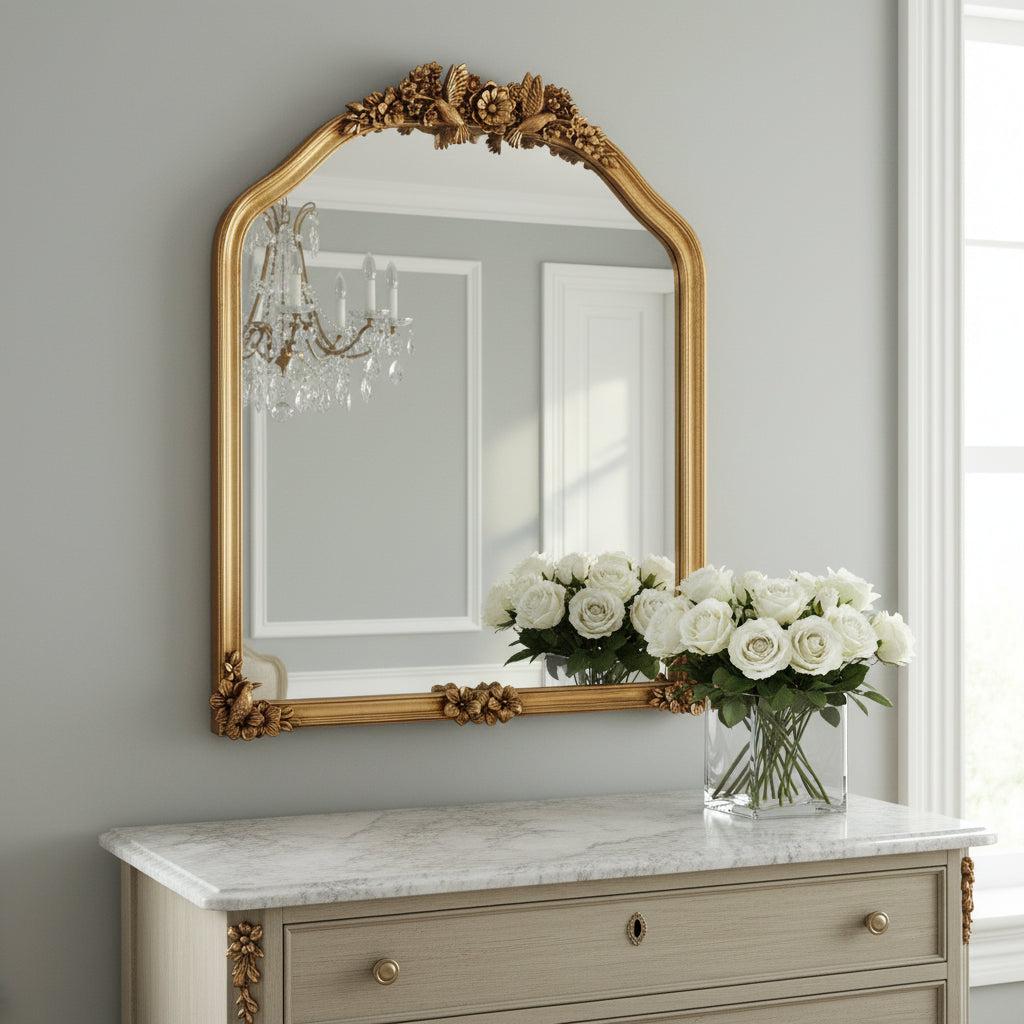
A dealer once sold a "200 year old" gilt mirror at auction, only for a buyer's appraiser to discover the frame was cast just eighteen months earlier. The gold leaf was real. The carving was beautiful. The age was pure fiction. Stories like that aren't rare in the mirror world, and they explain why so many buyers hesitate before spending real money on something labeled antique.
So how do you actually tell the difference between a genuine antique gilt mirror and a well-made reproduction, and does it even matter which one you buy?
What Actually Makes a Mirror "Antique"
The word antique has a specific meaning, not just a vibe. Traditionally, a piece needs to be at least 100 years old to earn that label. That single fact changes everything about how the mirror was made and what condition it's realistically in today.
Genuine antiques typically show:
-
Hand-applied gold leaf with natural inconsistencies in tone
-
Mercury or early silver-backed glass, often slightly clouded or spotted
-
Wood joinery methods common before mass production
-
Signs of real wear: fading, minor chips, uneven patina
None of these are flaws in the traditional sense. They're proof of age, and collectors often pay a premium specifically because of them, which is why so many people browsing vintage French mirrors for sale learn to look past a scratch or a cloudy corner rather than avoid it.
What Reproduction Mirrors Actually Are
A reproduction isn't a fake. It's a mirror designed to recreate a historic style using modern materials and craftsmanship. Quality reproductions are hand-carved just like antiques were, but built with contemporary techniques that improve durability and consistency.
If you've been searching for vintage French mirrors for sale and keep running into wildly different price points for similar-looking pieces, this is usually why. A well-made reproduction can look nearly identical to an antique at a fraction of the cost, without the structural risk that comes with a 150-year-old frame.
How to Tell Them Apart
A few practical checks separate genuine antiques from reproductions:
-
Check the glass. Older mirrors often have slight distortion or clouding; reproductions use clear, modern glass
-
Look at the back. Antique frames show aged wood and old hardware; reproductions typically have cleaner, uniform backing
-
Examine the gilding. Hand-applied gold leaf on antiques varies slightly in tone; reproductions can replicate this, but very uniform gold usually signals newer work
-
Ask about provenance. Genuine antiques usually come with documentation or a traceable history
Which One Should You Actually Buy?
This comes down to what you're really looking for. If you want a piece purely for its history and are comfortable with some age related wear, an antique makes sense. If you want the same French elegance without worrying about fragile glass or structural repairs, a well crafted reproduction is often the smarter choice.
This is exactly the gap that quality French country furniture USA brands have filled in recent years, offering hand-carved, artisan-made mirrors that capture the aged, romantic look of antiques while being built to actually last in a modern home.
Making a Confident Choice
There's no wrong answer between antique and reproduction, only the wrong mirror for what you actually need. Once you understand what separates the two, from the way the gold catches light to the story behind the frame, choosing becomes less about spotting a fake and more about picking the piece that genuinely belongs in your home.

 English
 Arabic
 French
 Spanish
 Portuguese
 Deutsch
 Turkish
 Dutch
Dutch
 Italiano
 Romaian
 Portuguese (Brazil)
 Greek
Greek
