


Practical Ways to Strengthen Factory Energy Efficiency
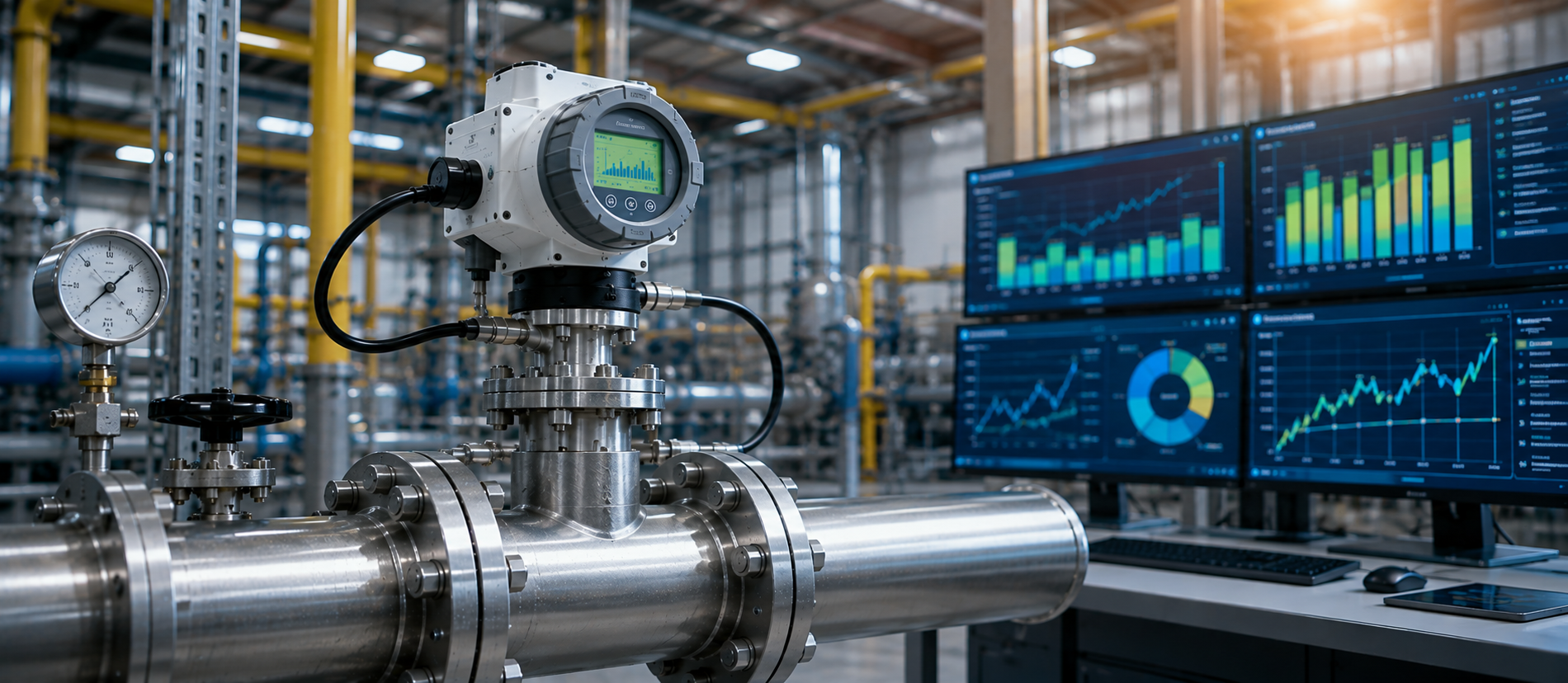
Compressed air is often called the fourth utility in modern industrial plants, alongside electricity, water, and gas. However, it is also one of the most expensive utilities to generate. Without continuous monitoring, up to thirty percent or more of compressed air output is lost to undetected leaks, pressure drops, and inefficient machinery operation. Establishing strict accountability over your compressed air network requires precise measurement tools capable of operating in demanding environments.
To achieve maximum energy accountability and cost efficiency, facility engineers rely on dedicated flow monitoring systems. Industrial sites provided by engineering solution partners like jams.com.pk require accurate operational data to identify wasted energy and lower operational costs across all production lines. Modern facility management depends heavily on moving away from guesswork and adopting high precision digital measurement.
Integrating the VA 500 series measurement device into your piping network creates an immediate benchmark for total flow consumption and baseline waste. The VA 570 flow sensor delivers exact mass flow data directly to your plant controllers without requiring complex pressure or temperature calculations. By capturing accurate readings across both low and high flow conditions, plant operators can isolate hidden distribution leaks and balance air output across multiple work shifts.
Understanding Thermal Mass Flow Principle in Compressed Air Networks
Traditional volumetric flow meters often struggle to provide accurate readings in compressed air applications because changes in pressure and ambient temperature constantly alter gas density. Thermal mass flow meters overcome this limitation by directly measuring the mass of the gas molecules passing through the sensor rather than the physical volume.
This advanced measuring technique uses two temperature sensors placed directly inside the flow path. One sensor acts as a reference point to measure the medium temperature, while the second sensor is heated continuously to a specific differential temperature. As compressed air moves across the heated sensor, heat is transferred away from it. The amount of energy required to maintain the temperature difference is directly proportional to the mass flow rate of the gas.
By measuring mass flow directly, industrial operators avoid purchasing separate external temperature and pressure transmitters. The thermal principle works seamlessly across varying network loads, giving energy managers immediate standard volume output measurements such as cubic meters per hour or cubic feet per minute without manual conversions.
Key Technical Specifications of the Inline Flow Sensor
Industrial compressed air installations require robust instruments that can withstand harsh operating environments while maintaining high calibration standards. The sensor housing and measuring section are engineered to handle continuous industrial operations while delivering long term repeatability.
-
High accuracy levels reaching up to plus or minus one percent of the measured value.
-
Robust aluminum die cast housing with an overall protection rating of IP 67.
-
Stainless steel wetted parts designed for stringent purity standards.
-
Operating temperature range up to one hundred and eighty degrees Celsius.
-
Integrated digital display displaying real time flow rate, total consumption, and medium temperature.
-
Standard digital and analog outputs including Modbus RTU and 4 to 20 mA signals.
-
Optional fieldbus interfaces such as Ethernet TCP, PoE, M-Bus, and Profibus.
-
Pressure resistance supporting line pressures up to sixteen bar with options up to forty bar.
Eliminating Costly Leaks with Precision Monitoring
Air leaks are the single largest source of wasted energy in industrial compressed air networks. In an unmonitored system, small pinhole leaks, worn out seals, and faulty condensate drains work continuously, forcing air compressors to cycle on even when production lines are completely shut down.
By installing an inline flow meter directly in main distribution pipes or branch lines, energy teams can establish clear baseline readings during non production hours, such as night shifts or weekends. If the measured flow remains significantly above zero when all machines are turned off, the system clearly indicates a severe leakage issue.
Continuous data logging makes it easy to track performance trends over time. When leakage rates begin to creep upward, maintenance teams receive early alerts, allowing them to fix piping faults before energy costs skyrocket. This preventative approach transforms maintenance from a reactive hassle into a structured energy saving strategy.
Seamless Integration with Industrial Data Networks
Modern industrial automation relies on interconnected equipment that can share data across control rooms, supervisory control and data acquisition networks, and cloud platforms. Energy meters must provide versatile output communication choices to fit existing plant infrastructures without requiring expensive protocol converters.
The integrated electronics support multiple communication protocols out of the box. Process engineers can transmit real time readings directly to programmable logic controllers or building management systems using standard Modbus RTU or traditional analog outputs. For installations demanding high speed network integration, optional Ethernet modules allow direct power over Ethernet connections.
Local displays on the measuring unit give field technicians immediate access to vital parameters right at the pipe section. Operators can check flow rate, totalized mass consumption, gas velocity, and process temperature simultaneously. This dual capability ensures both central automation systems and local service teams have instant visibility into operational data.
Simple Installation and Maintenance Without Operations Downtime
Disrupting facility production to install or service monitoring equipment is a major concern for plant management. Efficient flow sensor designs address this challenge by combining the sensor element and the measuring tube into a single pre calibrated inline unit.
The integrated measuring section ensures that the sensor probe sits at the exact geometric center of the pipe, preventing alignment errors that typically degrade reading accuracy. Threaded and flanged connections in standard pipe sizes allow easy mounting directly into existing pipe networks.
When calibration or sensor cleaning is necessary, the removable measuring head design allows technicians to remove the core sensor without taking the complete pipe assembly out of service. A simple sealing cap closes the measuring section, keeping the main air line fully operational while the unit undergoes offsite calibration.
Cross Industry Applications for Gas and Air Flow Measurement
While compressed air accountability remains the primary use case for thermal mass meters, these versatile sensors deliver exceptional performance across a wide range of industrial gas applications. Stainless steel wetted components make them ideal for handling diverse process gases across chemical processing, automotive assembly, food packaging, and power generation environments.
-
Measuring nitrogen distribution lines to prevent gas loss in food preservation and electronics manufacturing.
-
Monitoring carbon dioxide dosing systems in beverage production plants.
-
Tracking natural gas and biogas usage in industrial burner systems for energy efficiency audits.
-
Managing argon and shielding gas supplies in automated welding lines to prevent wasteful gas flow.
-
Quantifying oxygen flow rates in pharmaceutical and medical gas distribution systems.
Selecting the Right Pipe Size and Installation Location
Achieving optimal performance from your energy monitoring installation depends heavily on selecting the correct pipe size and locating the sensor correctly within the compressed air piping network. Installing sensors too close to elbows, valves, or pipe reducers can create turbulent air movement, leading to inaccurate measurement readings.
Engineers should place the flow meter in a straight section of pipe, maintaining adequate straight pipe runs upstream and downstream of the sensor. Upstream distances of fifteen to twenty pipe diameters help stabilize the flow profile before it reaches the measuring tip, while downstream sections require around five diameters.
Selecting the proper inline measuring section size matching your existing pipe diameter ensures negligible pressure drops. Because the thermal probe occupies a minimal cross sectional area inside the pipe tube, air pressure remains stable across the measuring zone, keeping your compressor load efficient.
Frequently Asked Questions
What is the advantage of a thermal mass flow meter over a traditional vortex meter?
Thermal mass flow meters measure the mass of the gas directly without requiring additional temperature and pressure compensation sensors. Vortex meters measure volumetric flow and need separate pressure and temperature calculations to determine actual mass consumption.
Can this sensor handle dirty or humid compressed air lines?
The sensor probe is built with stainless steel wetted components designed to handle standard industrial compressed air. However, installing filtration systems upstream is recommended if the compressed air line contains heavy oil mist or moisture accumulation to maintain long term measurement accuracy.
Is it possible to use this inline meter for explosive gas environments?
Yes, specific explosion proof versions certified under ATEX and IECEx standards are available for safe operation in hazardous gas zones, such as natural gas, biogas, or hydrogen distribution systems.
How often should the flow sensor undergo recalibration?
In standard compressed air environments, annual recalibration is recommended to maintain peak accuracy and ensure compliance with ISO energy management standards. The removable measuring head makes annual service fast and simple without removing pipe sections.
Does the device support bidirectional flow measurement?
Yes, the evaluation electronics and display unit can be rotated and configured to monitor flow directional changes, helping facilities analyze complex ring main systems where air flow direction shifts based on demand.
Conclusion
Building a sustainable industrial facility requires strict control over compressed air utility costs. By upgrading unmonitored supply lines with advanced thermal mass flow technology, energy managers gain the clear data needed to eliminate air leaks, optimize compressor sequencing, and allocate costs accurately across departments.
The combination of durable stainless steel construction, simple inline maintenance, and versatile automation interfaces ensures long term operational accountability. Implementing continuous digital flow monitoring is the ultimate operational step toward lowering energy consumption and boosting facility productivity.

 English
 Arabic
 Spanish
 Portuguese
 Deutsch
 Turkish
 Dutch
Dutch
 Italiano
 Russian
 Romaian
 Portuguese (Brazil)
 Greek
Greek
