


Why Choose Chendiao Semi-Automatic Metal Cutting Band Saw Machine for Workshops
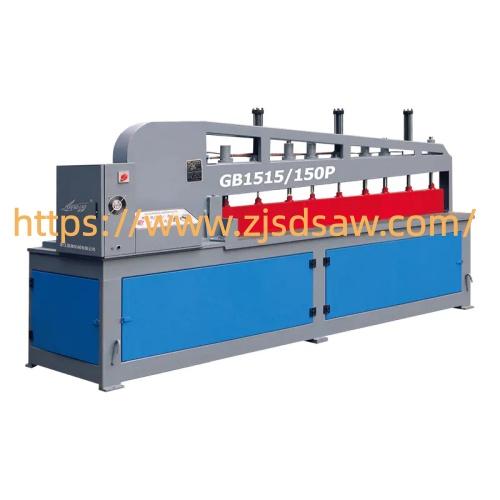
Semi-Automatic Metal Cutting Band Saw Machine selection should begin with the materials and workload handled by the workshop. Buyers should consider stock shape, dimensions, material type, cutting frequency, required cut angles, operator involvement, and available floor space before comparing specific models. A suitable configuration should fit the actual production process rather than simply matching a number listed on a specification sheet. Industry buyer guides similarly recommend reviewing material, capacity, workflow, facility conditions, and automation requirements together when evaluating equipment.
Cutting capacity is an important starting point. Workshops may process round bars, square sections, rectangular profiles, pipes, channels, or other structural materials. Each form requires sufficient working clearance and suitable support. Buyers should check both the maximum section size and the common sizes processed every day. Choosing equipment around actual production dimensions can make the machine easier to integrate into existing operations.
The workholding arrangement deserves close attention. Material needs to remain stable during the cutting cycle, particularly when repeated pieces are processed. Hydraulic clamping is commonly used on semi automated equipment, while different machines may offer additional adjustments for various workpiece shapes. Buyers should ask how the vice handles their regular materials and whether the available clamping range covers their production requirements.
Blade selection should be discussed together with the material being processed. Steel, stainless steel, aluminum, brass, tubes, and solid sections can require different blade configurations and operating conditions. Tooth pitch, blade width, cutting speed, and feed pressure all influence how the blade interacts with the workpiece. Buyers should provide accurate material information to the manufacturer so the recommended configuration reflects actual applications.
Feed control is another useful point of comparison. Semi automated equipment typically combines operator setup with controlled movement of the saw frame or workpiece. Buyers should check how the feed rate is adjusted and whether the system allows suitable control for different materials. Hydraulic feed systems are used on various machines to regulate the downward movement of the saw frame and maintain a controlled cutting process.
The level of operator involvement should also be clear before purchase. Some workshops want to reduce repetitive manual operations while keeping operators responsible for loading, positioning, inspection, and parameter adjustment. Others may require more flexible manual intervention because material sizes change frequently. Semi automated equipment can provide a practical middle ground when the production process needs some automation without removing operator control from every stage.
Cutting angle requirements can affect the machine configuration. If the workshop performs only straight cuts, a basic setup may be suitable. If angled sections are part of regular production, buyers should examine the available mitre range, angle adjustment method, clamping arrangement, and angle display. Certain semi automated models provide adjustable angle cutting and hydraulic clamping for different applications.
Cooling should not be treated as an optional detail until the end of the purchasing process. Cutting conditions can generate heat around the blade and workpiece, depending on material and operating parameters. A suitable coolant arrangement can help manage heat and chips while supporting normal blade operation. Buyers should ask about coolant capacity, filtration, maintenance access, and how the system is configured for their intended materials.
Blade tension and blade guidance are also worth checking. Proper blade tension helps maintain the intended cutting path, while suitable guide positioning supports stable blade movement. Some current semi automated models include pressure gauges for monitoring blade tension, adjustable guides, and blade break monitoring. These functions can make routine operation and inspection more straightforward.
The machine frame should be considered from a practical perspective. A rigid structure can help manage vibration during cutting, while appropriate guides support controlled movement of the saw frame. Buyers can ask about the frame construction, guide system, drive components, hydraulic unit, and worktable. These details are especially relevant when the equipment will be used regularly for batch production.
Production volume is another factor that can change the purchasing decision. A workshop cutting several pieces per day may have different requirements from a facility processing repeated batches throughout the week. Buyers should estimate the number of cuts per shift and consider how often materials or dimensions change. Recent industry purchasing guidance also emphasizes workload, setup time, changeover frequency, and staffing when evaluating automation.
Maintenance access should be reviewed before installation. Operators may need to inspect the blade, clean chips, check guides, maintain coolant, and examine hydraulic components. Ask whether these areas can be reached without complicated disassembly. Clear maintenance procedures can help operators keep routine inspection within the normal production schedule.
Workshop layout matters as well. Buyers should measure the available floor area and consider material loading, finished piece removal, operator access, power connections, and maintenance space. Roller tables or additional material supports may be useful when long stock needs to move safely through the working area. These accessories should be discussed during the planning stage rather than after installation.
Chendiao provides metal processing equipment designed around different material handling and production requirements. Manufacturers can prepare information about material types, dimensions, cutting frequency, angle requirements, desired automation level, and workshop conditions before discussing equipment configuration. This gives the supplier a clearer understanding of the application and helps connect machine functions with the actual production workflow.
Before making a final decision, buyers should compare capacity, clamping, blade compatibility, feed control, cooling, angle adjustment, maintenance access, safety functions, installation requirements, and technical support. Looking at these factors together provides a more useful basis for equipment selection than comparing price or motor power alone. Manufacturers interested in reviewing available equipment and company information can visit https://www.zjsdsaw.com/product/ and continue evaluating configurations that fit their production needs.

 Arabic
 French
 Spanish
 Portuguese
 Deutsch
 Turkish
 Dutch
Dutch
 Italiano
 Russian
 Romaian
 Portuguese (Brazil)
 Greek
Greek
