


High Quality Casting Products Built for Industrial Performance
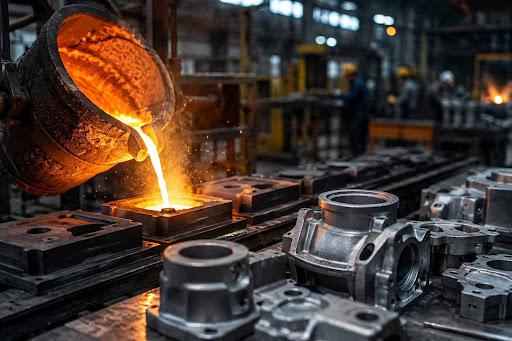
A few years back, I remember standing next to a maintenance engineer at a plant who pointed at a small metal bracket and said, "That little thing cost us two days of production last month." It was not some fancy sensor or expensive motor. Just a plain cast part that gave out because it was made cheap. That moment stuck with me, and it is a good reminder of why casting products deserve more attention than they usually get.
Casting, In Plain Terms
Casting is not complicated once you break it down. Metal gets melted, poured into a mold shaped like the part you need, and left to cool until it hardens into that shape. That is really it. People have been casting metal for thousands of years, and even with all the modern technology we have now, this old method is still one of the best ways to make parts that would be a nightmare to machine from scratch.
There is more than one way to cast metal, though. Sand casting is common for larger and simpler parts. Investment casting is used when a part needs fine detail and a smooth finish. Die casting comes in when a factory needs to produce a large number of identical pieces without wasting time. None of these methods is the automatic best choice. It really depends on what the part is for, what material it needs, and how many are being made.
Why You Cannot Just Trust the Way a Part Looks
Here is something most people outside the industry do not know. A cast part can look completely normal and still have hidden weaknesses inside it. Tiny gaps, uneven cooling, small defects you cannot see with your own eyes- and that part might fail exactly when you need it most.
That is why serious casting manufacturers do not just glance at a finished part and ship it out. They actually test it, using things like x ray scans, ultrasonic checks, and precise measurements, before it ever leaves the facility. It slows things down a little and adds cost, sure, but it is nothing compared to the cost of a breakdown or, worse, someone getting hurt because a part failed.
What Separates an Average Part From a Great One
I have talked to enough people in manufacturing to know that not all casting products are built the same, even when they look nearly identical sitting next to each other.
Material choice is one of the biggest factors. Cast iron, steel, aluminum, and different alloy blends all hold up differently under heat, pressure, and everyday wear, so picking the right one really matters. Precision plays a big role too. A part made with real precision fits properly the first time around, no extra grinding or adjusting needed. Surface finish is something people tend to forget about, but a rough surface wears out faster and tends to collect rust or moisture over time.
And then there is consistency, which honestly might be the most underrated part of all this. A manufacturer could make one excellent batch and then completely miss the mark on the next one. That inconsistency becomes someone else's problem later on, usually the person relying on that part to work. The best casting solutions come from a process that stays steady every time, not from getting lucky once in a while.
Where These Parts Show Up in Real Life
Once you start noticing casting products, you realize they are everywhere. Cars depend on them for engine blocks, transmission housings, and brake components, parts that need to survive years of heat and constant movement without giving out. Construction sites and heavy machinery rely on cast parts inside gearboxes and housings that take a beating almost daily.
Oil and gas is another place where this really matters, since parts there deal with intense pressure and harsh chemicals, so getting the casting process right can be the difference between something lasting for decades or breaking down early. Farm equipment leans on tough, simple cast parts that can handle mud, dust, and rough handling without complaint. And anyone who has worked near the ocean knows saltwater does not go easy on anything, which is exactly why corrosion resistant metal casting matters so much for marine equipment.
Why Spending A Bit More Usually Makes Sense
I understand the hesitation. Paying more for casting products can feel unnecessary, especially when a cheaper option looks the same on paper. But in most cases, it saves money later. Stronger parts break down less, which means fewer emergency repairs and less downtime. There is a safety angle too, since a part failing under load is not just inconvenient, it can genuinely put someone at risk. Well made parts also run smoother, which reduces stress on everything connected to them. Over time, all of this adds up to real savings, even if the upfront cost feels a little higher.
Choosing a Manufacturer Worth Trusting
Finding the right supplier matters just as much as the casting process itself. Before committing to anyone, it helps to ask a few honest questions. How long have they worked in your specific industry? What kind of testing and quality checks do they actually follow? Where do they source their raw materials from? It also helps to ask for sample parts or look at previous work they have done, especially if your project needs something custom made.
A manufacturer who is confident in their work will not avoid these questions. They will explain their process clearly, walk you through their testing methods, and back it up with real evidence instead of just a sales pitch. Companies like RM Technocast, for instance, are known for being upfront about their material sourcing and quality checks, which is exactly the kind of transparency worth looking for when you are trusting someone with your parts. Companies like Rm Technocast are a good example of this approach, where quality checks and consistent process control are treated as part of everyday work rather than an afterthought.
Final Thoughts
Casting products rarely get any credit, but they carry a lot of responsibility, sometimes quite literally. Whether you need parts for cars, construction, oil and gas, or farm equipment, the quality of your cast components shapes how well everything performs over the years. Once you understand what actually makes a cast part reliable, from the material used to how thoroughly it is tested, you are in a much better position to make smart decisions. And when you finally find a casting manufacturer who genuinely cares about doing things right, you are not just buying a part. You are buying the confidence that it will actually hold up when it matters most.

 English
 Arabic
 French
 Portuguese
 Deutsch
 Turkish
 Dutch
Dutch
 Italiano
 Russian
 Romaian
 Portuguese (Brazil)
 Greek
Greek
