


Metal Railings Canada: Types, Benefits & Installation Guide – Ornate Steel Works
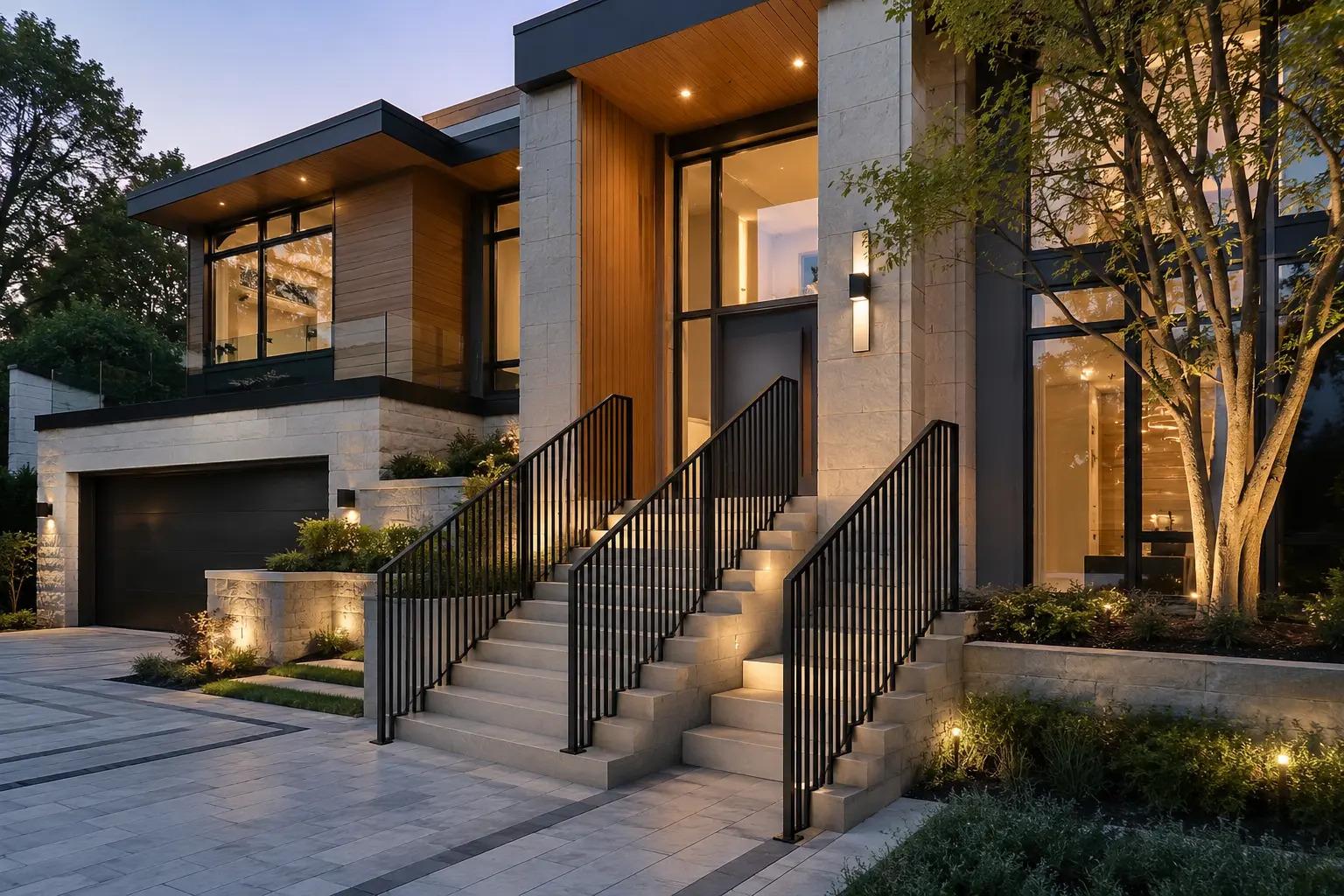
A gate gets noticed the moment someone pulls into the driveway. A railing gets touched every single day on the stairs, along the porch, and around the deck.
It's one of the most-used pieces of steel on any property, and yet it's usually the last thing homeowners think about until a stair feels unsafe or an old rail starts to rust through.
If you're planning a new build, a renovation, or simply replacing a tired railing, this guide walks through everything worth knowing: the types of metal railings available, how materials compare, what Ontario building codes require, and what a custom railing actually costs.
Whether you're pairing a railing with one of our driveway gates or starting a project from scratch, the goal here is the same a railing that's safe, good-looking, and built for Canadian weather.
Types of Metal Railings
Not all railings serve the same purpose, so the right choice depends on where it's going.
Interior stair railings: need to feel warm and grippable while still meeting code for stair guards. These are often paired with wood handrails or finished in a soft matte black for a modern look.
Exterior porch and deck railings: face the toughest conditions rain, snow, salt, and UV. Durability and finish quality matter more here than almost anywhere else on the property.
Balcony railings: are about sightlines as much as safety. Thinner balusters or a mixed metal-and-glass design can preserve a view while still meeting height and spacing requirements.
Pool and patio railings: carry extra code weight, since these areas fall under Ontario's pool safety and fencing requirements. Self-closing gates and specific baluster spacing are usually mandatory here.
Ramp and accessibility railings: prioritize a continuous, easy-to-grip handrail at a consistent height, often required on both sides of the ramp.
Knowing which category your project falls into is the first step. It determines the code requirements, finish recommendations, and even which material makes sense.
Steel Gate vs. Wrought Iron Gate vs. Aluminum Gate
Every metal railing starts with a material decision, and each option comes with real trade-offs.
Steel gate: is the strongest of the common choices and holds up well to heavy use, making it a favorite for stair railings and high-traffic commercial spaces. Left untreated, though, steel will rust so the coating matters as much as the metal itself.
Wrought iron gate: is the classic choice for ornamental railings, scrollwork, and traditional home exteriors. It's heavier and more expensive to fabricate than steel or aluminum, but nothing matches its detail and character. Like steel, it needs a proper protective finish to avoid corrosion, especially near salted walkways.
Aluminum gate: is lighter, naturally more corrosion-resistant, and typically the lowest-maintenance option of the three. It won't match the strength of steel or the ornamental detail of wrought iron, but for many exterior applications. Especially where upkeep is a priority, it's an excellent middle ground.
There isn't a single "best" material; the right one depends on the application, the look you want, and how much maintenance you're willing to take on. Every railing we build, including our Modern Laser-Cut Steel Stair Railing starts in heavy-duty steel for exactly this reason: it holds fine detail without sacrificing strength.
Design Styles
Railings do more than hold a barrier in place they set the tone for the entire entrance or outdoor space.
-
Classic wrought iron and scrollwork: suit heritage homes, estate properties, and anywhere a more traditional, hand-forged look is the goal.
-
Modern minimalist: designs use clean vertical or horizontal bars in matte black steel. A natural match for contemporary builds and newer subdivisions.
-
Geometric and lattice patterns: like the starburst and diamond cutouts we use across our gate collections, bring a distinctive, architectural feel to stairs and balconies alike. Our Modern Laser-Cut Steel Stair Railing (R120) is a good example of a 16-gauge laser-cut geometric panel in a semi-gloss black finish, built code-compliant from the ground up.
-
Traditional baluster: styles remain a dependable choice for classic Ontario homes, offering a familiar look that ages well.
Because railings are so visible, matching the design language of your gate, fence, or front entrance creates a cohesive look across the whole property. It's something we build into every custom order.
Ontario Building Code Basics for Railings
Before choosing a style, it's worth understanding the baseline safety rules that apply to most residential railings in Ontario:
-
Guard height: Decks, balconies, and stairs more than 600mm (about 2 feet) above grade generally require a guard at least 900mm to 1070mm high, depending on the drop.
-
Baluster spacing: Gaps between balusters typically can't exceed 100mm (about 4 inches), a rule specifically designed to prevent young children from slipping through.
-
Handrail requirements: Most stairs with more than a couple of steps require a continuous, graspable handrail on at least one side.
-
Permits: Structural railing work, especially anything tied into a deck or balcony rebuild, often requires a permit from your local municipality.
Requirements can vary by city and by the specific application, and pool fencing has its own separate rules. It's always worth confirming with your local building department before finalizing a design.
This is also where working with an experienced fabricator pays off. We build every custom railing to meet code from the start, not as an afterthought.
Finish & Coating: Why It Matters for Canadian Winters
The material gets most of the attention, but the finish is what actually determines how long a railing lasts outdoors. Standard powder coating is a solid, affordable option for most interior applications and moderate climates.
For anything facing an Ontario winter road salt, freeze-thaw cycles, and months of moisture. A more robust finish is worth the investment.
At Ornate Steel Works, every exterior piece can be finished with our marine-grade epoxy primer before the final coat is applied the same coating philosophy behind our driveway gates. It's a more demanding process than standard powder coating, but it's the difference between a railing that looks new after one winter and one that still looks new after ten.
Cost of Custom Metal Railings in Canada
Pricing depends heavily on length, material, complexity of design, and whether the railing is interior or exterior. As a general guide:
-
Aluminum railings: tend to be the most budget-friendly option for straightforward exterior runs.
-
Steel railings: sit in the middle, with pricing increasing alongside length and design complexity. Our Modern Laser-Cut Steel Stair Railing starts at $580 for a 24"W x 36"H panel, with larger sizes up to 60"W available.
-
Wrought iron and custom ornamental railings: carry the highest cost, driven by hand-forging time and detail work.
Factors that push cost up include intricate scrollwork or lattice patterns, non-standard heights or angles, matching an existing gate or fence design, and premium finishes like marine-grade epoxy.
The most accurate way to get a number is a custom quote based on your exact measurements and design. Generic per-foot pricing rarely reflects what a project actually costs once these variables are factored in.
Metal Railings vs. Wood, Glass & Cable Railings
Metal isn't the only option, so it's worth knowing how it stacks up:
|
Metal |
Wood |
Glass |
Cable |
|
|
Durability |
Excellent |
Moderate (rot risk) |
Good |
Excellent |
|
Maintenance |
Low–moderate |
High |
Moderate (cleaning) |
Low |
|
Winter performance |
Excellent (with proper finish) |
Poor |
Good |
Excellent |
|
View/light |
Depends on design |
Blocks view |
Maximizes view |
Maximizes view |
|
Cost |
Moderate–high |
Low–moderate |
High |
High |
For most Ontario properties dealing with harsh winters, metal offers the best balance of durability, low upkeep, and design flexibility. That's why it remains the standard choice for stairs, decks, and balconies across the province.
How to Order a Custom Railing from Ornate Steel Works
Getting started is simple. Browse our full railing collection, or start with a piece like the Modern Laser-Cut Steel Stair Railing and customize the size to fit your stairs.
From there, we'll walk through your measurements, discuss design and finish options, and match your railing to any existing gates, fences, or architectural details on the property.
Every railing is fabricated to order and finished with the same marine-grade coating process used on our driveway gates and pedestrian gates, then shipped across Canada and the US.
If you're planning a gate and a railing together, we can design both as a matched set. so your entrance and your steps tell the same story.
FAQ
What is the standard height for a deck railing in Ontario?
Most residential deck and balcony guards need to be between 900mm and 1070mm high, depending on the height of the drop below. Local code can vary, so it's worth confirming with your municipality before finalizing a design.
Are metal railings more expensive than wood?
Upfront costs can be comparable or slightly higher for metal, but wood typically costs more over time due to rot, warping, and repainting. Metal railings with a proper finish need far less long-term maintenance.
Do metal railings rust?
Untreated steel and wrought iron can rust over time, especially with exposure to road salt and moisture. A quality finish like marine-grade epoxy coating prevents this for decades. Aluminum is naturally more corrosion-resistant.
Can I get a matching railing and driveway gate?
Yes. We can design railings to match the style, finish, and detailing of any of our gate collections, creating a consistent look across your entrance and exterior.
How long does a custom railing take to build?
Timelines vary by design complexity and current order volume. Once measurements and design are confirmed, our team will provide a specific production and shipping timeline for your project.

 English
 Arabic
 French
 Spanish
 Portuguese
 Deutsch
 Turkish
 Dutch
Dutch
 Italiano
 Russian
 Portuguese (Brazil)
 Greek
Greek
