


What Is the Difference Between a Geocoder API and Forward Geocoding?
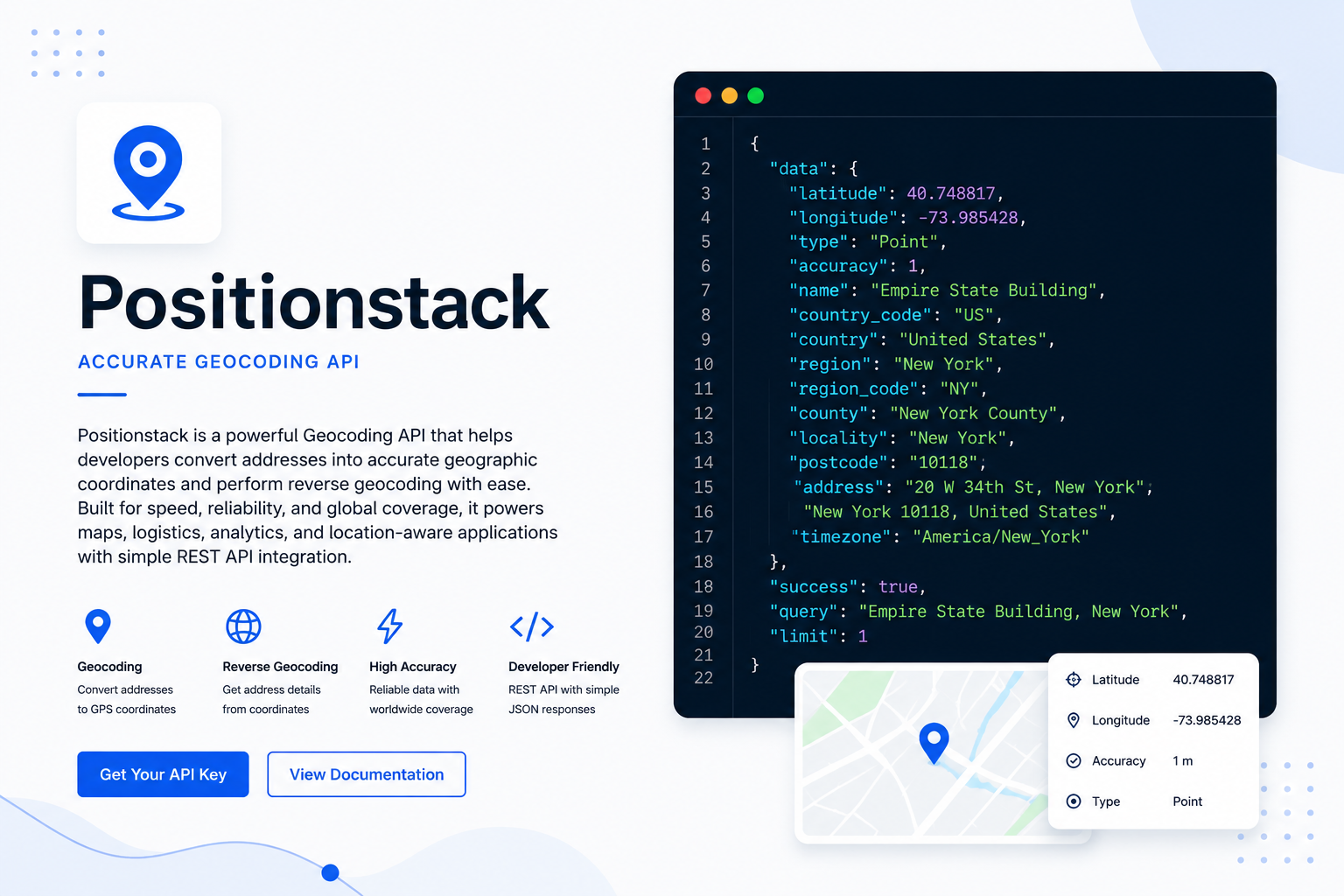
The terms overlap enough to confuse most people looking into this for the first time. A geocoder API is the general term for any service converting between addresses and coordinates in either direction.
Forward geocoding specifically means one direction only, turning a written address into latitude and longitude. Knowing the distinction matters once your product needs the reverse direction too, and many eventually do.
What Forward Geocoding Actually Does
Forward geocoding takes something like "350 Fifth Avenue, New York" and returns coordinates a map or distance calculation can actually use. This is the direction most people think of first, since it matches the obvious use case: a user types an address, your app needs a point on a map. A full geocoder API supports this, but it usually supports more.
Why the Reverse Direction Matters Just as Much
The reverse direction, converting coordinates back into a readable address, matters for anything working from a device's GPS position rather than typed text. A ride-share app showing "you're near 5th Ave and Main St" is running reverse geocoding, not forward. A delivery app converting a dropped map pin into a formatted street address needs the same reverse capability. A geocoder API that only handles forward geocoding API queries is missing half of what most real products eventually need.
Where Each Direction Actually Gets Used
Forward geocoding powers address autocomplete fields, store locators, and any "search by address" feature where the user types something first. Reverse geocoding powers anything starting from a location instead, live GPS tracking, dropped map pins, or converting a device's current position into something readable. Most real applications end up needing both directions eventually, even if one gets used far more often than the other.
What to Check Before Choosing a Provider
Confirm the geocoder API genuinely supports both directions rather than marketing forward geocoding API queries as the whole product. Check global address format support, since international structures vary significantly and a US-only geocoder will fail quietly on other formats. Look for batch processing if you need to geocode an existing address list in bulk rather than one lookup at a time.
positionstack supports full forward and reverse geocoding worldwide, with batch processing built in for existing address lists.
Final Thoughts
Most teams only discover they need reverse geocoding after shipping a feature built around forward geocoding alone, once a GPS-based feature request comes in that the current setup cannot handle. Choosing a provider that covers both from the start avoids that gap entirely.
Get both directions of geocoding covered
Forward and reverse geocoding, worldwide, free to start.
Try positionstack now → https://apilayer.com/products/positionstack/

 English
 Arabic
 French
 Spanish
 Portuguese
 Turkish
 Dutch
Dutch
 Italiano
 Russian
 Romaian
 Portuguese (Brazil)
 Greek
Greek
