


Prototype Machining: The Fastest Way to Turn Product Ideas into Functional Parts
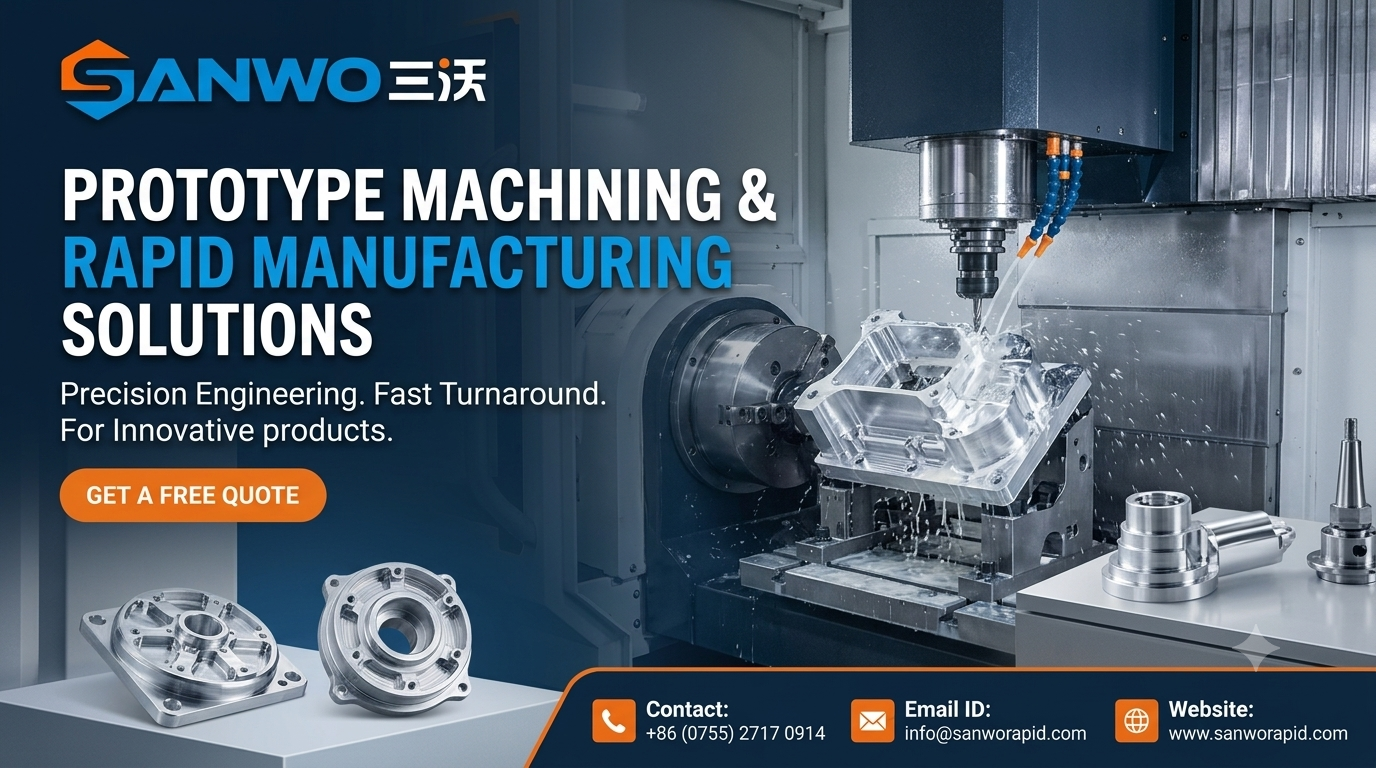
Bringing a new product to market requires speed, precision, and confidence in every design decision. Prototype machining plays a critical role in modern product development by producing highly accurate parts that closely match the final production components. Whether you're developing medical devices, automotive components, aerospace parts, or consumer electronics, prototype machining helps validate designs before investing in full-scale manufacturing.
At Sanwo Rapid, we help businesses accelerate product development through precision prototype machining services that deliver quality, speed, and reliability.
What Is Prototype Machining?
Prototype machining is the process of manufacturing prototype parts using advanced CNC (Computer Numerical Control) machines. Unlike 3D printing, which builds parts layer by layer, CNC machining removes material from a solid block of metal or plastic to create highly accurate components.
This manufacturing method is ideal for testing fit, function, durability, and assembly before mass production begins.
Common Materials Used
-
Aluminum
-
Stainless Steel
-
Brass
-
Copper
-
Titanium
-
ABS
-
POM (Delrin)
-
Nylon
-
Acrylic
These production-grade materials allow engineers to evaluate real-world performance under actual operating conditions.
Why Prototype Machining Matters
A well-machined prototype reduces development risks by identifying design flaws early.
For example, an automotive manufacturer designing a lightweight bracket can machine an aluminum prototype, test its strength under load, and modify the design before expensive tooling is created. This process saves both time and development costs.
Other key benefits include:
-
Exceptional dimensional accuracy
-
Fast turnaround times
-
Production-quality surface finishes
-
Easy design revisions
-
Functional testing using real materials
Prototype Machining vs. 3D Printing
|
Feature |
Prototype Machining |
3D Printing |
|
Accuracy |
Very High |
Moderate |
|
Material Strength |
Production-grade |
Limited depending on material |
|
Surface Finish |
Excellent |
Often requires post-processing |
|
Functional Testing |
Ideal |
Limited |
|
Complex Internal Geometry |
Limited |
Excellent |
Both technologies have advantages, but prototype machining remains the preferred solution when precision and mechanical performance are essential.
Industries That Depend on Prototype Machining
Prototype machining is widely used across industries where quality and precision cannot be compromised.
These include:
-
Automotive engineering
-
Aerospace manufacturing
-
Medical device development
-
Robotics
-
Consumer electronics
-
Industrial automation
-
Defense equipment
Each industry benefits from rapid design validation and shorter product development cycles.
Practical Example
Imagine a startup developing a new drone housing.
Instead of investing thousands of dollars in production molds, engineers machine several aluminum prototypes. After flight testing, they discover the battery compartment needs additional reinforcement.
The CAD model is updated, a revised prototype is machined within days, and the final design is approved without wasting tooling costs.
This is exactly how prototype machining accelerates innovation while minimizing financial risk.
Tips for Better Prototype Machining Results
To maximize efficiency and quality:
-
Choose production-grade materials whenever possible.
-
Design with realistic machining tolerances.
-
Minimize unnecessary complex features.
-
Work with experienced CNC engineers early in the design stage.
-
Test prototypes under actual operating conditions before production.
Partnering with an experienced manufacturer like Sanwo Rapid also helps optimize designs for manufacturability, reducing lead times and production costs.
Why Choose Sanwo Rapid?
At Sanwo Rapid, we combine advanced CNC machining technology with experienced engineering support to deliver precision prototypes that meet demanding industry standards. From a single prototype to low-volume production, our team focuses on accuracy, speed, and consistent quality.
Whether your project requires aluminum, stainless steel, titanium, or engineering plastics, we provide custom machining solutions tailored to your specifications.
Frequently Asked Questions
What is prototype machining used for?
Prototype machining is used to create functional prototype parts for design verification, performance testing, product validation, and low-volume manufacturing before full-scale production.
How accurate is CNC prototype machining?
Modern CNC machining can achieve tolerances as tight as ±0.005 mm, depending on the material, geometry, and machining process.
Which is better: prototype machining or 3D printing?
If your project requires production-grade materials, high precision, and functional testing, prototype machining is generally the better choice. For complex geometries and quick concept models, 3D printing may be more suitable.
How long does prototype machining take?
Most prototype machining projects can be completed within a few days to two weeks, depending on part complexity, material selection, and quantity.
Conclusion
Prototype machining remains one of the most reliable methods for transforming product concepts into functional, production-ready components. Its unmatched accuracy, material versatility, and rapid turnaround help businesses reduce development risks while bringing innovative products to market faster. By partnering with Sanwo Rapid, manufacturers gain access to precision machining expertise, advanced equipment, and dependable support throughout every stage of product development.
Contact - +86 (0755) 2717 0914
Email ID - info@sanworapid.com
Website - https://www.sanworapid.com/

 English
 Arabic
 French
 Spanish
 Portuguese
 Deutsch
 Turkish
 Dutch
Dutch
 Italiano
 Russian
 Portuguese (Brazil)
 Greek
Greek
