


Market Forecast: User and Entity Behavior Analytics (UEBA)
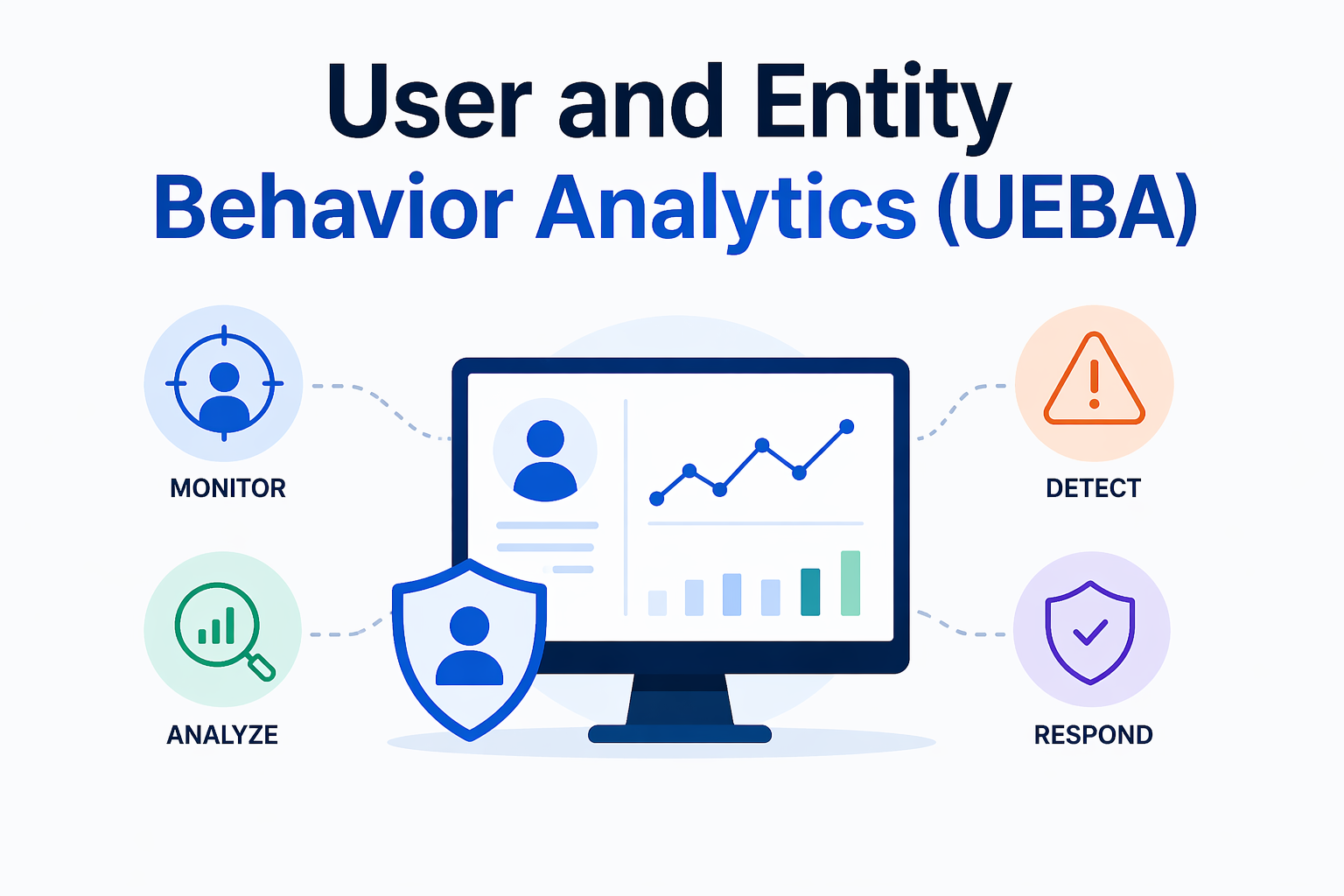
In today’s highly interconnected business environment, organizations across the globe rely heavily on third parties such as vendors, suppliers, contractors, consultants, and service providers to streamline operations, reduce costs, improve profitability, and gain a competitive advantage. User and Entity Behavior Analytics (UEBA) plays a crucial role in securing these third-party relationships by continuously monitoring access, detecting suspicious activities, and protecting sensitive organizational data. Third-party partnerships help businesses accelerate time to market, improve operational efficiency, and focus on core business functions while outsourcing specialized services like payroll processing, IT support, cloud management, customer service, and supply chain operations.
However, this growing dependence on external vendors also introduces significant cybersecurity risks. During these collaborations, organizations often share large volumes of sensitive information, including personally identifiable information (PII), financial records, intellectual property, confidential business data, customer information, and employee records. If these third-party vendors experience a security breach, the consequences can be severe—resulting in data leaks, financial losses, reputational damage, regulatory penalties, and business disruption.
Understanding Third-Party Risk in Modern Enterprises
Third-party risk refers to the potential threats organizations face when external vendors, contractors, or service providers gain access to internal systems, applications, and sensitive business information. While third-party partnerships are necessary for operational growth, they also create multiple entry points for cybercriminals.
For example, vendors managing payroll systems may have access to employee salary details and personal records, while IT service providers may handle network infrastructure, privileged accounts, and sensitive operational data. A single compromised vendor account can become a gateway for attackers to infiltrate an entire organization.
How UEBA Helps Mitigate Third-Party Security Risks
User and Entity Behavior Analytics (UEBA) is an advanced cybersecurity solution that uses machine learning, artificial intelligence, and behavioral analytics to monitor, detect, and respond to suspicious activities across users, devices, applications, and network entities.
Unlike traditional security tools that rely on predefined rules and signatures, UEBA focuses on identifying abnormal behavior patterns that may indicate insider threats, compromised accounts, unauthorized access, or malicious activities from third-party vendors.
UEBA continuously establishes a baseline of normal behavior for users and entities and flags deviations that could represent potential security incidents.
For example, if a third-party contractor suddenly accesses sensitive files outside of normal working hours, downloads large amounts of confidential data, or logs in from unusual geographic locations, UEBA can immediately detect these anomalies and trigger alerts for security teams.
This proactive approach enables organizations to detect threats early before significant damage occurs.
Key Benefits of UEBA for Third-Party Vendor Management
Continuous Monitoring of Vendor Activities
User and Entity Behavior Analytics (UEBA) solutions provide real-time visibility into vendor access and user behavior across the organization’s digital ecosystem. Security teams can monitor how third parties interact with systems, applications, and sensitive data at all times.
This helps identify suspicious activities that may otherwise go unnoticed in traditional monitoring environments.
Early Detection of Insider Threats
Third-party vendors can unintentionally or intentionally become insider threats. Whether through credential compromise, negligence, or malicious intent, insider threats pose a serious risk.
UEBA helps detect abnormal behavior patterns early, reducing the chances of major data breaches and unauthorized access incidents.
Protection of Personally Identifiable Information (PII)
Sensitive data such as employee records, customer information, healthcare data, and financial records require strong protection to comply with privacy regulations.
UEBA helps organizations safeguard PII by detecting unauthorized access attempts and unusual data transfer activities involving third-party accounts.
Improved Regulatory Compliance
Organizations must comply with strict data protection regulations such as GDPR, HIPAA, PCI-DSS, and CCPA. Third-party vendor risks can directly impact compliance obligations.
UEBA provides audit trails, behavioral insights, and threat detection capabilities that support compliance reporting and strengthen governance frameworks.
Why Traditional Security Approaches Are Not Enough
Traditional security systems like firewalls, antivirus software, and static access controls are important but often insufficient for detecting sophisticated third-party threats. Attackers increasingly use legitimate credentials and trusted vendor accounts to bypass perimeter defenses.
UEBA addresses this gap by focusing on behavioral intelligence rather than static security rules. It understands context, user intent, and access patterns—making it far more effective against modern cyber threats.
The Future of Third-Party Risk Management with UEBA
As organizations continue to embrace digital transformation, cloud adoption, remote work, and global vendor ecosystems, third-party risk exposure will continue to grow. Businesses can no longer rely solely on traditional security controls to manage these risks.
UEBA is becoming an essential component of modern cybersecurity strategies by enabling organizations to continuously assess trust, monitor user behavior, and respond rapidly to anomalies.
Conclusion
Third-party partnerships are essential for business growth, efficiency, and innovation, but they also introduce significant cybersecurity challenges. The sharing of sensitive data with vendors, suppliers, and contractors creates opportunities for unauthorized access, insider threats, and large-scale data breaches.
User and Entity Behavior Analytics (UEBA) provides a powerful solution for managing these risks through continuous monitoring, anomaly detection, and proactive threat response. By leveraging UEBA, organizations can strengthen third-party security, protect sensitive information, ensure regulatory compliance, and create a safer digital environment for long-term business success.


 English
 Arabic
 French
 Spanish
 Portuguese
 Deutsch
 Turkish
 Dutch
Dutch
 Italiano
 Russian
 Romaian
 Portuguese (Brazil)
