


Why the Fishing Photo Matters: Documenting Your Trip, Honoring the Fish, and Building a Record Worth Keeping
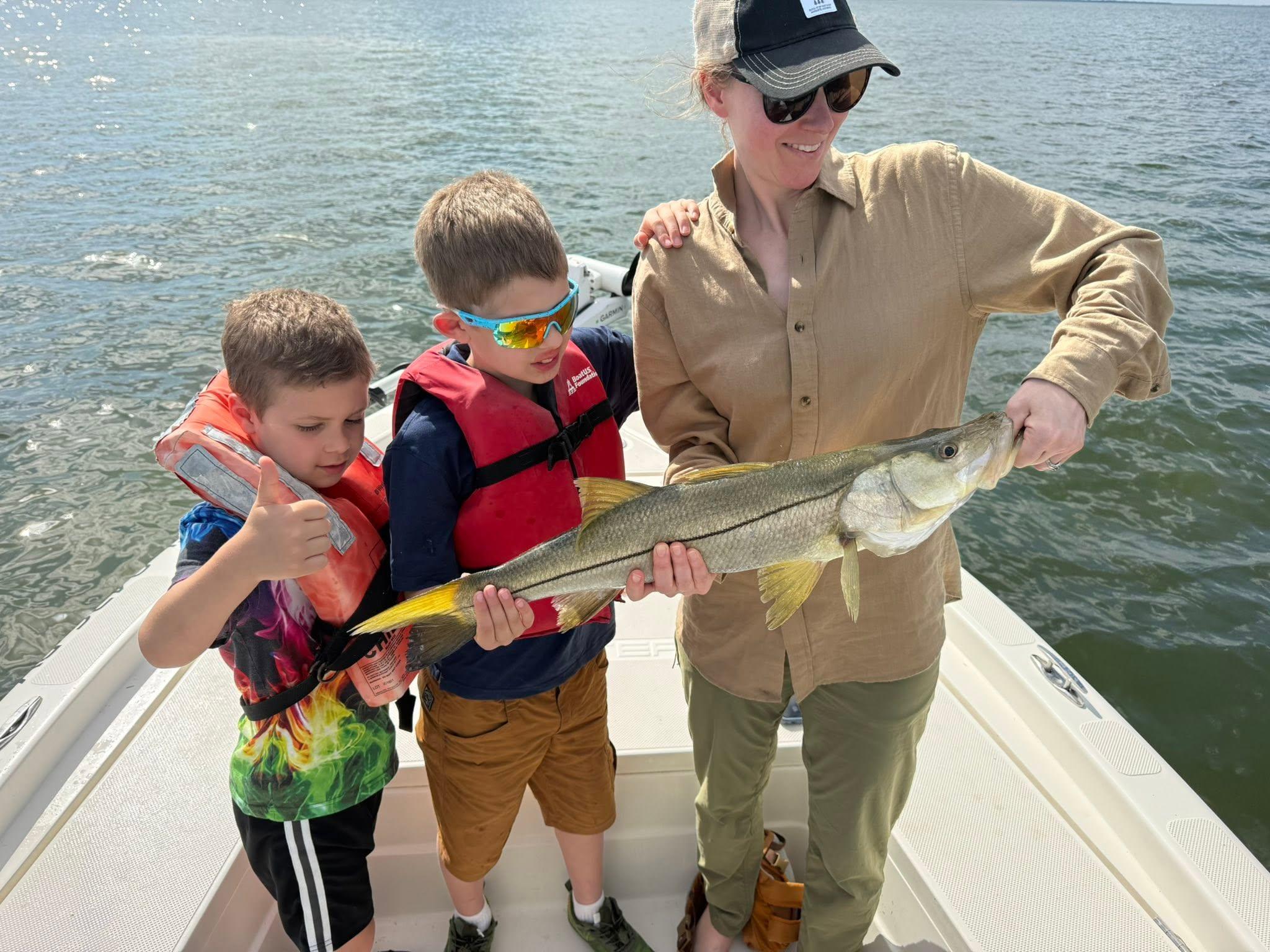
There are anglers who fish primarily to eat, and anglers who fish primarily for the experience, and anglers who exist somewhere on the spectrum between these two orientations. What most of them share, regardless of where they sit on this spectrum, is the desire to somehow preserve the memory of a remarkable catch — the 28-inch snook that ate a topwater at first light, the tarpon that jumped four times and threw the hook on the fifth, the redfish that was tailing in six inches of water sixty feet away and came to a perfectly placed gold spoon on the first cast. These are private moments of genuine achievement, and the impulse to capture and share them is entirely natural and, done thoughtfully, entirely defensible.
But fishing photography — the specific practice of documenting catches, locations, and fishing experiences through images — carries its own ethics, aesthetics, and practical considerations that aren't always obvious to anglers who haven't thought carefully about them. What makes a fishing photo genuinely good? What separates documentation that honors the experience from documentation that trivializes the fish? And how do the accumulated images of many trips, viewed together over time, become something more than a collection of individual moments?
This guide explores fishing photography as both a practical skill and a reflective practice — covering technique, ethics, composition, and the deeper question of why these images matter.
The Conservation Ethic Embedded in Modern Fishing Photography
The evolution of fishing photography over the past generation tracks closely with the evolution of catch-and-release ethics in recreational fishing more broadly. The classic trophy photo — fish held high, horizontal or vertical, well clear of the water, held for as long as necessary to get a good shot — has given way in most serious angling communities to a different aesthetic: fish kept low and horizontal, wet and supported, often partially in the water, with the time out of the water minimized to the absolute necessary minimum.
This shift isn't merely aesthetic preference. It reflects a genuine understanding of what happens physiologically to a stressed fish during an extended handling period. The lactic acid that accumulates in a fish's system during the fight begins clearing the moment the fight ends — but only if the fish is returned to the water with functional gill activity. Every second a fish spends out of water delays this recovery, and for fish that have been fought hard (particularly large tarpon and heavy redfish in warm summer water), extended air exposure can tip the balance from "fully recovering" to "delayed mortality."
The implication for fishing photography is direct: the best fishing photos are the ones that demonstrate the photographer understood this, both through the content of the image (fish handled correctly, obviously wet, clearly held for the minimum necessary time) and through what the image doesn't show (no fish on a dry deck, no prolonged vertical holds that stress the fish's internal organs and jaw structures, no triumphalist poses that prioritize human display over fish welfare).
This ethical evolution is visible in the collective fishing photography that documents the work of serious guides and anglers in productive fisheries throughout the country. Galleries that document real days on the water consistently reflect these values in how catches are presented — not as trophies to be dominated but as encounters to be briefly documented and then returned.
What Actually Makes a Fishing Photo Work
Technical quality matters in fishing photography, but it's subordinate to several other factors that determine whether an image successfully captures the experience it's attempting to document.
Story over trophy. The best fishing photos convey something about the experience of the moment, not just the fact of the catch. The look of concentration on an angler's face as a fish runs for the second time. The spray of water as a tarpon breaks the surface behind the angler in the middle ground. The low angle looking past the fish at the mangrove shoreline where it was caught, the morning light catching the water in a way that communicates the time of day and the quality of the moment. These contextual, story-rich images are almost always more interesting than a straight trophy shot, even when the trophy shot involves a larger or more impressive fish.
Light direction and quality. Fishing happens predominantly in bright, high-contrast light — full sun on open water — that is among the more challenging conditions for photography of any kind. The harshest light (overhead noon sun) creates deep shadows under hat brims, washes out the fish's coloration, and generally produces flat, unflattering images. Morning and evening light, when the sun is low and directional, flatters both the angler and the fish and produces the warm, golden images that characterize the most memorable fishing photography. Whenever possible, position the subject so that the light falls on the fish's side rather than creating a silhouette, and avoid shooting directly into the sun.
Proximity and framing. Most amateur fishing photographers stand too far from the subject and frame too wide, resulting in images where the fish that felt enormous in your hands appears as a small, peripheral element in a frame dominated by boat deck, horizon, and other visual clutter. Getting closer — physically, by moving toward the subject, or optically, by using the camera's zoom — and filling the frame with the angler and fish rather than their surroundings is the single most impactful compositional improvement available to most fishing photographers.
The fish at its best. Fish in good condition, just landed, held correctly with both hands supporting the body weight, display their coloration and physical form in a way that deteriorates rapidly as time passes and as handling stress increases. Photographing fish quickly, immediately after landing, when coloration is still vivid and the fish is still fully fresh, produces significantly better images than waiting for the "perfect" moment that often never comes.
Gear Considerations: What You Actually Need
Modern smartphone cameras are genuinely capable of excellent fishing photography in most conditions, and the practical argument for investing in dedicated photographic equipment is weaker than it was even five years ago. The limiting factors in most fishing photography aren't sensor size or lens quality but the compositional and timing elements discussed above — factors that are entirely independent of the equipment used.
A waterproof phone case (or a purpose-built waterproof camera housing for a dedicated camera) is a meaningful investment for any angler who intends to document trips regularly. Saltwater and electronics don't mix, and the scenario of a phone slipping overboard or getting swamped by a wave at the moment of a good catch is common enough to warrant genuine protection rather than optimism about careful handling.
A selfie stick or phone mount that allows hands-free or stabilized photography is useful for solo anglers, and for guided trips, a small, easily accessible mounting point on the gunwale can allow the guide to quickly position the camera at the right angle while both hands are needed to support the fish.

Building a Visual Record of Your Fishing History
Beyond any individual photograph, there's something deeply valuable about the accumulated visual record of many trips over time — the decade of images that shows the progression of a young angler's skill, the documentation of specific locations across years that reveals how the fishery has changed, the faces of fishing companions at different ages that transform a fishing archive into something closer to a family or friendship history.
Many serious anglers who have maintained careful photographic records of their fishing across years or decades describe these archives as among their most treasured possessions — more irreplaceable in some sense than any equipment, because they document experiences that cannot be reconstructed. The organizational discipline required to maintain such a record (consistent naming conventions, reliable backup systems, regular curating rather than simply accumulating) is itself a worthwhile practice.
For anglers interested in seeing what a curated gallery of genuine days on the water in Southwest Florida looks like, the fishing photos and gallery maintained by professional operations provides exactly the kind of visual documentation being discussed here — catches documented respectfully, handling techniques clearly thoughtful, locations and conditions communicating the specific character of this particular fishery in ways that pure description cannot match.
The Social Dimension: Sharing Images Thoughtfully
Social media has transformed fishing photography from a private or family practice into an often-public one, with all of the considerations that public sharing introduces. Location sharing deserves particular care: revealing the specific GPS coordinates or highly identifiable landmarks of productive fishing spots can expose those spots to sudden, concentrated pressure that undermines the very qualities that made them productive. Most experienced anglers share images from productive spots with deliberate compositional choices that communicate the experience without pinpointing the location — open water in the background, landmark-ambiguous mangrove frames, identifiable species without identifiable geography.
Accuracy in caption information matters as well, particularly for species identification and size claims. The fishing photography community has developed fairly robust informal norms around honest representation of catches, and the credibility of an angler's photographic documentation is closely tied to the accuracy and honesty of the information accompanying the images.
The Ethics of Sharing Fishing Destinations
There's a broader question embedded in fishing photography and social media that the angling community continues to navigate without a fully settled consensus: when does sharing a fishing experience become sharing a fishing resource, and what responsibility comes with that transition?
The answer isn't a simple prohibition on sharing fishing content — the positive effects of well-documented, ethically framed fishing photography on public engagement with conservation and the natural world are real. But the question deserves thought, particularly for anglers documenting fishing in sensitive, productive environments like the inshore waters of Southwest Florida where certain species and specific habitats have required careful management to maintain their current quality.
Sharing the experience of fishing these waters — the beauty, the wildlife encounters, the genuine excitement of a world-class fishery — while being thoughtful about the specific location and timing information embedded in that sharing is a reasonable middle path that most serious anglers navigate intuitively once they've thought about it.
Video as an Alternative or Complement to Still Photography
The proliferation of affordable, capable action cameras and the ubiquity of video-capable smartphones has made moving-image documentation of fishing trips increasingly accessible and increasingly popular. Video captures dimensions of the experience that still photography can't — the sound of a reel singing, the acrobatic jumps of a hooked tarpon, the real-time sequence of events from strike to landing to release — and for many experiences, a well-composed fifteen-second video clip communicates more authentically than the best still photograph of the same moment.
The practical constraints of video documentation on a fishing trip — limited storage, battery consumption, the difficulty of holding a camera steady during an active fish fight — favor a selective approach rather than recording everything continuously. Identifying in advance the specific moments most worth capturing (the hookup, the first run, the fish at the boat, the release) and being deliberately ready for those moments with minimal fumbling produces better video documentation than simply leaving the camera running in case something interesting happens.
Building a Documentation Habit That Lasts
The anglers whose photographic archives become genuinely valuable over time are almost universally those who built a consistent documentation habit early and maintained it as a matter of practice rather than exceptional effort. This means photographing even ordinary catches rather than only the exceptional ones — because an ordinary fish from a specific place in a specific season ten years from now may look like a very different fish than today's "ordinary," and the documentation of what was normal becomes its own kind of valuable record.
It means keeping the camera accessible rather than buried in a dry bag. It means taking five minutes at the end of each trip to label and organize the day's images before they join the undifferentiated mass of an ever-growing photo library. And it means reviewing older images occasionally with genuine attention — not as nostalgia but as a practice of observing change, tracking patterns, and building the long-view perspective that turns a collection of individual fishing photographs into a genuine record of engagement with a living, changing system.

 English
 Arabic
 French
 Spanish
 Portuguese
 Deutsch
 Dutch
Dutch
 Italiano
 Russian
 Romaian
 Portuguese (Brazil)
 Greek
Greek
