


Electronic Flight Bag Driving Safer Digital Operations Across Modern Aviation
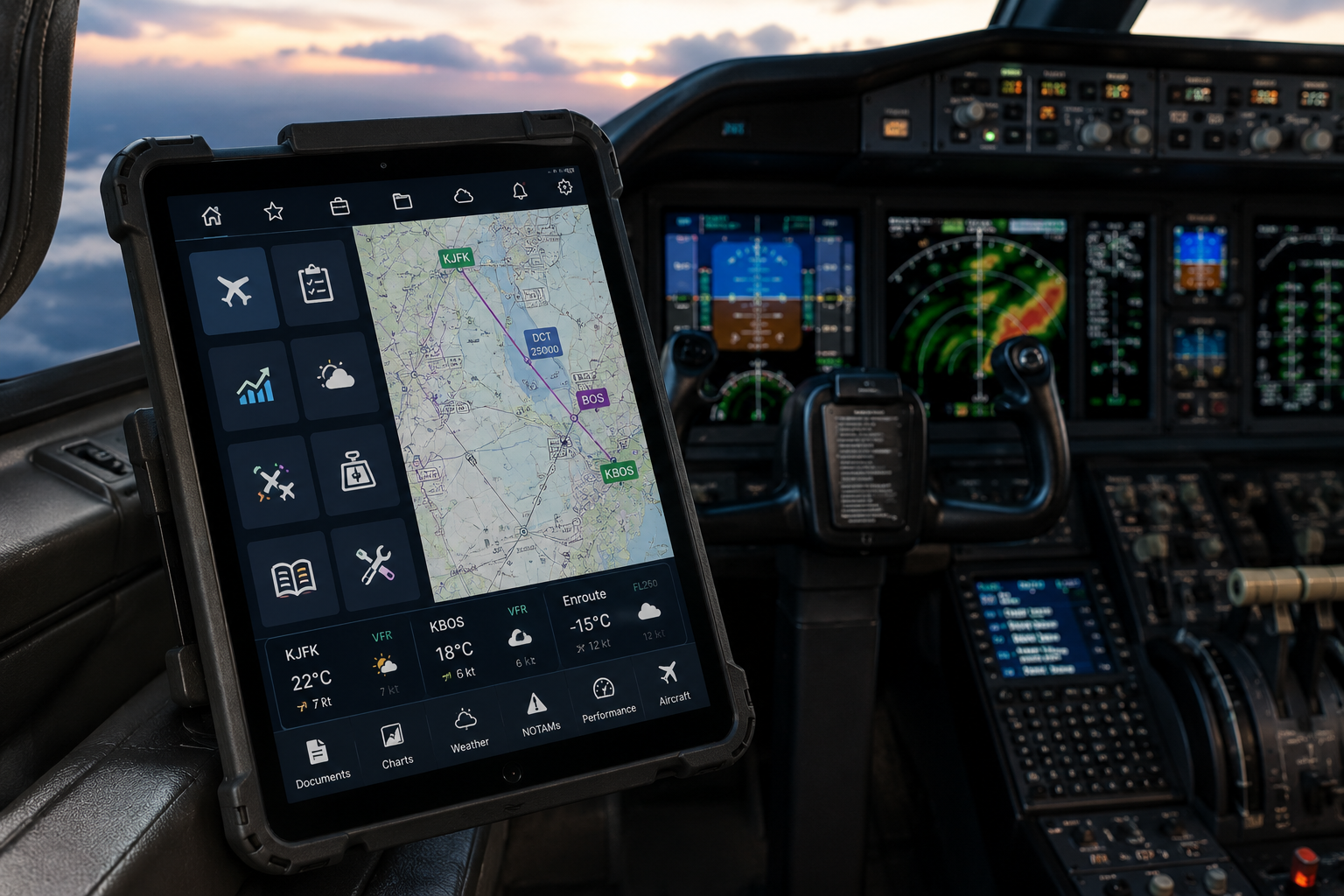
Electronic Flight Bag solutions are becoming an important part of modern cockpit digitalization. Electronic Flight Bag systems help flight crews access charts, manuals, weather updates, performance data, and operational documents through digital interfaces instead of relying on heavy paper-based flight kits. Their adoption reflects a broader aviation shift toward safer, faster, and more connected decision-making. As airlines, business aviation operators, and defense fleets focus on operational efficiency, EFB platforms are becoming central to how pilots plan, manage, and complete flight duties with improved accuracy.
Digital Cockpit Transformation
The aviation sector is moving steadily toward paperless and connected cockpit environments. Earlier, pilots depended on printed manuals, navigation charts, performance books, and flight documents that required constant updating and physical handling. EFB platforms simplify this process by placing critical information on portable tablets or installed cockpit displays. This supports faster access to route data, aircraft performance calculations, operational notices, and safety information.
The shift is not only about replacing paper. It also reflects the need for better coordination between aircraft, pilots, dispatch teams, and ground operations. With digital tools, updates can be delivered more quickly and consistently. This helps reduce manual errors, improve situational awareness, and support more structured flight planning. As aviation operations become more data-driven, EFB systems are becoming a practical bridge between traditional cockpit workflows and next-generation connected aircraft operations.
Value Supported by Reliable Data
According to MarkNtel Advisors, the Global Electronic Flight Bag Market growth is valued at around USD 3.56 billion in 2025 and is projected to reach USD 7.39 billion by 2032. The market is estimated to grow at a CAGR of around 11% during 2026–2032. This indicates rising adoption across commercial aviation, military aviation, municipal aviation, and business or general aviation applications.
Software holds the largest component share, supported by the growing use of analytics, cloud connectivity, route optimization, weather updates, and compliance applications. Portable EFB solutions also hold strong adoption because tablets are easier to deploy, update, and manage than fully installed systems. Airlines and fleet operators are increasingly choosing flexible EFB models that can improve pilot workflow while reducing cockpit clutter and documentation handling.
Practical Use Across Flight Activities
EFB platforms support several practical flight activities, from pre-flight preparation to in-flight decision-making and post-flight reporting. Before departure, pilots can use EFB tools to review flight plans, calculate aircraft performance, verify charts, check weather updates, and access operational notices. During flight, these systems can assist with navigation references, fuel monitoring, route adjustments, and real-time communication with operations teams.
In commercial aviation, EFB adoption helps airlines maintain consistent documentation across large fleets. In business aviation, pilots benefit from flexible access to updated charts and route planning tools. Military aviation can use EFB systems for mission planning, secure documentation, and operational coordination. As aircraft operations become more complex, EFB solutions help flight crews manage information in a more organized and timely way.
According to The Federal Aviation Administration, electronic flight bag guidance supports aircraft owners, operators, and pilots who want to replace required paper information and use hosted database or software applications as part of EFB functionality.
Regional Adoption Patterns
North America holds a major share due to advanced aviation infrastructure, strong regulatory support, and early adoption of digital cockpit technologies. Airlines in the region have invested in EFB systems to support paperless operations, improve flight safety, and increase operational efficiency. The presence of major aerospace and avionics companies also strengthens technology development and deployment.
Europe is also adopting EFB platforms as airlines modernize cockpit operations and align with digital aviation priorities. In Asia-Pacific and the Middle East, rising air traffic, fleet expansion, and airline digitalization are supporting new opportunities. Carriers in emerging aviation markets are increasingly using portable EFB tools because they offer easier deployment and lower installation complexity. This regional spread shows that EFB adoption is no longer limited to large airlines; it is gradually reaching regional, business, and specialized aviation operators as well.
According to The European Union Aviation Safety Agency, acceptable means of compliance and guidance material provide airworthiness considerations for installed electronic flight bags and related installed resources.
Cost, Integration, and Security Barriers
Despite strong adoption, EFB implementation can involve notable challenges. Airlines may need to invest in hardware, secure software, aircraft connectivity, mounting equipment, pilot training, and ongoing updates. For smaller operators, these costs can delay adoption, especially when return on investment takes time to become visible. Integration with aircraft systems and airline operations platforms can also require careful planning.
Cybersecurity is another important concern. As EFB platforms become more connected, operators need secure data transfer, controlled access, device management, and reliable update processes. Any digital cockpit tool must be managed with strict safety and compliance standards. Battery reliability, screen readability, backup procedures, and data accuracy also remain important operational considerations. These challenges do not reduce the relevance of EFB systems, but they show why structured implementation is essential.
According to The International Civil Aviation Organization, an electronic flight bag is an electronic information system that stores, updates, displays, and processes functions to support flight operations or flight crew duties.
Companies Supporting Adoption
Several companies are active in developing and supporting EFB solutions for global aviation users. Key names include Airbus SAS, The Boeing Company, Collins Aerospace, Thales Group, Honeywell Aerospace, L3Harris Technologies Inc., CMC Electronics, Astronautics Corporation of America, Lufthansa Systems, Teledyne Controls, DAC International Inc., Esterline Technologies Corporation, Ramco Systems, Flightman, and Rockwell Collins.
These companies support different parts of the EFB ecosystem, including aircraft integration, flight planning software, cockpit connectivity, performance analytics, digital documentation, and operational support tools. Their activities are helping airlines and aircraft operators move toward more connected cockpit environments. As EFB platforms continue to evolve, collaboration between aircraft manufacturers, avionics providers, software companies, and operators may shape how digital flight operations develop over the coming years.
Electronic Flight Bag adoption reflects a wider move toward safer and more efficient aviation operations. By reducing paper dependency, improving access to updated information, and supporting real-time decision-making, EFB systems are becoming valuable tools for pilots and operators. Their future use may expand further as cloud connectivity, analytics, and aircraft data integration become more common. However, successful adoption is expected to depend on cost planning, cybersecurity, training, and regulatory alignment. With balanced implementation, EFB solutions could continue to support more reliable, organized, and data-driven flight operations.

 English
 Arabic
 French
 Spanish
 Portuguese
 Deutsch
 Turkish
 Italiano
 Russian
 Romaian
 Portuguese (Brazil)
 Greek
Greek
