


MPO MTP Fiber Connector | High-Density Fiber Optic Connectivity Guide
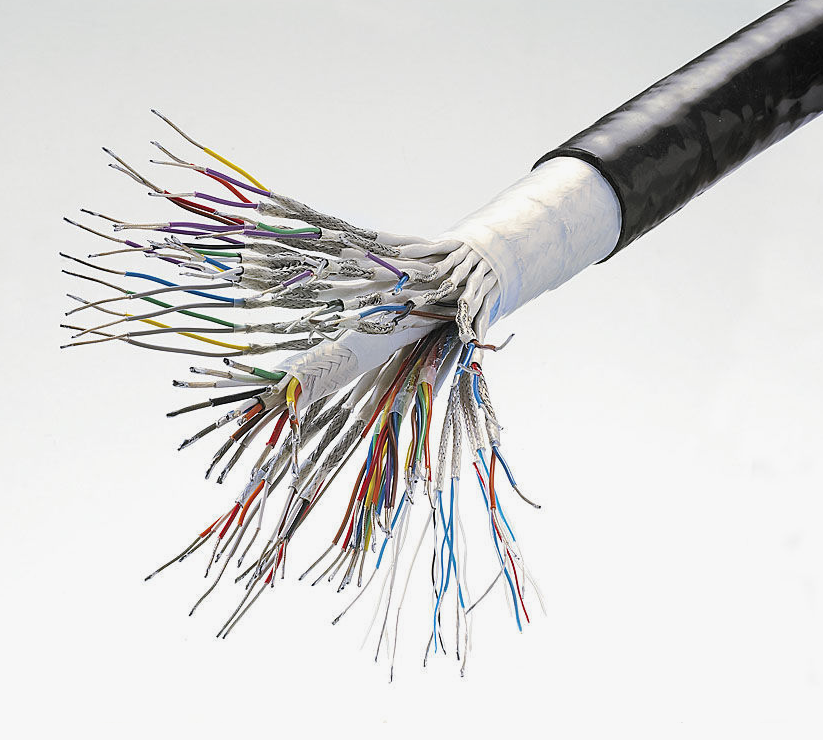
As global data demand continues to grow, modern networks require faster, denser, and more efficient connectivity solutions. The MPO MTP fiber connector is a key innovation in fiber optic technology, designed to support high-speed, high-density network environments such as data centers, telecom systems, and enterprise infrastructure.
These connectors simplify fiber management while enabling ultra-fast data transmission, making them essential for next-generation communication systems.
What Is an MPO MTP Fiber Connector?
An MPO MTP fiber connector is a multi-fiber push-on connector used in fiber optic networks to connect multiple optical fibers simultaneously. MPO stands for Multi-fiber Push-On, while MTP is a high-performance brand of MPO connectors designed for improved precision and reliability.
Instead of connecting individual fiber strands, MPO/MTP connectors allow multiple fibers (commonly 8, 12, 16, 24, or more) to be connected in a single interface, significantly reducing installation time and space requirements.
How MPO MTP Fiber Connector Works
The MPO MTP fiber connector uses precision-aligned pins and a push-pull mechanism to ensure accurate fiber alignment. Each fiber strand inside the connector transmits data using light signals.
When two MPO/MTP connectors are joined, all fibers connect simultaneously, enabling high-speed parallel data transmission across multiple channels.
This design is especially useful in environments requiring large-scale data transfer and minimal signal loss.
MPO vs MTP Fiber Connector
While often used interchangeably, there are important differences.
MPO Connector
- Standard multi-fiber push-on connector
- Widely used in general fiber networks
- Supports multiple fiber configurations
MTP Connector
- Enhanced version of MPO
- Higher precision alignment
- Improved mechanical performance
- Better durability and lower insertion loss
MTP connectors are often preferred in high-performance data center environments.
Types of MPO MTP Fiber Connectors
There are several configurations of MPO MTP fiber connector systems.
Standard MPO/MTP Connector
Used for general high-density fiber connections.
APC (Angled Physical Contact) Connector
Provides lower back reflection for high-speed applications.
UPC (Ultra Physical Contact) Connector
Offers low insertion loss for stable signal transmission.
Female and Male Connectors
- Male connectors have alignment pins
- Female connectors do not include pins
Key Benefits of MPO MTP Fiber Connector
The MPO MTP fiber connector offers several advantages in modern networking systems.
High-Density Connectivity
Supports multiple fibers in a single compact connector.
Faster Installation
Plug-and-play design reduces installation time significantly.
Improved Network Efficiency
Enables high-speed parallel data transmission.
Reduced Cable Clutter
Minimizes the need for multiple individual fiber connections.
Scalable Design
Easily supports network expansion and upgrades.
Applications of MPO MTP Fiber Connector
These connectors are widely used in advanced networking environments.
Data Centers
Used for high-speed server-to-switch and switch-to-switch connections.
Cloud Computing Infrastructure
Supports large-scale distributed computing systems.
Telecommunications Networks
Forms part of backbone and distribution systems.
5G Network Infrastructure
Enables high-capacity data transmission for mobile networks.
Enterprise IT Networks
Supports internal high-speed communication systems.
MPO MTP Fiber Connector in Data Centers
Data centers rely heavily on MPO MTP fiber connector systems for efficiency and scalability.
High Port Density
Allows multiple fiber connections in limited rack space.
Simplified Upgrades
Easily supports transitions to 40G, 100G, 400G, and beyond.
Reduced Downtime
Plug-and-play systems minimize installation errors and disruptions.
Efficient Cable Management
Helps maintain organized and structured cabling systems.
MPO MTP Polarity Types
Proper polarity ensures correct signal transmission.
Type A (Straight Through)
Fiber positions remain the same on both ends.
Type B (Reverse)
Fibers are flipped for correct alignment in specific systems.
Type C (Pair Flip)
Used in duplex transmission systems.
Installation of MPO MTP Fiber Connector
Proper installation is critical for performance.
Network Planning
Determine layout, fiber count, and connection requirements.
Connector Alignment
Ensure correct male/female pairing for accurate connection.
Plug-and-Play Setup
Connect MPO/MTP connectors directly into patch panels or modules.
Testing and Verification
Check signal strength, continuity, and performance metrics.
Challenges of MPO MTP Fiber Connector Systems
Despite advantages, there are some challenges.
High Initial Cost
Advanced connectors can be more expensive than standard options.
Cleaning Requirements
Dust or contamination can affect signal quality.
Compatibility Issues
Must match specific network equipment standards.
Installation Precision
Requires careful handling and proper alignment.
Best Practices for MPO MTP Fiber Connector Use
To ensure long-term performance:
Keep Connectors Clean
Use proper cleaning tools before installation.
Follow Polarity Standards
Ensure correct alignment for signal transmission.
Avoid Excessive Bending
Maintain proper fiber bend radius.
Use Proper Labeling
Helps with maintenance and troubleshooting.
Perform Regular Testing
Ensure stable performance in high-speed networks.
Future of MPO MTP Fiber Connector Technology
The technology continues to evolve with modern networking demands.
Higher Fiber Counts
Future connectors will support even more fibers per interface.
Support for 800G and Beyond
Designed for ultra-high-speed data transmission systems.
Improved Mechanical Design
Enhanced durability and easier installation features.
AI-Driven Data Centers
Supports intelligent, automated network infrastructure.
Conclusion
The MPO MTP fiber connector is a critical innovation in modern fiber optic networking, enabling high-density, high-speed, and scalable connectivity solutions. It is widely used in data centers, telecom networks, cloud systems, and enterprise infrastructure.
By simplifying installation, reducing cable complexity, and supporting next-generation bandwidth demands, MPO and MTP connectors play a vital role in building the future of global high-speed communication networks.

 English
 Arabic
 French
 Spanish
 Deutsch
 Turkish
 Dutch
Dutch
 Italiano
 Russian
 Romaian
 Portuguese (Brazil)
 Greek
Greek
