


Copper Bottle vs Steel Bottle: Which One Should You Buy in 2026?
The great hydration debate of 2026 continues: copper bottle or stainless steel bottle? Both have passionate advocates and legitimate benefits. But when you weigh all the factors — health, durability, sustainability, and value — which one truly wins? This no-nonsense comparison helps you decide.
Health Benefits: Copper vs Steel
This is where copper bottles win decisively. When water is stored in a pure copper vessel for 6 to 8 hours, it undergoes a natural purification process. Copper ions leach into the water at safe, beneficial levels, killing bacteria and other pathogens. This process, called the Oligodynamic effect, is scientifically validated and has been practised in Ayurveda for millennia.
Stainless steel, on the other hand, is inert — it does not interact with water at all. This makes it chemically neutral, which is both its strength (no harmful leaching) and its limitation (no active health benefits either).
Verdict on Health: Copper wins for active health benefits. Steel wins for chemical neutrality.
Temperature Retention: Copper vs Steel
Stainless steel bottles, especially double-walled insulated versions, are vastly superior at temperature retention. They can keep drinks cold for 24 hours and hot for 12 hours. Copper bottles are single-walled and not insulated — they keep water at room temperature, which is actually preferred in Ayurvedic practice (chilled water is discouraged in Ayurveda).
Verdict on Temperature: Steel wins for insulation. Copper wins for Ayurvedic wellness principles.
Durability: Copper vs Steel
Both materials are extremely durable. Stainless steel is harder and more resistant to denting. Copper is slightly softer and can dent if dropped on hard surfaces, but pure copper does not rust or corrode. Both can last 10 to 20 years or more with proper care. Copper naturally develops a patina over time, which some people love as a sign of authenticity.
Sustainability: Copper vs Steel
Both copper and stainless steel are recyclable and far better than plastic bottles. Copper has a slight edge in traditional sustainability because it has been used in India for thousands of years without processing chemicals. Both are excellent choices from an environmental perspective compared to single-use plastic.
Aesthetics: Copper vs Steel
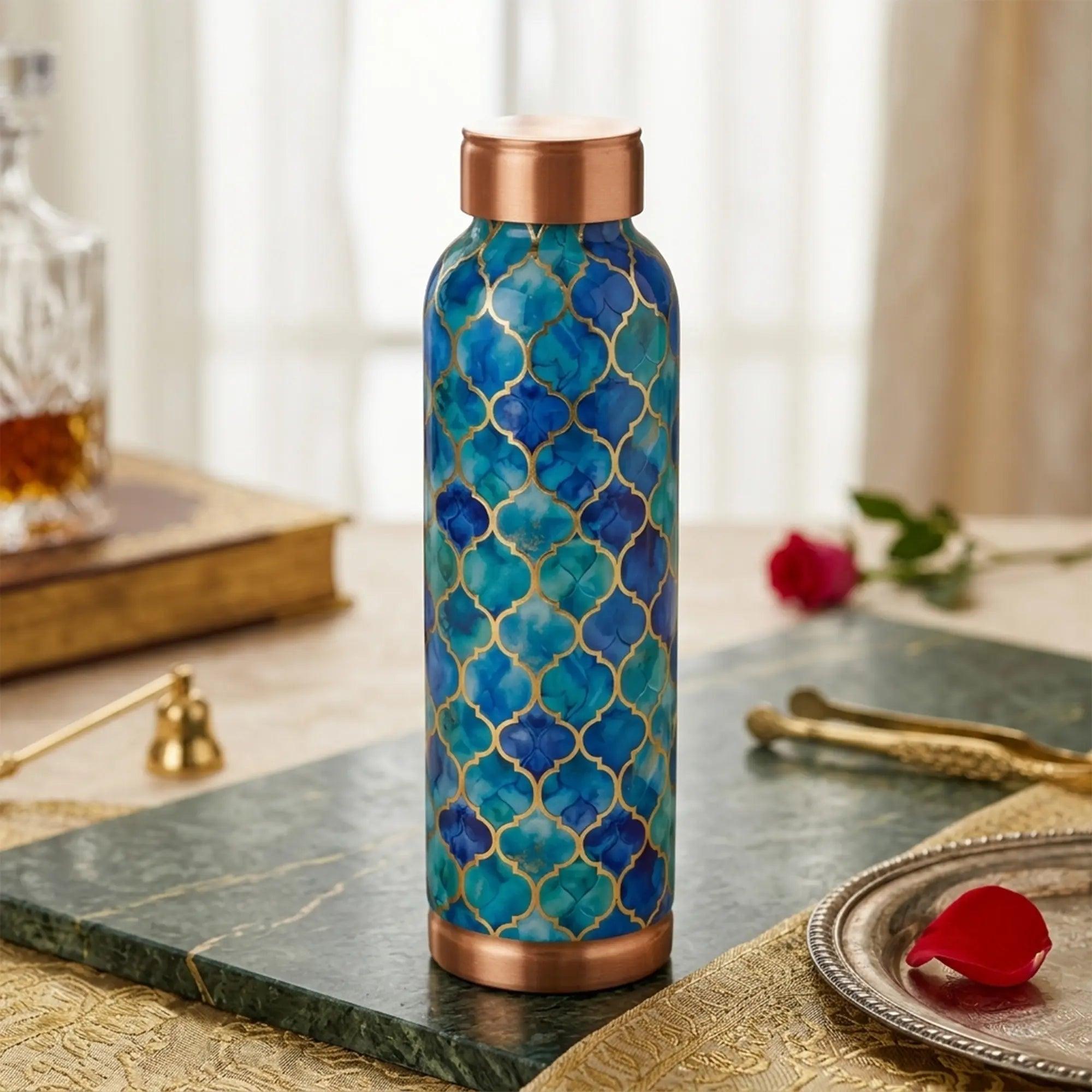
Copper bottles are simply more beautiful. The warm, reddish-gold tone of copper, combined with hammered textures, engraved designs, and oxidised finishes, makes copper bottles artistic objects as much as functional ones. Steel bottles are sleek and modern but rarely striking. If you want a bottle that draws compliments, copper is the clear winner.
Price Comparison
Stainless steel bottles range from ₹300 to ₹3000. Copper bottles range from ₹500 to ₹3000 for quality options. The price overlap is significant, meaning you can get a premium copper bottle for the same cost as a premium steel bottle.
Which Should You Buy?
If your primary goal is health and wellness, choose copper. If you need all-day temperature regulation for hot or iced drinks, choose insulated steel. For most Indian users who want a daily wellness habit, copper bottles are the better long-term investment. Browse India's best copper bottle range at Copper Bottles to find the perfect pure copper bottle for your lifestyle.
Final Verdict
Copper bottles and steel bottles serve different needs. For active health benefits, cultural resonance, beauty, and daily Ayurvedic wellness, copper is unbeatable. For temperature retention and rugged outdoor use, insulated steel has the edge. Many health-conscious Indians choose to own both — copper for morning wellness water, steel for their gym or outdoor adventures.

 English
 Arabic
 French
 Spanish
 Portuguese
 Deutsch
 Turkish
 Dutch
Dutch
 Italiano
 Romaian
 Portuguese (Brazil)
 Greek
Greek
