


How Meniere's Disease Develops: The Four Stages Explained
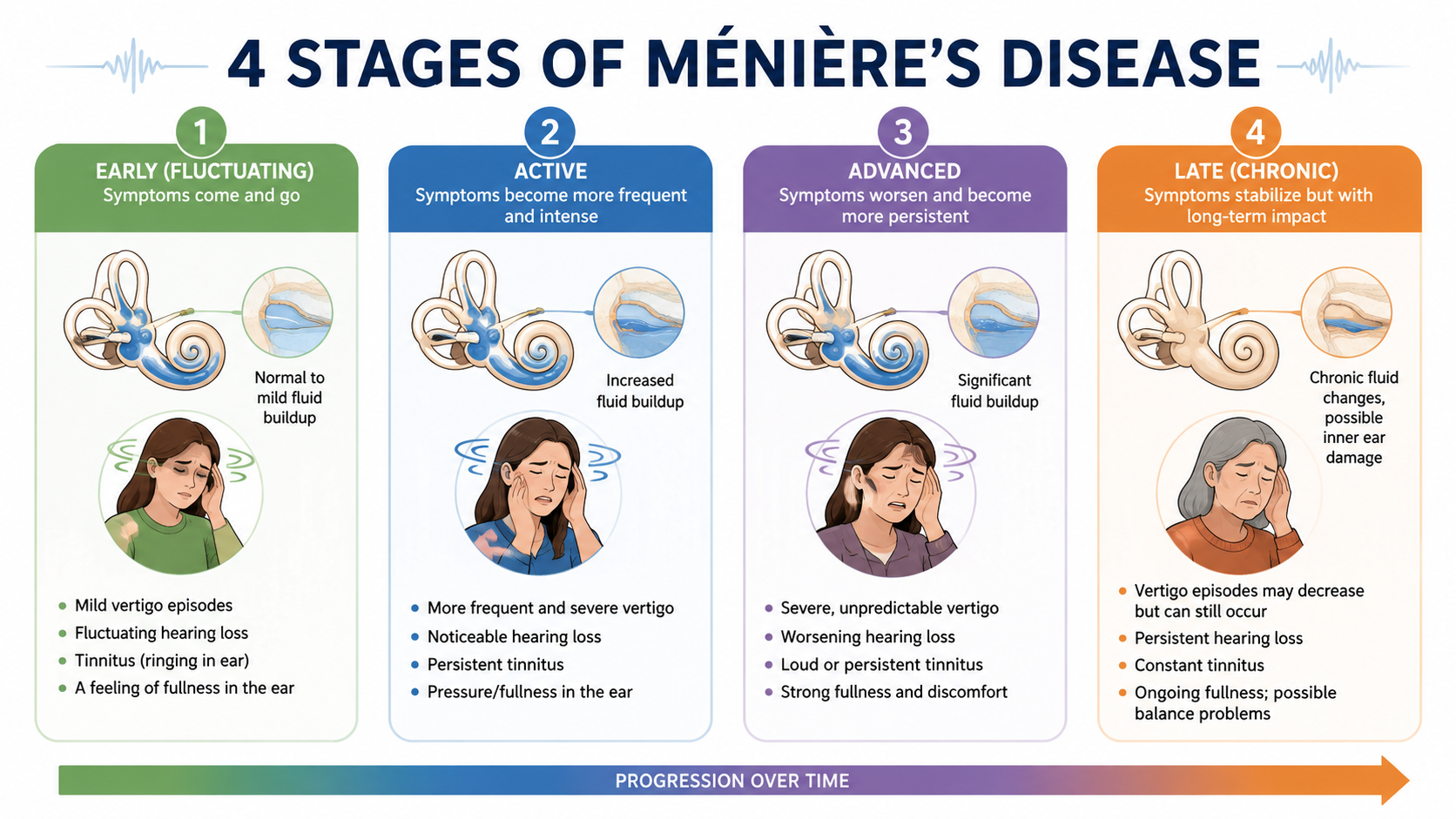
Meniere's disease is a chronic inner ear disorder that affects balance and hearing. It can cause episodes of vertigo, ringing in the ears (tinnitus), hearing loss, and a feeling of fullness in the ear. While symptoms vary from person to person, most individuals experience a gradual progression of the condition.
Understanding 4 stages of meniere's disease and how Meniere's disease develops through its four stages can help patients recognize symptoms early, seek appropriate treatment, and manage the condition more effectively. In this guide, we'll explain each stage in detail, discuss common symptoms, and answer frequently asked questions.
What Is Meniere's Disease?
Meniere's disease is a disorder of the inner ear believed to result from abnormal fluid buildup within the labyrinth, a structure responsible for hearing and balance.
Common Symptoms of Meniere's Disease
- Sudden episodes of vertigo
- Fluctuating hearing loss
- Tinnitus (ringing or buzzing in the ear)
- Ear fullness or pressure
- Balance problems
- Nausea during vertigo attacks
The condition usually affects one ear initially but may involve both ears over time.
The Four Stages of Meniere's Disease Explained
Meniere's disease generally progresses through four stages, although not every patient experiences the exact same pattern.
Stage 1: Early Meniere's Disease
What Happens During the Early Stage?
The first stage is often characterized by sudden and unpredictable attacks of vertigo. These episodes may last from 20 minutes to several hours.
Symptoms of Early Meniere's Disease
- Intense vertigo attacks
- Temporary hearing loss
- Ear pressure or fullness
- Intermittent tinnitus
- Nausea and vomiting
Key Characteristics
- Hearing usually returns to normal between episodes.
- Symptoms may occur weeks or months apart.
- Diagnosis can be challenging because symptoms resemble other vestibular disorders.
Stage 2: Middle Meniere's Disease
How Does the Disease Progress?
As the condition advances, vertigo attacks often become more frequent and severe. Hearing loss starts to become more noticeable.
Symptoms During the Middle Stage
- Recurring vertigo episodes
- Increased tinnitus
- More persistent hearing loss
- Difficulty hearing low-frequency sounds
- Balance disturbances between attacks
What Patients Often Experience
Many people find this stage the most disruptive because symptoms interfere with work, driving, and daily activities.
Stage 3: Late Meniere's Disease
What Changes Occur?
During the late stage, vertigo attacks may become less intense or less frequent. However, hearing damage often becomes permanent.
Symptoms of Late Meniere's Disease
- Permanent hearing loss
- Constant tinnitus
- Ongoing balance difficulties
- Reduced frequency of vertigo attacks
- Chronic ear fullness
Why Vertigo May Improve
Experts believe that damage to the balance organs in the inner ear reduces the intensity of vertigo episodes, even though hearing continues to decline.
Stage 4: End-Stage Meniere's Disease
What Is End-Stage Meniere's Disease?
The final stage involves significant and often irreversible hearing impairment. Vertigo may be rare or absent, but balance problems can persist.
Symptoms of End-Stage Meniere's Disease
- Severe hearing loss
- Persistent tinnitus
- Chronic imbalance
- Increased risk of falls
- Reduced quality of life
Long-Term Effects
Patients may require hearing aids, vestibular rehabilitation therapy, or other supportive treatments to maintain independence and communication.
How Fast Does Meniere's Disease Progress?
The progression of Meniere's disease varies greatly among individuals.
Some people remain in the early stage for years, while others move through the stages more rapidly.
Factors That May Influence Progression
- Age
- Genetics
- Stress levels
- Overall health
- Treatment adherence
- Frequency of vertigo attacks
Can Meniere's Disease Be Stopped?
Currently, there is no cure for Meniere's disease. However, treatment can significantly reduce symptoms and slow progression.
Common Treatment Options
Lifestyle Changes
- Reduce salt intake
- Limit caffeine and alcohol
- Manage stress
- Stay hydrated
Medications
- Anti-vertigo medications
- Diuretics
- Anti-nausea drugs
Advanced Treatments
- Vestibular rehabilitation therapy
- Hearing aids
- Steroid injections
- Surgical procedures in severe cases
What Are Five Mental Health Issues?
Five mental health issues include anxiety disorders, depression, bipolar disorder, obsessive-compulsive disorder (OCD), and post-traumatic stress disorder (PTSD). These conditions can affect thoughts, emotions, behavior, and daily functioning. Early recognition, professional support, healthy lifestyle habits, and appropriate treatment can help individuals effectively manage symptoms and improve well-being.
When Should You See a Doctor?
Seek medical evaluation if you experience:
- Recurrent vertigo attacks
- Sudden hearing loss
- Persistent tinnitus
- Frequent balance problems
- Ear fullness accompanied by dizziness
Early diagnosis can help manage symptoms and improve quality of life.
Frequently Asked Questions (FAQs)
What is the first sign of Meniere's disease?
The first sign is often a sudden episode of vertigo accompanied by ear fullness, tinnitus, or temporary hearing loss.
Does Meniere's disease always get worse?
Not necessarily. Some people experience mild symptoms for many years, while others notice gradual progression.
Can hearing loss from Meniere's disease be reversed?
Early-stage hearing loss may fluctuate and improve temporarily. However, long-term hearing loss often becomes permanent.
How long does each stage of Meniere's disease last?
There is no fixed timeline. Stages can last months, years, or even decades depending on the individual.
Is Meniere's disease considered a disability?
In severe cases, chronic vertigo, hearing loss, and balance issues may qualify as a disability and affect daily functioning.
What triggers Meniere's disease attacks?
Common triggers include:
- High salt intake
- Stress
- Fatigue
- Alcohol
- Caffeine
- Changes in air pressure
Conclusion
Understanding how Meniere's disease develops through its four stages can help patients recognize symptoms, seek timely medical care, and make informed treatment decisions. Although there is currently no cure, early diagnosis and symptom management can significantly improve quality of life and help reduce the impact of vertigo, hearing loss, and balance problems.
Take Action: If you're experiencing symptoms of Meniere's disease, schedule an appointment with an ear, nose, and throat (ENT) specialist for a comprehensive evaluation and personalized treatment plan.

 Arabic
 French
 Spanish
 Portuguese
 Deutsch
 Turkish
 Dutch
Dutch
 Italiano
 Russian
 Romaian
 Portuguese (Brazil)
 Greek
Greek
