


How to Customize Booklet Boxes for Maximum Brand Impact
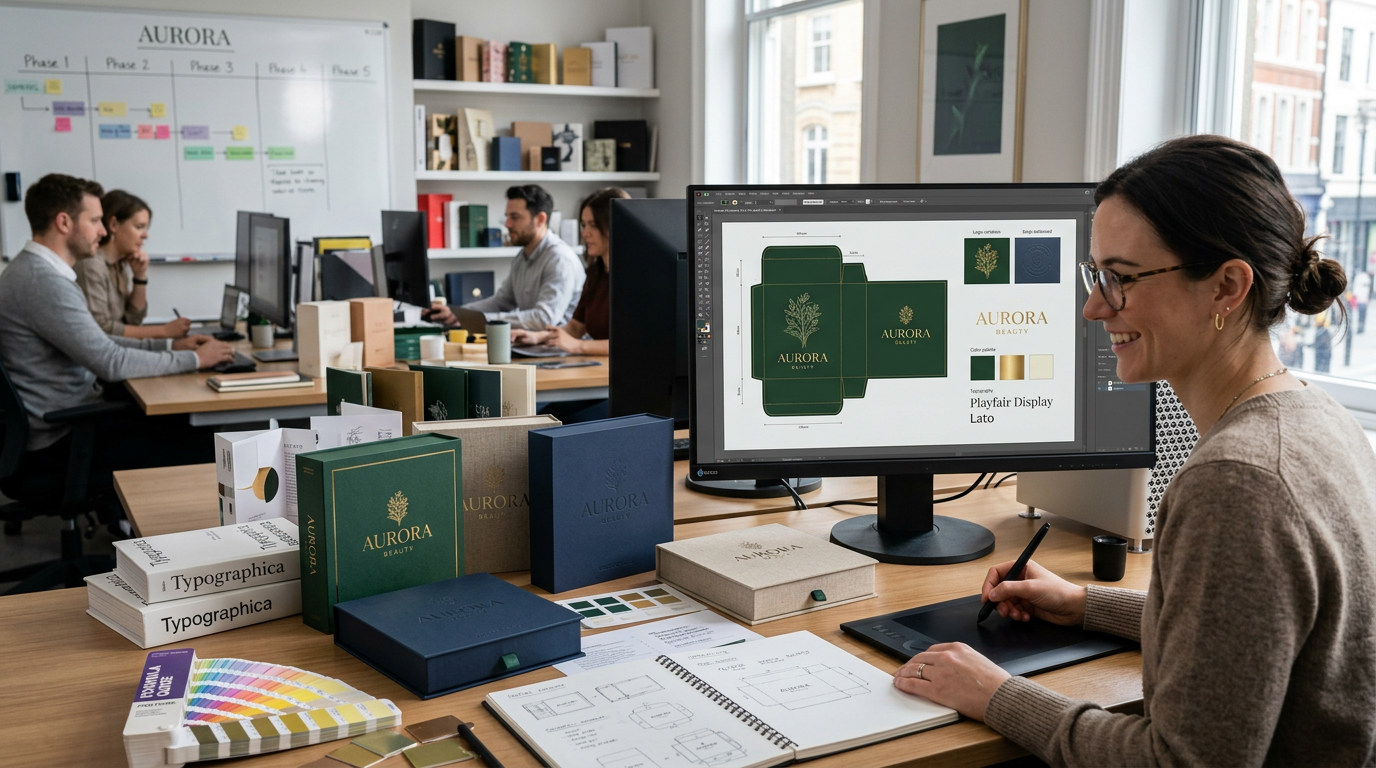
Booklet boxes do more than hold a product. They tell your story, guide your customer, and shape the first impression of your brand. When you customize them well, they become a marketing tool that works long after the sale. This guide walks you through every step — from understanding what booklet boxes are to choosing materials, printing methods, and design details that build a brand people remember.
We've worked with packaging across dozens of industries, from cosmetics to electronics. Along the way, we've learned what makes a booklet box feel cheap and what makes it feel premium. We'll share those specifics with you here.
What Are Booklet Boxes?
A booklet box is a packaging format that combines a printed booklet with a sturdy box structure. It either includes an attached or inserted booklet, or it folds open like a book to reveal the product and information inside. The result is packaging that informs and protects at the same time.
You've likely seen them already. Think of a perfume box that opens to reveal usage notes, or a supplement package with a folded leaflet of directions tucked inside. These are booklet boxes in action.
Here's what sets them apart from standard boxes:
-
They carry more printed information than a basic box, often across multiple panels or pages.
-
They guide the customer through instructions, ingredients, or brand stories.
-
They create a layered unboxing experience that feels intentional.
-
They meet regulatory needs in industries that require detailed labeling.
Booklet boxes serve two jobs at once. They protect the product, and they communicate. That dual purpose is exactly why they reward thoughtful customization.
Why Customization Matters for Branding
A plain box says nothing. A customized booklet box says everything about who you are. Customization is where packaging stops being a container and starts being a brand statement.
Here's the concern many brands have: they worry custom packaging is an unnecessary expense. The data says otherwise. Studies on consumer behavior consistently show that around 70% of buyers say packaging design influences their purchase decision. That means your box is selling before the customer reads a single word about the product.
Customization matters for three concrete reasons:
-
Recognition. Consistent colors, fonts, and logos make your brand instantly identifiable on a shelf or a doorstep.
-
Trust. Clean, well-printed packaging signals quality. Customers assume a brand that invests in its box invests in its product.
-
Memory. A distinct unboxing moment gets shared. Roughly 40% of consumers say they would share a unique packaging experience on social media.
When you customize a booklet box, you control every one of these signals. You decide what the customer sees first, what they touch, and what they remember.
Design Elements That Drive Brand Impact
Design is where customization becomes visible. Each element below pulls weight, and together they form a complete brand impression. We'll break down each one so you know exactly what to specify when you order.
Colors
Color is the fastest way to communicate a brand. People process color before they read text, so your palette does the heavy lifting in the first second of contact.
Stick to these rules:
-
Use one or two primary brand colors consistently across every panel.
-
Match your printed colors to a Pantone reference so they stay identical across reorders.
-
Choose colors that fit your industry — soft tones for wellness, bold tones for tech, muted earth tones for organic products.
The most common mistake we see is color drift between print runs. Specifying a Pantone code, rather than a vague description like "navy blue," keeps your box looking the same every time.
Fonts and Typography
Fonts carry personality. A serif font feels traditional and trustworthy. A clean sans-serif feels modern and direct. Your typography should match the voice of your brand.
Keep these points in mind:
-
Limit yourself to two fonts — one for headlines, one for body text.
-
Make sure body text stays at least 8 points so it remains readable.
-
Keep enough contrast between text and background for legibility.
Logos and Brand Marks
Your logo is the anchor of recognition. Place it where the eye lands first, usually the top center or the front panel.
-
Provide your logo as a vector file so it prints crisp at any size.
-
Decide whether it should be printed flat, embossed, or foil-stamped for emphasis.
-
Repeat a smaller version inside the booklet to reinforce the brand at every touchpoint.
Finishes
Finishes are the touch and feel of your box. They turn a flat print into a sensory experience, and they're often what separates a premium product from an ordinary one.
|
Finish |
Effect |
Best For |
|
Matte lamination |
Soft, non-reflective, elegant |
Luxury and wellness brands |
|
Gloss lamination |
Shiny, vivid colors, durable |
Retail and consumer products |
|
Spot UV |
Glossy highlights on select areas |
Logos and key text |
|
Foil stamping |
Metallic gold, silver, or color shine |
Premium accents and logos |
|
Embossing |
Raised texture you can feel |
Logos and patterns |
|
Debossing |
Pressed-in texture |
Subtle, refined detail |
A good rule: pick one statement finish, not five. A matte box with a single foil-stamped logo reads as confident. A box covered in every finish reads as busy.
Choosing the Right Materials
The material is the foundation of your box. It affects durability, weight, sustainability, and cost. The right choice depends on your product and the impression you want to create.
Here are the materials we work with most and what each one does well:
|
Material |
Strength |
Sustainability |
Typical Use |
|
Kraft paperboard |
Moderate |
High, recyclable and natural |
Eco-friendly and organic brands |
|
SBS (solid bleached sulfate) |
High, smooth surface |
Recyclable |
Cosmetics and premium retail |
|
Corrugated cardboard |
Very high |
Recyclable |
Shipping and heavier products |
|
Rigid board |
Very high, premium feel |
Recyclable |
Luxury goods and electronics |
Match the material to the job. A delicate cosmetic product pairs well with smooth SBS that prints vividly. A heavier item that ships directly to customers needs corrugated strength to survive transit. If sustainability is central to your brand, kraft paperboard lets you say so honestly, because it's recyclable and made from renewable fiber.
A well-made Booklet For Packaging starts with the right substrate, because no amount of beautiful printing fixes a flimsy base. We always recommend testing a physical sample before a full run so you can feel the weight and check how the print holds.
Printing Techniques Explained
Printing is how your design moves from screen to box. The method you choose affects color accuracy, cost per unit, and the smallest order you can place. Here's a plain breakdown.
Digital Printing
Digital printing sends your file straight to the press with no plates. It suits short runs and quick turnarounds.
-
Best for small orders, usually under 1,000 units.
-
Allows easy design changes between runs.
-
Slightly higher cost per unit at large volumes.
Offset Printing
Offset printing uses metal plates to transfer ink. It delivers the sharpest, most consistent color at scale.
-
Best for large runs, typically 1,000 units and up.
-
Lowest cost per unit at high volume.
-
Requires plate setup, which adds upfront cost.
Flexographic Printing
Flexo printing uses flexible plates and works well on corrugated surfaces.
-
Best for shipping boxes and high-volume runs.
-
Handles textured materials that other methods struggle with.
-
Less detailed than offset for fine artwork.
Choose digital when you're testing a design or ordering in small batches. Choose offset when your order grows and color consistency matters across thousands of boxes. We'll often suggest starting digital to validate a design, then moving to offset once volume justifies the plate cost.
Industry Use Cases
Booklet boxes adapt to nearly any product that needs both protection and information. Below are the industries where they earn their keep, and what each one tends to need.
Cosmetics and Beauty
Beauty brands use booklet boxes to share ingredient lists, application tips, and brand stories. The box becomes part of the ritual.
-
Smooth SBS stock for vivid color.
-
Foil-stamped logos for a premium feel.
-
Inner panels for usage directions and shade details.
Pharmaceuticals and Supplements
These products carry legal labeling requirements. A booklet box holds dosage, warnings, and ingredient data without crowding the front panel.
-
Clear, readable typography that meets regulatory standards.
-
Folded leaflets for multi-language instructions.
-
Tamper-evident structures for safety.
Electronics
Electronics need protection and setup guidance. A booklet box delivers both in one package.
-
Rigid board for impact protection.
-
Inserts that hold the device and accessories in place.
-
Step-by-step setup pages inside.
Food and Beverage
Specialty food brands use booklet boxes to share sourcing stories, recipes, and nutritional facts.
-
Food-safe coatings on any surface that contacts product.
-
Kraft stock for an artisan, natural look.
-
Recipe panels that add value for the customer.
Across all of these, the pattern is the same. The product is protected, and the customer is informed in the same moment. That's the strength of the format.
Cost Considerations
Cost is the question every brand asks, and it deserves a straight answer. The price of a custom booklet box depends on a handful of factors you can control.
Here's what drives the final price:
-
Order quantity. Higher volumes lower the cost per unit. Plate-based offset printing rewards large runs especially.
-
Material. Rigid board costs more than kraft or SBS. Match the material to the product's value.
-
Finishes. Each added finish — foil, spot UV, embossing — adds a step and a cost. One statement finish keeps spending in check.
-
Printing method. Digital wins on small runs; offset wins on large ones.
-
Size and structure. Complex folds and inserts add die-cutting and assembly costs.
|
Cost Factor |
Lower Cost Choice |
Higher Cost Choice |
|
Quantity |
Large bulk order |
Small batch |
|
Material |
Kraft paperboard |
Rigid board |
|
Finish |
Single matte or gloss |
Multiple premium finishes |
|
Printing |
Offset at volume |
Digital at low volume |
|
Structure |
Simple tuck design |
Custom inserts and folds |
For brands ordering in volume, sourcing Custom Packaging Boxes Wholesale brings the per-unit cost down significantly while keeping full design control. The key is to plan your design before you order, so you're not paying for revisions or reprints. We always recommend locking your artwork, ordering a sample, and only then committing to the full run.
Tips for Maximizing Brand Impact
You've chosen materials, design, and printing. Now here's how to pull it all together into packaging that works hard for your brand. These are the specific moves that separate forgettable boxes from memorable ones.
-
Keep your branding consistent. Use the same colors, fonts, and logo placement on every box and across every product line. Consistency builds recognition faster than any single clever design.
-
Lead with one focal point. Pick the single element you want the customer to notice first — usually your logo — and give it room to breathe. Don't compete with yourself.
-
Design the inside, not just the outside. The inner panels are prime real estate. Add a thank-you note, a brand story, or a QR code that links to a tutorial.
-
Use the booklet to add value. Recipes, usage guides, and care instructions turn the packaging into something the customer keeps.
-
Make it easy to open. A frustrating box undoes a beautiful design. Test the structure with real hands before you commit.
-
Add a QR code. It bridges your physical box to your digital world — reviews, reorders, or video guides.
-
Order a physical proof. Screens lie about color and scale. Hold the box before you approve thousands of them.
Each of these steps is small on its own. Together, they create packaging that customers notice, remember, and talk about.
Putting It All Together
A customized booklet box brings four things into alignment: protection, information, brand identity, and customer experience. When you choose the right material, print it well, finish it with intention, and design both the inside and outside, you create packaging that earns its cost many times over.
Start with your brand. Decide what impression you want, then make every choice — color, font, finish, material — serve that impression. Test a sample, confirm your colors against a Pantone reference, and order with confidence. The box you send out is often the first physical thing a customer touches from your brand. Make it count.
Frequently Asked Questions
What is the difference between a booklet box and a regular box?
A regular box simply holds and protects a product. A booklet box does that too, but it adds printed pages or panels that carry instructions, ingredients, or brand stories. It combines packaging and communication in one format.
What is the minimum order quantity for custom booklet boxes?
It depends on the printing method. Digital printing supports small runs, often under 1,000 units, which is ideal for testing a design. Offset printing becomes cost-effective at 1,000 units and above. We recommend starting small with digital, then scaling to offset once your design is locked.
Which material is best for eco-friendly booklet boxes?
Kraft paperboard is the most sustainable common choice. It's recyclable, made from renewable fiber, and gives boxes a natural, artisan look. If you need a smoother surface for vivid printing, recyclable SBS stock is a strong alternative.
How long does it take to produce custom booklet boxes?
Production time varies with order size and finishes. Digital runs can move quickly, often within one to two weeks. Offset runs with plates, premium finishes, and custom structures take longer. Always add time for sampling, since approving a physical proof before the full run prevents costly reprints.
Can I add special finishes like foil or embossing?
Yes. Foil stamping, embossing, debossing, spot UV, and lamination are all available. Each finish adds a production step and cost, so we suggest choosing one statement finish — such as a foil-stamped logo — rather than layering several at once. One well-placed finish reads as premium; too many read as cluttered.

 English
 Arabic
 French
 Portuguese
 Deutsch
 Turkish
 Dutch
Dutch
 Italiano
 Russian
 Romaian
 Portuguese (Brazil)
 Greek
Greek
