


What Commercial Labs Actually Need From a Natural Gas Dehydrator
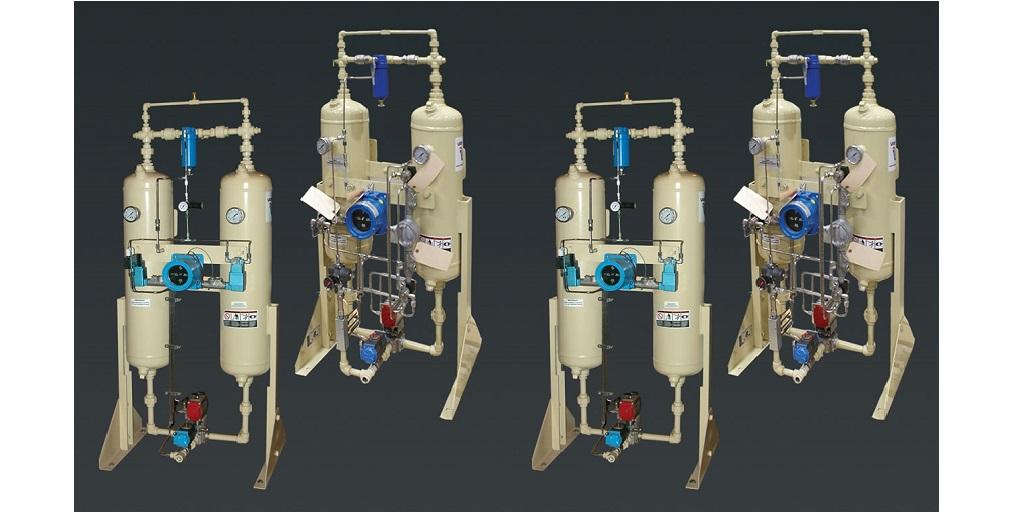
Water vapor in gas lines doesn't give much warning. It builds inside compressors, analyzers, and flow meters over time until something stops working correctly, and tracing it back takes longer than it should. Commercial labs dealing with natural gas in quality control, calibration, or instrument supply lines run into this more than the incident reports suggest, and a well-specified natural gas dehydrator is what keeps the downstream equipment from absorbing the cost.
Why Labs Reach for a Natural Gas Dehydrator Before the Damage Shows
Analytical instruments aren't forgiving about gas quality. Wet gas distorts chromatography readings, corrodes stainless fittings, and eats through sensor membranes in equipment that's expensive and hard to replace mid-run. The natural gas drying process gets far more attention after a lab has traced a string of unexplained equipment failures back to moisture and had to acknowledge it was preventable.
A natural gas dehydrator for lab use must deliver lower outlet dew points than most standard units are designed for. Labs deciding between a glycol dehydrator and a desiccant natural gas dryer usually land on the right choice pretty quickly once they map the options against actual operating conditions. Glycol systems handle higher flows and hold up well where some liquid carryover risk is acceptable. Desiccant systems remove water from natural gas without introducing any liquid into the stream, which matters for labs with tight cleanliness requirements or sensitive downstream instruments. Both work, but they're not interchangeable, and choosing the wrong type can create issues that compound over time.
Sizing and Selecting a Natural Gas Dehydrator for Your Lab's Reality
A gas dehydration unit for commercial lab use gets sized differently than equipment designed for pipeline or wellhead applications. Flow rates are lower, but the required outlet dew points are usually stricter. Instrument gas lines feeding precision detectors and analyzers need dry, consistent conditions that general-purpose units don't reliably produce.
A natural gas dehydrator that's undersized will fall short of spec under peak demand, and the effects tend to show up in the data before anyone identifies the cause. An oversized unit regenerates more frequently than necessary, wasting energy in the process. Getting the sizing right at the start avoids both problems.
The TEG unit has a strong reputation in glycol-based dehydration and performs well in high-volume applications where the process conditions suit it. Labs with cleanroom-adjacent environments or high-sensitivity analytical equipment tend to opt for desiccant systems because the outlet quality is more consistent and there's no concern about glycol carryover. The application drives the choice.
What Sits Next to a Natural Gas Dehydrator in a Well-Built Lab Setup
Dehydration equipment doesn't run in isolation. Coalescing filters usually go upstream to remove liquid water and aerosols before the gas contacts the dehydrator, which protects the media and extends service intervals. Pressure regulators stabilize inlet conditions so the dehydrator isn't working against variable upstream pressure.
Downstream, particulate filters and activated carbon beds catch residual material before gas reaches the instruments. Dew point monitors belong right after the dehydration stage. Real-time confirmation that the unit is performing to spec matters for labs under internal QC programs or any kind of third-party certification requirement.
Moisture analyzers, sample conditioning panels, and gas blending equipment all depend on consistent gas quality. Each piece performs more reliably when it's fed dry gas from a correctly sized natural gas dehydrator, and the equipment downstream is only as reliable as its feed.
Labs comparing dehydration options for commercial and analytical applications can browse the full equipment catalog at Air & Vacuum Process, Inc.
For more information about Laboratory Air Dryer and Compressed Air And Gas Filters Please visit: Air & Vacuum Process Inc.

 Arabic
 French
 Spanish
 Portuguese
 Deutsch
 Turkish
 Dutch
Dutch
 Italiano
 Russian
 Romaian
 Portuguese (Brazil)
 Greek
Greek
