


What Happens If You Shoot a Moose From a Boat in Ontario?
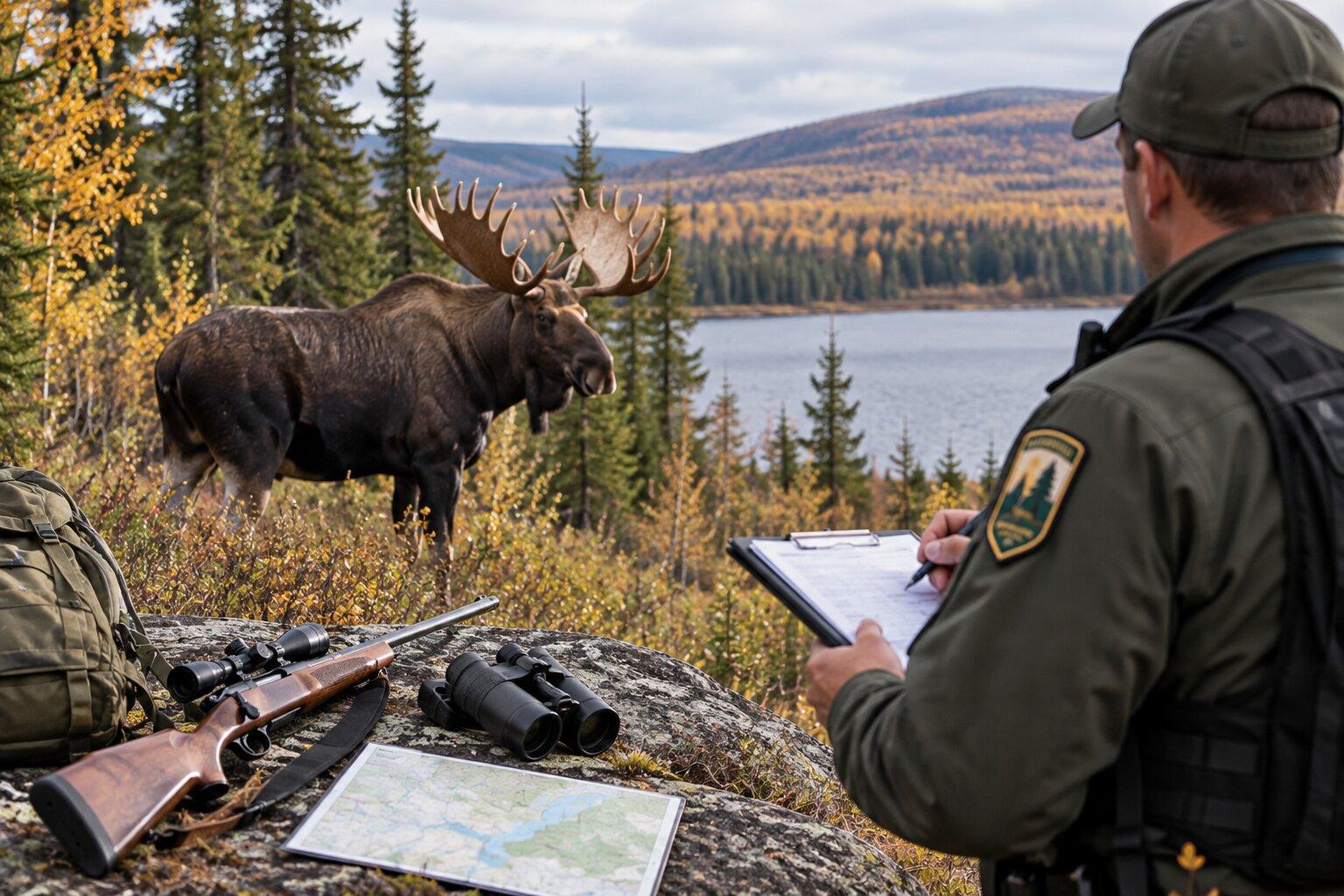
Short answer: this is one of the most seriously punished moose offences in Ontario, with suspensions reaching double digits. Three Wisconsin men paid $27,500 combined in a 2026 case, with individual suspensions ranging from five to ten years, and a Mississauga hunter separately paid $20,000 with a three-year ban. Full case breakdown in our ontario moose hunting fines guide.
This is a genuinely important question because moose spend real time in and around water throughout the season, making this scenario come up more often for hunters than they might expect — and Ontario treats it as one of the most serious violations in its entire moose enforcement record.
Why This Offence Draws Such Long Suspensions
The set fines for these specific offences actually look modest on paper — $250 for hunting big game that is swimming, and $250 for using a boat to kill, injure, or harass wildlife. But the suspension lengths tell a completely different story. Courts appear to treat shooting a swimming animal as removing any fair chase element from the hunt entirely, and they reach for long bans rather than large fines to answer it.
The 2026 Outpost Camp Case
Three Wisconsin men paid $27,500 in total after a planned operation targeting unlawful hunting at remote outpost camps. One pleaded guilty to discharging a firearm from a motorboat and hunting a moose while it was swimming, paying $12,000 with a ten-year ban. A second added a licensing charge on top, paying $11,500, also with a ten-year ban. A third pleaded guilty to the boat charge alone and paid $4,000 with a five-year ban.
The Mississauga Case: A Different Balance
A Mississauga hunter who fired at a bull moose from a motorboat on the Otoskwin River paid $20,000 — a much larger fine than the outpost camp cases — but received only a three-year suspension. This illustrates again how fine size and suspension length don't move together predictably; the specific combination of charges and circumstances in each case shapes the outcome independently.
Why 'Planned' Operations Draw Longer Bans
The outpost camp case, described as a planned operation, produced the longest suspensions in this category — five and ten years across the three defendants. Organized or premeditated violations appear to draw more severe non-monetary consequences than a single spontaneous decision, even when the fine amounts land in a similar range.
How to Avoid This Situation Entirely
The straightforward fix is patience: if a moose is in water when spotted, wait. Moose frequently move to shore on their own, turning a legally risky opportunity into a clean, legal one without sacrificing the hunt. Combining this awareness with sound shot placement judgment — covered in our guide to where to shoot a buck and applicable in principle to any big game species — rounds out a genuinely responsible approach to hunting near water.
Why Patience Near Water Protects More Than Just Legal Standing
Beyond avoiding a serious offence, waiting for a moose to move to solid ground also generally produces a cleaner, more accessible recovery than a shot animal that goes down in or near water — patience serves both the legal and the practical sides of the same decision.
Ultimately, Ontario's enforcement record makes clear that shooting from a boat or at swimming game carries consequences disproportionate to the modest set fines involved, and patience near water protects far more than just a clean shot opportunity.
Quick FAQ
Is using a boat just for transport treated the same as shooting from one?
No — using a boat to access a hunting location is generally treated differently from using it to kill, injure, or harass wildlife directly; the offence centres on the boat being part of the taking itself.
Does this rule apply to other big game besides moose?
The specific cases discussed involve moose, but the underlying set fines reference big game broadly, suggesting the same caution applies to other species encountered swimming.
Why did the Mississauga case get a shorter ban than the outpost camp case?
The exact reasoning behind each sentence depends on the specific facts, charges, and circumstances of each case — the outpost camp case involved a described 'planned operation,' which may have influenced the longer suspensions there.

 English
 Arabic
 French
 Spanish
 Portuguese
 Deutsch
 Turkish
 Dutch
Dutch
 Italiano
 Russian
 Portuguese (Brazil)
 Greek
Greek
