


TFT LCD Manufacturing Plant 2026: Comprehensive Business Plan, Requirements and Project Report
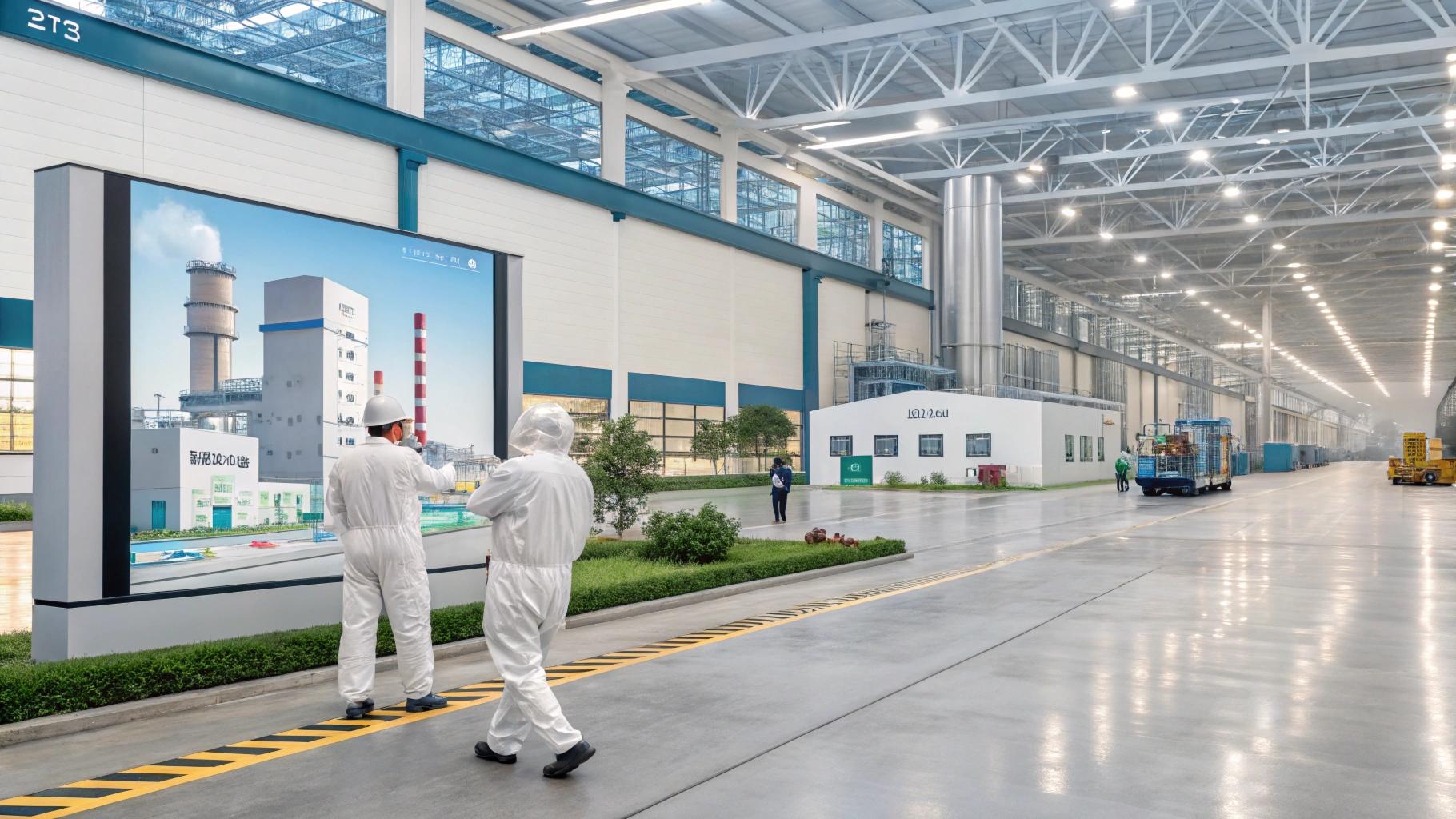
IMARC Group's "TFT LCD Manufacturing Plant Project Report 2026: Industry Trends, Factory Setup, Machinery Cost, Raw Materials, Investment Opportunities, Cost and Revenue" report provides a comprehensive guide on how to successfully set up a TFT LCD plant. The report offers clarifications on various aspects, such as unit operations, raw material requirements, utility supply, infrastructural needs, machinery models, labour necessities, transportation timelines, packaging costs, etc.
In addition to the operational aspects, the report also provides in-depth insights into TFT LCD manufacturing process, project economics, encompassing vital aspects such as capital investments, TFT LCD manufacturing plant cost, project funding, operating expenses, income and expenditure projections, fixed and variable costs, direct and indirect expenses, expected ROI, net present value (NPV), profit and loss account, and thorough financial analysis, among other crucial metrics. With this comprehensive roadmap, entrepreneurs and stakeholders can make informed decisions and venture into a successful TFT LCD business plan and manufacturing unit.
What are TFT LCD?
TFT LCDs, or Thin Film Transistor Liquid Crystal Displays, are flat-panel display technologies that use an array of thin-film transistors to individually control liquid crystal pixels, allowing precise light modulation and high-quality image reproduction. Compared with traditional passive-matrix LCDs, TFT LCDs provide enhanced brightness, improved contrast, faster response times, and more accurate color performance, making them widely adopted across modern electronic devices. TFT LCD panels are available in configurations such as In-Plane Switching (IPS), Twisted Nematic (TN), Vertical Alignment (VA), and other hybrid formats, each designed to meet specific viewing and performance requirements. They are extensively used in smartphones, tablets, laptops, computer monitors, televisions, automotive instrument clusters and infotainment systems, industrial control interfaces, medical equipment, and digital signage. Manufacturing typically involves substrate preparation, thin-film deposition, photolithography, etching, liquid crystal alignment, cell assembly, backlight integration, and optical and electrical testing. Their compact design, relatively low power consumption, scalable display sizes, and dependable performance continue to support demand across consumer electronics, automotive, healthcare, and industrial applications.
Market Trend and Drivers of TFT LCD:
The TFT LCD market is witnessing steady growth, driven by increasing demand for high-resolution and energy-efficient display solutions across consumer electronics, automotive systems, industrial automation, digital signage, and medical equipment. According to IMARC Group estimates, North America accounts for over 34% of the global TFT LCD market share. The expanding use of smartphones, laptops, tablets, and smart televisions, together with continuous improvements in resolution, color reproduction, viewing angles, and power efficiency, is strengthening market demand. Furthermore, the growing adoption of electric vehicles is increasing the need for advanced automotive displays, while rising deployment of industrial human-machine interface (HMI) panels and large-format commercial screens is creating additional opportunities. Ongoing innovations in panel manufacturing, coupled with the development of ultra-thin, high-brightness, and wide-viewing-angle displays, are further supporting the expansion of the global TFT LCD market.
Request a Sample Report: https://www.imarcgroup.com/tft-lcd-manufacturing-plant-project-report/requestsample
How to Setup a TFT LCD Manufacturing Plant?
Setting up a TFT LCD manufacturing plant requires evaluating several key factors — from TFT LCD manufacturing plant cost and machinery requirements to operational efficiency and quality control. Some of the major considerations include:
- Detailed Process Flow: The TFT LCD manufacturing process involves multiple stages, including glass substrate cleaning, thin-film deposition, photolithography and patterning, etching, liquid crystal filling and cell assembly, backlight unit integration, module assembly, and optical and electrical testing. Key aspects include unit operations, raw material requirements, cleanroom standards, and technical testing procedures.
- Site Selection: The plant location should provide easy access to raw materials such as glass substrates, polarizer films, liquid crystals, and backlight components, along with strong transportation infrastructure, ultra-pure water supply, and stable utility systems to reduce logistics costs and improve operational efficiency.
- Plant Layout Optimization: An efficient layout is essential to streamline workflow, maintain cleanroom integrity, and ensure worker safety. Separate zones for substrate processing, thin-film deposition, photolithography, cell assembly, module assembly, quality inspection, and finished goods storage should be planned with strict contamination control.
- Equipment Selection: Selecting durable and high-performance manufacturing machinery is crucial. Equipment may include chemical vapor deposition (CVD) systems, sputtering machines, photolithography aligners, etching equipment, liquid crystal injection systems, automated optical inspection machines, and aging and burn-in test chambers.
- Raw Material Sourcing: Reliable sourcing of glass substrates, color filter films, polarizer films, liquid crystal materials, driver ICs, backlight units (LED arrays and light guide plates), and adhesive tapes is necessary to maintain consistent product quality and stable production operations.
- Safety and Environmental Compliance: The facility must comply with cleanroom standards (ISO Class 5–7), chemical handling regulations, and environmental norms. Proper chemical waste treatment, exhaust gas scrubbing, ultrapure water recycling systems, and static discharge controls should be implemented.
- Quality Assurance Systems: A strong quality management system should be established to ensure pixel uniformity, color accuracy, brightness, contrast ratio, response time, and compliance with display industry standards through automated optical inspection and functional testing protocols.
Requirements to Setup a TFT LCD Plant:
- Funds
- Machinery
- Lands
Types of Costs to Setup a TFT LCD Factory:
- Land, Location and Site Development Cost
- Plant Layout Cost
- TFT LCD Plant Machinery Cost
- Raw Material Requirements and Costs
- Packaging Requirements and Costs
- Transportation Requirements and Costs
- Utility Requirements and Costs
- Human Resource Requirements and Costs
Project Economics:
- Capital Investments
- Operating Costs
- Expenditure Projections
- Revenue Projections
- Taxation and Depreciation
- Profit Projections
- Financial Analysis
Ask Analyst for Customized Report: https://www.imarcgroup.com/request?type=report&id=7332&flag=C
How IMARC Can Help?
IMARC Group is a global management consulting firm that helps the world's most ambitious changemakers to create a lasting impact. The company provides a comprehensive suite of market entry and expansion services. IMARC offerings include thorough market assessment, feasibility studies, company incorporation assistance, TFT LCD factory setup support, regulatory approvals and licensing navigation, branding, marketing and sales strategies, competitive landscape and benchmarking analyses, pricing and cost research, and procurement research.
Services:
- Plant Setup
- Factory Auditing
- Regulatory Approvals, and Licensing
- Company Incorporation
- Incubation Services
- Recruitment Services
- Marketing and Sales
Contact Us:
IMARC Group
134 N 4th St. Brooklyn, NY 11249, USA
Email: sales@imarcgroup.com
Tel No:(D) +91 120 433 0800
United States: (+1-201971-6302)

 English
 Arabic
 French
 Spanish
 Portuguese
 Turkish
 Dutch
Dutch
 Italiano
 Russian
 Romaian
 Portuguese (Brazil)
 Greek
Greek
