


Rubber Board Manufacturer Licence: A Practical Guide for Rubber Manufacturing Businesses
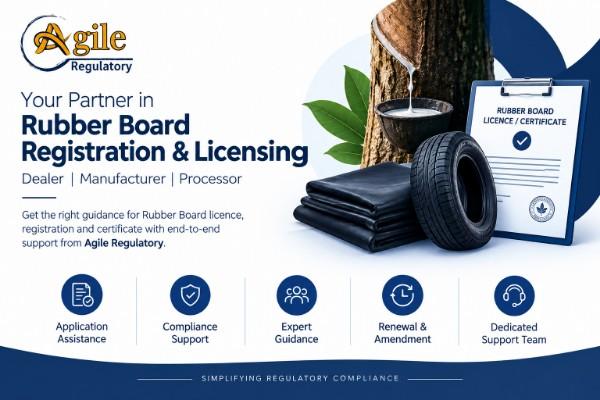
Manufacturers using natural rubber may come across several compliance terms, including Rubber Board registration, manufacturer licence, rubber licence and Rubber Board certificate. These terms are often used interchangeably online, but they can represent different regulatory concepts.
For a manufacturing business, identifying the correct Rubber Board requirement is important because the Board separately administers licensing activities for manufacturers, dealers and processors.
This guide explains the basics of rubber board manufacturer license requirements and how a business can approach the application process.
What Is a Rubber Board Manufacturer Licence?
A Rubber Board manufacturer licence relates to the regulatory requirements applicable to manufacturers that purchase or otherwise acquire natural rubber for manufacturing purposes.
The Rubber Board's Excise Duty Division is responsible for issuing and renewing manufacturer licences and handling related activities.
According to the Board's published annual report, manufacturer licences are initially issued for three years and renewed for five years.
This means that a manufacturer should treat the licence as an ongoing compliance obligation rather than a one-time registration.
Why Is Manufacturer Licensing Important?
Natural rubber transactions are regulated under the Rubber Act, 1947 and Rubber Rules, 1955.
The Rubber Board has stated that its Licensing and Excise Duty Department handles licensing, related payments, enforcement and other functions connected with regulated rubber transactions.
For manufacturers, compliance may involve more than simply obtaining the initial licence. Maintaining correct records, making applicable statutory payments and updating licence information can also be important.
Who Should Examine Manufacturer Licensing?
Businesses using natural rubber in manufacturing should assess whether they fall within the manufacturer licensing requirements.
This can include businesses involved in manufacturing rubber-based products where natural rubber is acquired as a manufacturing input.
Before applying, the business should consider:
- Nature of manufacturing activity
- Type of rubber acquired
- Factory location
- Storage location
- Business constitution
- Existing Rubber Board permissions
- Purchase arrangements
- Changes to the manufacturing facility
- Applicable statutory requirements
Rubber Board Certificate: Is It the Same as a Licence?
This is one of the most common areas of confusion.
A search for rubber board certificate may return information about licence certificates, registration-related documents or other Rubber Board services.
The Rubber Board's licensing information explains that licences are issued in certificate form through the online system.
Therefore, it is better to identify the underlying licence category instead of searching only for a generic "certificate."
For a manufacturer, the relevant question is generally whether the business requires the applicable manufacturer licence.
Documents and Information
The exact documentation should be checked against the current application requirements.
Depending on the business, information may include:
- PAN
- Business constitution documents
- Factory address
- Storage premises information
- Ownership or possession documents
- Contact details
- Manufacturing details
- Existing licence details
- Authorisation documents, where relevant
- Other supporting information requested by the Board
Applicants should ensure that the information provided online matches their supporting documents.
Application Process
1. Identify the Correct Category
Start by determining whether the business falls under manufacturer licensing rather than dealer or processor licensing.
2. Prepare Business Details
Prepare accurate information about the legal entity, factory and relevant premises.
3. Collect Supporting Documents
Organise the documents before beginning the online application.
4. Submit the Application
The Rubber Board's annual report states that licence applications and related activities are conducted online through its licensing portal.
5. Pay Applicable Fees or Statutory Amounts
The applicant should pay the applicable amounts according to the current rules and online system.
6. Address Clarifications
If the authority requests clarification, the applicant should provide a clear and accurate response.
7. Receive the Licence Certificate
Once the application is approved, the applicable licence certificate is issued according to the prescribed procedure.
Licence Validity
The Rubber Board states that manufacturer licences are initially issued for three years and renewed for five years.
Manufacturers should record the expiry date and begin renewal preparations sufficiently early.
A compliance calendar can include:
- Licence expiry
- Renewal date
- Relevant returns
- Applicable payments
- Premises changes
- Business constitution changes
- Licence amendments
What If the Factory Address Changes?
Businesses should not assume that an existing licence automatically covers a new premises.
The Rubber Board's licensing functions include processing amendments such as changes in business details and additions of factory or storage premises. The Board's published annual report also records amendments involving changes of name, address, storage premises and other licence particulars.
Therefore, before shifting or adding premises, the manufacturer should check the applicable procedure.
What If the Company Changes Its Constitution?
A change in constitution may also require updating the Rubber Board's records.
Examples can include:
- Proprietorship to partnership
- Partnership restructuring
- Company-related changes
- Change in business name
- Changes in authorised persons
The relevant amendment process should be followed rather than continuing indefinitely with outdated licence information.
Manufacturer Licence vs Dealer Licence
These licences are not interchangeable.
A dealer and manufacturer perform different business functions, and the Rubber Board maintains separate licensing functions for these categories.
The Board's annual report confirms that its Licensing Section deals with dealers and processors, while the Excise Duty Division handles manufacturer licensing.
A company that both trades in rubber and manufactures products should assess its activities separately.
Why Businesses Should Avoid Generic Online Information
Regulatory information can change, and not every website explains the difference between a licence, certificate, registration and authorisation.
For this reason, businesses should rely on current official requirements when preparing an application.
The Rubber Board's official website remains the appropriate reference point for current notices, forms and regulatory information.
Common Mistakes Manufacturers Make
Using Old Information
Online articles may contain outdated fees, forms or procedures.
Applying Under the Wrong Category
A manufacturing business should not automatically select a dealer category.
Ignoring Storage Premises
Storage details may be relevant to the licensing records.
Not Updating Changes
Business name, address, constitution or premises changes should be reviewed for possible amendment requirements.
Delaying Renewal
Licence expiry should be tracked as part of the company's compliance calendar.
How Agile Regulatory Helps
Agile Regulatory helps Indian businesses with regulatory registrations, licences, certifications and compliance support.
For a business exploring a rubber board manufacturer license, Agile Regulatory can assist with:
- Understanding the applicable requirement
- Reviewing the business activity
- Preparing documentation
- Application support
- Online filing assistance
- Clarification management
- Renewal support
- Amendment-related guidance
Our approach is focused on helping the applicant understand what is actually required rather than simply submitting a generic application.
Frequently Asked Questions
What is a Rubber Board manufacturer licence?
It is the applicable licence for eligible manufacturers acquiring rubber for manufacturing purposes under the regulatory framework administered by the Rubber Board.
How long is a manufacturer licence valid?
The Rubber Board states that manufacturer licences are initially issued for three years and subsequently renewed for five years.
Is a Rubber Board certificate different from a licence?
The terms can be confusing. The Board has stated that licences are issued in certificate form, so the underlying licence category is more important than the generic word "certificate."
Can licence details be amended?
The Rubber Board handles amendments to licence records, including certain changes in business information and premises.
Conclusion
For a rubber manufacturing business, the first step is not simply searching for a rubber board certificate. The business should identify the correct regulatory category and determine whether a rubber board manufacturer license is applicable.
With accurate business information, appropriate supporting documents and timely compliance management, manufacturers can approach the licensing process in a more organised way.
Agile Regulatory can assist businesses throughout the application and compliance process.

 English
 Arabic
 French
 Spanish
 Portuguese
 Deutsch
 Turkish
 Dutch
Dutch
 Italiano
 Romaian
 Portuguese (Brazil)
 Greek
Greek
