


Ceramic Injection Molded Parts: Zfcera For Precision Manufacturing
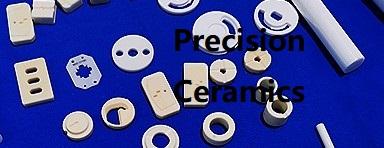
For industrial components with intricate shapes, thin sections, or detailed structural features, Ceramic Injection Molded Parts provide an efficient approach to advanced ceramic manufacturing. Compared with simpler forming methods, Ceramic Injection Molded Parts can reproduce complex geometries while supporting consistent production for precision applications. With material options including zirconia, alumina, silicon nitride, silicon carbide, and aluminum nitride, zfcera develops customized ceramic components according to product geometry, dimensional requirements, and operating conditions. This approach is useful for manufacturers seeking smaller, more detailed parts without relying entirely on extensive post-processing.
Why Injection Molding Works For Complex Shapes
Ceramic injection molding combines ceramic powder with a carefully prepared binder system to create a feedstock that can flow into a mold cavity. This makes the process particularly useful for components with small dimensions, thin walls, curved surfaces, holes, grooves, or other details that may be difficult to achieve through conventional pressing.
Once the material enters the mold, the cavity defines the basic geometry of the component. This near-net-shape approach can reduce the amount of material that needs to be removed during later machining. For manufacturers producing repeated components, a well-designed mold can also help maintain consistency between individual parts.
The process therefore offers a practical balance between design freedom and repeatable manufacturing, especially when component geometry is too complicated for basic ceramic forming methods.
Material Choices For Different Requirements
The ceramic material should match the environment in which the finished component will operate. Zirconia is useful when toughness, hardness, and wear resistance are important. Alumina can be selected for applications requiring electrical insulation, chemical stability, and high-temperature performance.
Silicon carbide offers strong resistance to heat and wear, while silicon nitride provides a combination of mechanical strength, thermal shock resistance, and chemical stability. Aluminum nitride can be considered where thermal conductivity and electrical insulation need to work together.
Choosing the right material at the beginning helps determine the appropriate molding, debinding, sintering, and finishing conditions. It also allows the finished component to better match the performance requirements of the equipment.
Zfcera For Detailed Component Manufacturing
Complex ceramic components require more than simply filling a mold. Feedstock consistency, injection conditions, mold design, binder removal, and sintering all influence the final dimensions and structure. Poor control during any stage can result in cracking, deformation, internal defects, or dimensional variation.
A controlled manufacturing workflow helps reduce these risks. After injection molding, the green component undergoes debinding to remove the binder system before high-temperature sintering creates the final ceramic structure. Additional grinding, CNC machining, honing, or polishing can then be applied when tighter dimensional or surface requirements are needed.
This combination of forming and finishing gives equipment manufacturers greater flexibility when developing components with demanding specifications.
Applications In Precision Industries
The technology is suitable for many industries where small, detailed ceramic components are required. Semiconductor equipment can benefit from ceramic parts that combine dimensional stability and electrical insulation. Automation systems may use customized ceramic components for positioning, guiding, or wear-resistant functions.
Other potential applications include medical equipment, new energy systems, laser technology, precision instruments, automotive components, textile machinery, and specialized industrial equipment. Depending on the material and geometry, molded ceramic components can serve as structural parts, sensor-related components, wear-resistant elements, or precision mechanisms.
The ability to create detailed shapes is particularly valuable when equipment manufacturers need to reduce assembly complexity or integrate several functions into a compact component.
From Prototype To Repeat Production
A customized ceramic project often starts with a drawing, sample, or three-dimensional model. Engineers can then evaluate the geometry, material, wall thickness, shrinkage considerations, tolerances, and post-processing requirements before production begins.
For new designs, prototype development and small-batch production can help verify dimensional accuracy and actual equipment performance before larger quantities are ordered. Once the design is confirmed, a suitable molding process can provide consistent production for repeated applications.
This makes injection-based ceramic manufacturing useful not only for large-volume production, but also for specialized industrial projects where precision and design flexibility are equally important. By combining material expertise, molding technology, sintering, and precision finishing, manufacturers can develop components around real equipment requirements. For more information about customized advanced ceramic solutions, visit https://www.zfcera.com/ .

 English
 Arabic
 French
 Spanish
 Portuguese
 Turkish
 Dutch
Dutch
 Italiano
 Russian
 Romaian
 Portuguese (Brazil)
 Greek
Greek
