


How Does NMES Differ From Other Electrotherapy Approaches?
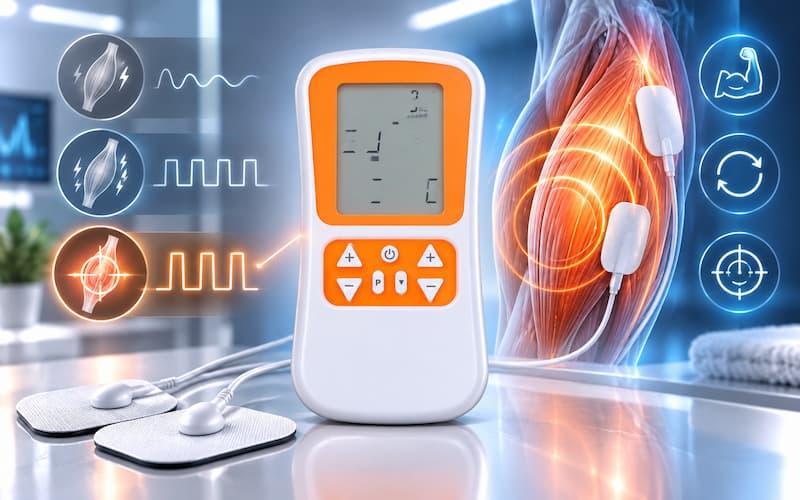
Electrotherapy is used across many areas of rehabilitation to support pain management, muscle activation, neuromuscular re-education, and functional recovery. An electrical muscle stimulation machine can deliver controlled electrical impulses for different therapeutic purposes, but not every form of electrical stimulation works in the same way. Understanding these differences helps healthcare professionals select an approach that matches the patient's treatment goals.
Neuromuscular electrical stimulation (NMES) is particularly focused on activating motor nerves and producing purposeful muscle contractions. It therefore has a different primary role from approaches such as TENS, which is commonly associated with pain management, or EMG biofeedback, which measures muscle activity rather than directly stimulating the muscle. Understanding these distinctions can help therapists use electrotherapy more effectively within structured rehabilitation programmes.
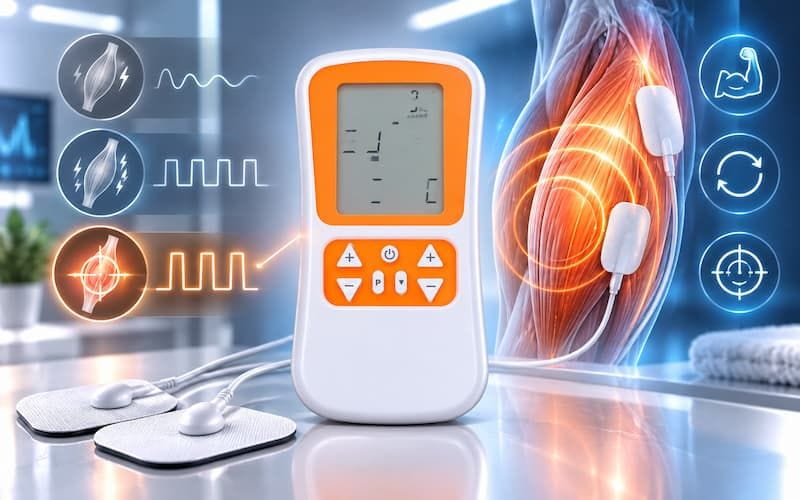
Understanding NMES Electrotherapy Approaches
NMES is a form of electrical stimulation designed to activate nerves supplying skeletal muscles. Electrical pulses are delivered through surface electrodes placed over appropriate areas of the body. When the stimulation reaches the motor nerve at a suitable intensity, it can cause the associated muscle to contract.
The purpose of NMES can vary according to the rehabilitation programme. It may be incorporated into muscle re-education, strengthening programmes, functional training, or rehabilitation following periods of reduced muscle activity. The specific application depends on the individual's condition, treatment objectives, electrode placement, stimulation parameters, and professional assessment.
The term NMES Electrotherapy Approaches therefore covers a range of stimulation strategies rather than one single treatment protocol. Understanding the differences between stimulation technologies is important because electrical stimulation should be selected according to its intended therapeutic function.
How Does NMES Work?
NMES generally follows a controlled stimulation process:
-
Electrode placement: Surface electrodes are positioned over the appropriate muscle or motor nerve according to the treatment objective.
-
Parameter selection: The clinician selects appropriate settings such as pulse duration, frequency, intensity, and treatment time.
-
Electrical stimulation: Controlled pulses are delivered through the electrodes.
-
Muscle activation: The stimulation can activate motor nerves, producing a muscle contraction.
-
Functional integration: Where appropriate, stimulation can be incorporated alongside voluntary exercises or rehabilitation activities.
-
Monitoring: The therapist observes the patient's response and adjusts the programme when clinically appropriate.
This differs from TENS, where stimulation is primarily used for pain management. It also differs from EMG biofeedback, which detects and displays voluntary muscle activity to help the patient understand and improve muscle control.
Some professional rehabilitation devices combine stimulation with EMG biofeedback or EMG-triggered stimulation. These technologies can provide a more interactive approach when the treatment goal involves improving voluntary muscle activation and neuromuscular control.
Key Benefits and Clinical Applications
Supporting Muscle Re-education
Following injury, surgery, immobilisation, or periods of reduced activity, some patients may have difficulty producing an effective voluntary contraction. NMES can be incorporated into a rehabilitation programme to help stimulate the targeted muscle while the patient works on voluntary activation.
The aim is not simply to produce a contraction, but to integrate stimulation appropriately with broader therapeutic exercises and functional training.
Supporting Muscle Activation
NMES may be used when a clinician wants to target muscle activation as part of a structured rehabilitation programme. The stimulation parameters can be adjusted according to the treatment objective and the patient's response.
Professional devices with programmable stimulation settings can provide therapists with greater flexibility when developing patient-specific protocols.
Neuromuscular Re-education
NMES Electrotherapy Approaches can form part of neuromuscular re-education programmes where improving the relationship between voluntary effort and muscle contraction is important.
In suitable applications, stimulation may be combined with active movement so that the patient attempts to contract the muscle while electrical stimulation provides additional activation.
Rehabilitation After Reduced Muscle Use
Extended periods of inactivity can affect normal muscle performance. Under professional supervision, NMES may be incorporated into rehabilitation where restoring or maintaining muscle activation is an appropriate treatment objective.
The clinician should determine whether electrical stimulation is suitable and how it should fit within the wider rehabilitation programme.
Combining Stimulation With Biofeedback
Some rehabilitation technologies combine electrical stimulation with EMG biofeedback. EMG measures electrical activity generated by muscles, allowing patients and clinicians to observe voluntary muscle activity.
Systems incorporating EMG-triggered stimulation, such as appropriate NeuroTrac MyoPlus devices, can connect voluntary effort with stimulation when clinically indicated. This can be useful where the treatment objective involves improving awareness and muscle recruitment.
Supporting Structured Home Rehabilitation
Some patients may use professional electrotherapy devices outside the clinic as part of a supervised rehabilitation programme. Clear instructions regarding electrode placement, programme selection, intensity, treatment duration, and monitoring are important.
Home use should follow the recommendations of the relevant healthcare professional rather than being treated as a substitute for clinical assessment.
Important Features and Factors to Consider
When evaluating NMES equipment, healthcare professionals should consider several practical factors.
-
Programmability: Different rehabilitation goals may require different stimulation parameters, so adjustable programmes can be useful.
-
Number of channels: Single- and dual-channel configurations offer different options for targeting muscles or treatment areas.
-
Stimulation controls: Adjustable intensity and clinically relevant stimulation parameters allow treatment to be adapted appropriately.
-
Biofeedback capability: When muscle assessment is important, EMG biofeedback can complement stimulation.
-
ETS functionality: EMG-triggered stimulation can be relevant when combining voluntary muscle activity with electrical stimulation.
-
Electrode compatibility: Reliable electrode connections and suitable accessories are important for consistent application.
-
Ease of use: Controls and displays should be practical for both clinicians and appropriately supervised patients.
-
Monitoring: The ability to review treatment performance can support structured rehabilitation and clinical decision-making.
Not every patient requires every feature. The appropriate specification depends on the clinical application and treatment objectives.
How Can Healthcare Professionals Use NMES in Practice?
Physiotherapists can incorporate NMES into rehabilitation programmes when muscle activation is an appropriate clinical objective. It may be used alongside therapeutic exercise, movement training, strengthening activities, and other rehabilitation techniques.
Rehabilitation clinicians may also consider devices that combine stimulation and EMG biofeedback when assessment of voluntary muscle activity is relevant. For example, NeuroTrac professional systems provide technologies for applications involving NMES, EMG biofeedback, and EMG-triggered stimulation.
Pelvic health specialists may use related biofeedback and stimulation technologies within appropriately assessed pelvic floor rehabilitation programmes. In these cases, treatment selection should reflect the patient's specific needs rather than relying on a general stimulation protocol.
Hospitals and rehabilitation centres can also use programmable electrotherapy systems as part of supervised treatment pathways. Where equipment is provided for home rehabilitation, clinicians should ensure that patients understand how and when to use it and what signs should prompt them to seek professional advice.
Choosing the Right Solution
Selecting an appropriate electrotherapy solution starts with the treatment objective rather than the device itself.
If the primary objective is pain management, a TENS-focused device may be more appropriate than an NMES system. If the objective involves muscle activation or neuromuscular re-education, NMES may be more relevant. Where assessing voluntary muscle activity is important, EMG biofeedback can provide information that stimulation alone cannot provide.
NMES Electrotherapy Approaches should therefore be considered in relation to:
-
The patient's rehabilitation needs
-
The muscles or treatment area involved
-
The intended therapeutic objective
-
Required stimulation parameters
-
Whether EMG measurement is beneficial
-
Whether single- or multi-channel operation is needed
-
Clinical monitoring requirements
-
Whether supervised home use is appropriate
A professional assessment can help determine which combination of technologies best fits the rehabilitation plan.
Why Professional Rehabilitation Devices Matter
Professional rehabilitation devices provide clinicians with greater control over treatment parameters and can support more structured therapy. This is particularly relevant when treatment requires repeatable settings, patient monitoring, or integration with other rehabilitation techniques.
Verity Medical's NeuroTrac range includes technologies designed for areas such as TENS, NMES/STIM, EMG biofeedback, ETS, and pelvic floor rehabilitation. Depending on the clinical requirement, devices such as NeuroTrac MyoPlus and NeuroTrac Simplex can support approaches involving muscle stimulation and biofeedback.
For example, EMG biofeedback can help clinicians assess muscle activity, while stimulation can provide controlled electrical input. When appropriately combined, these technologies can become part of a broader programme focused on muscle assessment, re-education, functional training, or supervised rehabilitation.
The value of professional equipment is therefore not simply the ability to deliver electrical impulses. Programmability, measurement capabilities, usability, and treatment control can all contribute to a more structured clinical approach.
Practical Considerations for Effective Therapy
For effective and appropriate use, clinicians should consider:
-
Correct electrode placement: Positioning should follow the relevant clinical protocol and device instructions.
-
Appropriate settings: Stimulation parameters should be selected according to the treatment objective and patient response.
-
Patient comfort: Intensity should be adjusted appropriately rather than assuming that a stronger sensation produces a better outcome.
-
Voluntary participation: Where neuromuscular re-education is the goal, combining stimulation with appropriate active effort may be considered.
-
Consistent treatment: Following an appropriate rehabilitation schedule can help maintain continuity.
-
Progress monitoring: Clinicians should assess the patient's response and modify the rehabilitation plan when necessary.
-
Professional guidance: Patients using stimulation at home should receive appropriate instruction and know how to operate the device safely.
NMES is one component of rehabilitation, not a replacement for clinical assessment, exercise, functional training, or other appropriate therapeutic interventions.
FAQs
What is NMES?
NMES stands for neuromuscular electrical stimulation. It uses controlled electrical pulses delivered through surface electrodes to activate motor nerves and produce muscle contractions. It is commonly considered within rehabilitation programmes involving muscle activation, re-education, or functional recovery, depending on the patient's needs and professional assessment.
How is NMES different from TENS?
The primary objectives are different. NMES is designed to activate motor nerves and produce muscle contractions, whereas TENS is generally used as an electrical stimulation approach for pain management. Although both use surface electrodes and electrical pulses, their intended applications, settings, and treatment goals can differ.
Is NMES the same as EMS?
The terms are sometimes used interchangeably, but their use can vary between manufacturers and clinical settings. NMES specifically refers to stimulation intended to activate nerves supplying muscles. EMS is a broader term often used for electrical muscle stimulation. The device's actual functions and intended clinical applications should always be checked.
Can NMES be combined with EMG biofeedback?
Yes, some professional rehabilitation systems combine electrical stimulation with EMG biofeedback or EMG-triggered stimulation. EMG provides information about voluntary muscle activity, while stimulation can activate the muscle. This combination may be relevant when a rehabilitation programme focuses on improving muscle awareness and recruitment.
Can NMES be used at home?
Some NMES devices may be suitable for supervised home rehabilitation, depending on the patient's needs and the device's intended use. A healthcare professional should provide appropriate instructions on electrode placement, settings, treatment duration, and safe operation before home use.
What should professionals consider when selecting an NMES device?
Professionals should consider the intended treatment goals, available stimulation parameters, number of channels, programmability, electrode compatibility, ease of use, monitoring requirements, and whether EMG or ETS functionality is needed. The best choice depends on the clinical application rather than simply the number of features available.
Does NMES replace exercise-based rehabilitation?
No. NMES is generally considered an adjunct to rehabilitation rather than a universal replacement for active exercise or functional training. Depending on the clinical objective, stimulation may be integrated with voluntary movement, strengthening, motor-control exercises, or other therapeutic approaches.
Conclusion
NMES differs from other electrotherapy approaches primarily because its central purpose is to stimulate motor nerves and support controlled muscle contraction. TENS, by comparison, is commonly associated with pain management, while EMG biofeedback measures muscle activity and provides information that can assist muscle-control training. Understanding these distinctions helps healthcare professionals match technology to the intended rehabilitation objective.
NMES Electrotherapy Approaches can be valuable when incorporated appropriately into structured muscle rehabilitation and neuromuscular re-education programmes. Professional systems from the NeuroTrac range can provide options involving NMES/STIM, EMG biofeedback, and ETS, depending on the clinical requirements. The practical takeaway is to select technology based on the patient's needs, treatment goals, monitoring requirements, and professional guidance rather than treating all forms of electrotherapy as interchangeable.

 English
 Arabic
 French
 Portuguese
 Deutsch
 Turkish
 Dutch
Dutch
 Italiano
 Russian
 Romaian
 Portuguese (Brazil)
 Greek
Greek
